Showing posts with label weather. Show all posts

Sunday, April 26, 2015

Summer Temperatures Begin in April

by Maureen Dietrich
25 Apr 15
mazmessenger.com


Head of the local meteorological service of the National Water Commission, Hugo Nordahl Valdez, said he expects the temperature in Mazatlán today to reach 33°C as a result of a mixture of three natural weather phenomena of low pressure, humidity from the Pacific Ocean and a jet stream.

As of tomorrow, he predicted, hot days in the port will begin to increase and minimum temperatures will rise to between 22°C and 23°C.

For those suffering in the heat, the CFE annual summer electricity subsidy begins on May 1 when turning on the air conditioner won’t break the bank.

(from Noroeste)

Monday, April 13, 2015

19 Storms or Hurricanes Predicted for this Summer

by Maureen Dietrich
11 Apr 15
mazmessenger.com

Statistics show that Sinaloa is the second State most affected by tropical storms and hurricanes.


Due to the El Niño weather phenomenon, meteorologists are predicting 19 tropical cyclones in the Pacific region this summer, six more than the annual average of 13. Hurricane season in the Pacific begins May 15 and ends November 30.

In a video conference from Mexico City the coordinator of the National Meteorological Service, Juan Manuel Caballero González, said he could not give a definitive prediction as it will all depend on how El Niño develops.

He explained that if El Niño is strong, the central and north areas of the country will see an intense drought. If it is weak, we will have normal or above normal rain in the summer months of June, July and August.

Of the 19 events expected in the Pacific, eight are predicted to be tropical storms and 11 to be hurricanes, four of which will be intense and six moderate. The meteorologist added that historically only 2.9 storms directly affect coastal areas.

Statistics show that Sinaloa is the second State most affected by tropical storms and hurricanes with 41 direct hits. Last year, 14 storms lashed Sinaloa.

Mazatlán is definitely at risk for tropical storms particularly in September and October, said Caballero González.

For the Atlantic Ocean, the University of Colorado predicts less cyclone activity with seven named storms, four of which could become tropical storms and three hurricanes.

The names for Pacific tropical storms and hurricanes this year will be: Andrés, Blanca, Carlos, Dolores, Enrique, Felicia, Guillermo, Hilda, Ignacio, Jimena, Kevin, Linda, Marty, Nora, Olaf, Patricia, Rick, Sandra and Terry.

(from Noroeste)

Monday, March 16, 2015

Snow on Durango Highway, Hail in Mazatlán

by Maureen Dietrich
16 Mar 15
mazmessenger.com

More snow fell yesterday on the highway making driving conditions hazardous.


When it comes to weather, Mazatlecans have a saying: in February the weather is loco, in March it is un poco loco.

February this year offered no surprises, just the occasional rain that almost threatened some of Carnival 2015 events but held off until the fireworks and parades were over.
March, on the other hand, has come in like a lion.


For many in Mazatlán, this was the first time in their lives they had experienced hail.


On Friday last week, residents in north Mazatlán communities such as Missiones, Prado Bonito, El Venadillo, Valles del Ejido and Concordia watched as the unusual phenomenon of hail rained down from the sky onto patios and farm fields.

For many, this was the first time in their lives they had experienced hail.

Such was the case for María Avendaño of Colonia Felicidad who told reporters she was washing outdoors around seven in the morning when the “piedras de hielo” (stones of ice) fell on her head. She said she never thought she would see this in her lifetime, and it made her day.

The hail, a result of Winter Storm number 9, also brought sleet to the roads of the Mazatlán-Durango highway on Friday, but by Saturday it had turned to snow prompting the roads department to issue a caution alert for drivers to use extreme care on the autopista.

Wintery weather continued yesterday evening in Mazatlán when the cold front brought a short squall of strong winds and rain into the city.

For today the national meteorological service forecasts rain and cooler temperatures. (from Noroeste)

Friday, March 13, 2015

Frostbitten US Fliers Chase Sun, Cheap Pesos in Mexico

banderasnews.com


go to original
March 13, 2015

Aeromexico's international passenger traffic rose 13% in February. The carrier flies direct from New York to Cancun and offers flights from Boston and Chicago to Cancun, Cabo San Lucas and Puerto Vallarta.
 

Mexico City - A frigid U.S. winter is creating a record tourism season in Mexico as travelers enriched by savings from cheap gas and stronger dollars seek warmer climes.

Among the top beneficiaries of the winter migration are airlines Volaris and Grupo Aeromexico SAB, the first and fifth best stock performers respectively among more than 100 large companies trading in Mexico as of March 6. Airport operators listed on the IPC stock index are also beating that gauge in 2015.
This season is shaping up to be the most robust for Mexico tourism, the country's fourth-largest source of foreign cash and a bright spot in an economy dragged down by low oil prices and production. December revenue from tourists was the highest for any Christmas season, according to central bank data, and foreign visits in January rose from last year's highs with a boost from U.S. travelers.
"I'm looking forward to not putting on 12 layers before I go outside," said Morgan Thompson, a marketing and communications manager at a furniture company in New York, who recently booked an Aeromexico flight to a Mexico beach town. "I've never seen so much snow in my life."

Last month was the coldest February on record at New York's John F. Kennedy International Airport, and Chicago tied its coldest February ever, the National Weather Service said. Boston had its sixth-snowiest January, followed by its snowiest and second-coldest February.

Southern Exodus

The weather triggered an exodus south. In January, foreign visits to Mexico rose 8.9 percent from a year earlier, according to the National Immigration Institute in Mexico City. It was the biggest month for international visitors of any January since 2007, according to the Interior Ministry. Travel from the U.S. alone increased 11 percent in the same month.

"The weather in the north has been more extreme than in the past years," said Jose Maria Flores, an analyst at Casa de Bolsa Ve Por Mas SA in Mexico City. "That propels people to travel more during this time of year and they're inclined to seek out the heat of Mexico's beaches."

A weakening peso is also an incentive for crossing the border. The peso fell to a record Tuesday amid speculation that U.S. interest rates will increase by September.

Volaris, whose only foreign flights are to and from the U.S., saw international traffic rise 18 percent in February, more than the 17 percent it grew a year earlier.

Aeromexico's international passenger traffic rose 13 percent in February. The carrier flies direct from New York to Cancun and offers flights from Boston and Chicago to Cancun, Cabo San Lucas and Puerto Vallarta. Volaris flies from Chicago and Portland to Cancun and Mexico City.

Makes Sense
"Of course" the severe winter is helping attract tourists, Aeromexico Chief Executive Officer Andres Conesa said in an interview last week. And with the peso's 13 percent decline since November to near 15 per dollar "it makes more sense to travel to Mexico."
Volaris has risen 27 percent this year and Aeromexico gained 21 percent. The Mexican benchmark IPC index is virtually unchanged in that period. Volaris CEO Enrique Beltranena said it was difficult to determine if weather was helping the airline.

Seeking Sun

In February, passenger traffic from abroad rose more than 10 percent at Grupo Aeroportuario del Centro Norte and Grupo Aeroportuario del Sureste, which serve resort destinations including Acapulco and Cancun. Grupo Aeroportuario del Pacifico, which serves Pacific beach destinations, reported international traffic rose 6% in January, the latest period for which statistics are available.

None of the airport operators returned requests for comment. According to its website, Aeroportuario del Sureste had the highest international traffic in both January and February that those months have ever recorded since 2000.

"Weather in the U.S. could be a relevant factor that along with the strength of the dollar is making Mexico a more attractive tourist destination," said Javier Romo, an analyst at Signum Research, who has a hold recommendation on Aeromexico.

Plunging oil prices may also help frozen northerners pay for their escape from the cold. Crude prices have fallen about 50 percent since June, reducing costs at the gas pump & for some fares.

"I missed two weeks of hell and now I'm back again," Alex Nunez, an artist from Manhattan, said in a telephone interview after her recent trip to Mexico City. "I was planning on going to a wedding and wasn't sure. Then the price dropped so much that I had to get the ticket, and the weather really helped" clinch the decision.

March Snow

Severe weather is usually more of a hindrance to travel than a help: Blizzards have delayed thousands of flights across the U.S. the past two winters. Some travelers are avoiding travel to northern cities now, Aeromexico's Conesa said.

That hasn't stopped bookings to Mexico as winter weather lingers into March, Emma Jupp, president of Liberty Travel, based in Ramsey, New Jersey, said by e-mail. Bookings have risen 14 percent so far this year compared with the same time in 2014, she said.

"With the back-to-back storms, there has been an uptick in both inquiries and bookings to warm weather destinations, namely the Caribbean and Mexico," Jupp said, referring to three storms that slammed the New York City area in four days last week. "There is a consensus that it's time to trade snow boots for sandals."

Original article

Tuesday, March 10, 2015

Mexico ranks first on global list with 91 percent happy expats

rivera-maya-news.com
March 7, 2015 
Sabrina Rodriguez
mexico expats having lunch


Relocating for any reason is a big decision. Assessments from local climate to job availability to the cost of living and schools for kids are only some of the common considerations. Being an expat also means fitting in and making new friends.
A recent survey conducted by InterNations revealed just where the happiest expats are these days.
They surveyed 14,000 expats across 160 countries and asked participants to focus mostly on family, their work life, ease of settling into the community and personal finance.
While several European cities made the list – Luxembourg City and Zurich were two top choices – New York City also made the cut. The Big Apple came in fifth overall with expats saying they like the friendliness of the people, the endless entertainment choices and ongoing plenitude of career opportunities.
Expats living in New York also said they were able to fit in easily, and with a city of such cultural diversity and vast population, that’s a big deal for anyone considering the move.
Ecuador ranked the best overall with expat satisfaction being the highest in all categories. In particular, expats enjoyed the city of Gayaquil – the nation’s financial center — for its low cost of living and ease in making new friends. Many said that the increase in career opportunities is also a big draw.
Mexico City ranked first with expats saying they feel right at home giving Mexico an overall third place for globally content expats. Their surveys reported an outstanding 91 percent of expats had no problem settling in and found the locals to be friendly. Although the city has its fair share of safety issues, crime rates have been decreasing since 2011.
Zurich and Luxembourg may not provide as easy a time at making friends, but they did make the happy expat list for job opportunities. According to the survey, nearly 40 percent of expats in Luxembourg moved there for work, while a majority of Zurich expats arrive for the banking and financial jobs.

Thursday, March 5, 2015

Scattered Showers, Cool Weather Forecasted

by Maureen Dietrich
5 Mar 15
mazmessenger.com


Mazatlán could experience scattered showers and low temperatures today and tomorrow due to the arrival of Cold Front No. 41.

According to the meteorological service of Conaqua, snow and freezing rain are expected in the sierras of Sonora, Chihuahua and Durango which will bring a drop in temperatures to southern Sinaloa.

(from Noroeste)

Sunday, March 1, 2015

Mazatlán’s Split Personality

theepochtimes.com

The city’s two personalities are divided into distinct zones separated by a seven-mile coastal road. On one side is Old Mazatlán featuring the historic district, and on the other is the Zona Dorada or Golden Zone, with its beach resorts facing the Pacific Ocean.

Mazatlán, meaning “land of the deer”—so named by the indigenous Nahuatl Tribes—is located in the Sea of Cortez with Baha California to the west. It was settled by the Spanish in 1531, but unlike the Spanish colonization that flavours the east coast and central highlands of Mexico, Mazatlán’s culture owes more to the German and French influence which arrived in the mid-19th century.

By 1840 Mazatlán’s harbour was a major port of call on the long journey from Europe to
California when, lured by the prospect of easy riches in the gold fields, waves of Europeans
passed through. Many of these adventurers were seduced to linger in a land blessed by balmy breezes, brilliant sunsets, and a sun smiling down from a sparkling blue sky—not to mention
the area’s huge natural resources of gold, silver and gem stones, which are still present in the
nearby hills even after 300 years of exploitation by the Spanish.

This new wave of Europeans brought diverse skills to their adopted home but just as importantly, they brought their culture, honed for centuries in their native lands. Add their history to the rich heritage already existing in the area and you have today’s Mazatlán, the Pearl of the Pacific.

Malecón and Historic Centre

A visit to Mazatlán is a different and authentic Mexican experience. It offers locals and visitors
alike the best of the worlds of culture and nature. There is also the added allure of an abundant bounty from the sea. In Mazatlán’s restaurants you will find the freshest, most delicious fish and seafood from local waters with the fish still bearing marks from the fisherman’s nets. If you’ve
a mind to, you can buy right off the boats as the fishermen arrive with their daily catch along the Malecón, an amazing walkway running along the beach for miles, punctuated by art sculptures
of every size and description.
 
It is in fact an open air museum where native artists pay homage to their heroes, fables, and myths. Along the Malecón also you can catch the cliff divers who climb high onto a wooden platform, and for a few dollars, dive 45 feet into tidal pools to astound and delight the tourists.
 
Centro Historico, or the historic centre of town, is in the process of being returned to the grandeur of its halcyon days. The Teatro Angela Peralta (Angela Peralta Theater), a 19th century neo-classical building, has undergone extensive restoration and is the impetus for the revival of the area.
 
The once-named Rubio Theater was renamed for the “Nightingale of Mexico” in 1883 after the much beloved singer was stricken by yellow fever caught during her boat journey to Mazatlán to perform there. Tragically she died before singing in the venue that now bears her name—a venue that is at the cultural heart of Mazatlán and currently hosts concerts and performances by internationally acclaimed artists.
 
My first night in Mazatlán I climbed aboard the charming Pulmonias—the open-air vehicles that are the symbol of the city—for a ride along the Malecón to the historic centre. The monuments along the Malecón are illuminated at night, and with the whispering sea adding its musical accompaniment to our short journey, we ended in the centre square of Old Mazatlán, which was festively dressed with lights, people, and live music. Many of the buildings that line the square have been turned into restaurants and clubs and at night they unfold into the street for al fresco dining in the balmy air.

Sharks, Birds, Food

In the morning, we headed to the Acurio Aquarium and the dancing seal performance. I never saw a seal dance before and it was an amazing show of affection to see it balance on its flippers to embrace its trainer. Of course, all manner of fish were on display but their biggest draw is the 4.5-million gallon shark tank that is built to hold Tiger, Yellow, and Mako sharks where people can swim, feed, and interact with them. One of our group volunteered to don a mask and flippers to feed, swim, and then hold a shark!
 
Next to the aquarium was an aviary with magnificently colourful birds flying free. There was a controlled entry but once you passed through, it was just as if you were in their natural habitat and woe to you if a bird—especially a male peacock—took a dislike to you. I tried to make friends but the clever birds just looked at me inquisitively as if I were the object of investigation. To them, I was another species to be tolerated.
 
From the aquarium we headed toward the water and the Alagua Restaurant facing the beach and ocean. This restaurant is a seafood lover’s paradise: briny oysters, fat succulent shrimp and scallops, and fish so fresh it practically swam onto your plate. Among our selections was the best coconut shrimp served with freshly made mango sauce that I ever ate.
 
To walk off lunch we headed back to the historic district to see it during daylight and it was hard to believe the same magical square where we had dinner the night before was now transformed into a walk down memory lane. Pastel-coloured 19th century buildings stand side by side, with manicured shade trees lining the streets leading up to and around the square. No time for siesta as the beach beckoned and night falls early in November.
 
Mazatlán has a loyal following with guests returning year after year, lured by the beach, the ocean, and the hospitality Mexico is renowned for.

Saturday, February 14, 2015

Rain Snarls Traffic, Postpones Children’s Carnaval

by Maureen Dietrich
14 Feb 15
mazmessenger,com
 
Transit police advised there was no reason to close any streets due to the rain though driving was hazardous.


What was forecasted to be light rain in Mazatlán yesterday became a four hour rainstorm that flooded streets and caught Mazatlecans and Carnaval organizers off guard.

Although transit police advised there was no reason to close any streets due to the rain, the access to Av. Reforma in front of the Gran Plaza Shopping Mall was virtually impassable for vehicles when the road flooded due to a blocked drain leading into the El Camarón lagoon.

Five cars were stranded in high water on the avenue until authorities brought in heavy machinery to open the drain.


Forecasted light rain in Mazatlán yesterday became a four hour rainstorm.


When questioned about the blocked drain yesterday, Mazatlán Mayor Carlos Felton stated the flooding was caused by a contractor working on construction in the area. He expected the drain to be opened and the waters to recede within a few hours and stated the contractor would be charged for the cost of the machinery because “he was totally responsible.”

The Mayor also advised they had spoken to the Profepa delegate yesterday because the flood was the result of the contractor not having filed an environmental impact study.

The unexpected heavy rainfall also forced Cultura to postpone the beginning of the Children´s Carnaval programmed for 4pm yesterday in the Zona Dorada on Las Garzas Street. Cultura stated the event programmed for February 13 to 16 from noon to 7pm will continue despite cancelling its inauguration yesterday afternoon.

Media reported that according to the national meteorological system, scattered rain is expected to continue throughout the weekend until Monday.

(from Noroeste)

Acuden a la cita de los Juegos Florales del Carnaval, aún con amenaza de lluvia

Noroeste / Redacción
noroeste.com
13-02-2015
|
El público que asiste a la coronación de la Reina de los Juegos Florales del Carnaval de Mazatlán.
Fotografía: Noroeste.
MAZATLÁN._ La fiesta de coronación de los Juegos Florales dio inicio y los invitados ya están en sus lugares.

Con todo y la lluvia que afectó buena parte del día, los asistentes a la coronación de la Reina de los Juegos Florales ya se encuentran en el Estadio Teodoro Mariscal.

Lentamente el público ha ocupado sus lugares y aunque la amenaza de lluvia continúa, hasta las embajadoras de ciudades hermanas ya hicieron acto de presencia pasando por encima del pequeño lodazal sobre el que están instaladas las sillas.

Monday, February 9, 2015

Inicia poco a poco la entrada de calor a Mazatlán

Fernando Velasco
noroeste.com
09-02-2015
 
MAZATLÀN._ Aunque la presencia del Sistema Frontal 33 mantiene su efecto en la zona norte y noreste del País, el Pacífico Norte tendrá un clima estable y mayormente despejado durante los próximos días, de acuerdo al Servicio Meteorológico Nacional de la Comisión Nacional del Agua.

Las temperaturas para hoy, mañana y hasta el final de la semana se incrementarán a 27 grados centígrados la máxima, con 16 grados la mínima. Dicho efecto tendrá eco en la región del Pacífico Norte, donde el termómetro tenderá a aumentar.

La entrada de humedad sobre el Océano Pacífico tendrá como consecuencia una racha de vientos de 25 a 50 kilómetros por hora, sin embargo, no se afectará a las temperaturas parcialmente calurosas que se sentirán en Mazatlán y gran parte de Sinaloa, apuntó la Conagua en un comunicado.

El temporal frío y nublado que se había presentado en el estado cederá, con un cielo mayoritariamente despejado para los días lunes, martes, miércoles y jueves de la presente semana, informó.

Específicamente, para Sinaloa, no existe alerta de potencial de tiempo severo para las próximas 72 horas, reportó el Servicio Meteorológico Nacional.

Pese al buen temporal que se espera, la instancia exhortó a los ciudadanos a extremar precauciones.

27°C

SE PREVÉ COMO TEMPERATURA MÁXIMA

16°C

TEMPERATURA MÍNIMA

Wednesday, February 4, 2015

"Arrastra" bonanza para Mazatlán cierre de autopista a Durango

Belizario Reyes
noroeste.com
04-02-2015
En la zona de playa el turismo observaba la bahía.
Fotografía: Noroeste / Andrés García.


MAZATLÁN._ La nevada en la sierra no sólo dejó varados a miles de ciudadanos por el cierre de la Autopista Mazatlán-Durango, también trajo al puerto una derrama económica extra porque algunas familias duranguenses debieron quedarse un día más.

"No (afectó), al contrario, benefició el cierre de la carretera del día de ayer (lunes), tuvimos el reporte por el comandante de la Policía Federal de Proximidad Social, Roberto Gutiérrez, el cual nos informó desde las nueve de la mañana el cierre de la carretera a la altura de Mesillas, Concordia", expresó el presidente de la Federación de Cámaras Nacionales de Comercio en Sinaloa, Guillermo Romero Rodríguez.

"Y la idea era hacerlo extensivo a los medios de comunicación y a todas las redes sociales para que los turistas tomaran sus precauciones y se tuvieron que quedar un día más en Mazatlán, ya teníamos el fin de semana estuvimos en promedio el 90 por ciento (de ocupación), ya teníamos desde el 30 de enero con salida el 2 de febrero, y la mayoría de las personas que viene precisamente de Durango, Nuevo León, Coahuila, Zacatecas, alguna parte también nos estuvieron visitando de Chihuahua, pues tuvieron que quedarse un día más".

Romero Rodríguez reiteró que por este cierre no se registraron afectaciones en el comercio, en los servicios y en el turismo.

"En la gastronomía se vio mucho repunte ayer (lunes) en los restaurantes, los hoteles también tuvieron buen repunte y en el comercio salió el turismo también, a pesar de que tuvimos un día lluvioso, con mal clima para Mazatlán, pero esto obviamente sí benefició al comercio", subrayó.

El presidente de la Cámara Nacional de Comercio, Servicios y Turismo de Mazatlán, Óscar Tirado, expresó que el cierre de la nueva carretera por la nevada no afectó sustancialmente a los comerciantes de Mazatlán, sino a los turistas que no pudieron regresar a tiempo a sus lugares de origen.

"No afectó, por el contrario, el que pernoctaran una noche más los turistas y que pudieran transitar por acá por Mazatlán ayudó más a la derrama, porque las carreteras al estar cerradas muchos por seguridad prefirieron quedarse, otros tomaron rutas alternas", añadió.

Tuesday, February 3, 2015

Snow Forces Closure of Mazatlán-Durango Highway

As of this morning no time or date has been set to re-open the highway.
Snow generated by the fifth winter storm and reinforced by Cold Front 33 forced the federal roads department to close the Mazatlán-Durango autopista at 6am yesterday morning.
Media reported that as of this morning no time or date has been set to re-open the highway.
Approximately 50 centimeters of snow fell in the area. Drivers were advised of the road closure at kilometer 223 by highway police who suggested they return to a safe location.
Some travellers decided to return to Mazatlán, others to circle around to take the free highway to Durango, while some preferred to wait until the snow covered highway was reopened.
Approximately 50 centimeters of snow fell in the area.
The National Water Commission advised the winter storm is expected to continue today with a possibly of more snow for the Durango sierras.
This morning a long line of trucks had congregated on the side of the highway a kilometer before the first toll booth while drivers wait patiently for the autopista to re-open.
(from Noroeste)

Monday, February 2, 2015

City Hall Hands out Free Blankets to 1,200 Families

by Maureen Dietrich
30 Jan 15
mazmessenger.com
 
The programme encompasses a total of ten colonias.


Under a cloudy sky early in the morning yesterday, personnel from Mazatlán’s municipal hall arrived in Colonia Libertad to hand out blankets to hundreds of waiting residents.

The blankets are part of a programme initiated by the municipality to assist residents of poorer colonias during the winter months.

The programme encompasses a total of ten colonias where Mayor Carlos Felton and his wife Sylvia Felton, president of DIF, have given away two blankets each to 1,200 families. In some cases, media reported, residents were seen carrying half a dozen as they left the distribution area.

In Colonia Libertad, two lines formed of residents holding vouchers in their hands and although some arrived at the local basketball court distribution center without vouchers, they also walked away with blankets as a gift from the municipality.

Mayor Felton told reporters that Mazatlecans often think it is not cold here in the winter, but the people of these colonias live in cardboard houses.

(from Noroeste)

Friday, January 30, 2015

The Great Rain Caper (Weather Update)

Jan 30, 2015
 
In case you haven't noticed the weather oriented web sites are going crazy with rain predictions for Mazatlan.  You could get whiplash watching them shrink and balloon the number of days they're calling for rain.  For example one popular site started with one day of rain, increased that to three, dropped it back to one again, only to go back up to a ludicrous FIVE day forecast of wet stuff.


We've had folks legitimately worried their plans will be ruined if they schedule an outside venue like Surf's Up.  Or they're coming in for a short stay and think their entire vacation will be rained out.  Several people aren't sure what to do for Super Bowl viewing, and one visitor even considered paying fees to re-book for Cancun.


All in all it's been quite a comedy.  So what is causing all this angst and concern?  First let's review a couple things for context.


1. We've talked before about Mazatlan not having a dedicated weather service.  These weather sites use computer modeling, and in the end a prediction is only as good as the data used to make it.  Most weather predictions for Maz are based on readings taken at the airport, so their forecast is fatally flawed.


2. Everybody NOB has heard of the Alberta Express, and many seasoned travelers know the Pineapple Express carries rain from Hawaii to California.  Maz has what I've dubbed the Mango Express.  It originates near the equator and spins off clouds and rain through Mexico into Texas.


So we end up with a 1-2 combo of bad data fed into computers, which are currently spitting out nonsense predictions on a weather condition they don't understand.  So what's really going on?  Two things:


Those who've been in Maz this winter are aware we've had an unusual amount of overcast, as opposed to our typical clear skies.  This is because the Mango Express train has been very active.  In fact an unusually large dose of it is poised to move in shortly.


This front has combined with a rare lined up double pressure system.  We have a stable high sitting over northern Nevada and pushing clockwise winds southward toward Mexico.  In the meantime we also have a slowly moving low system in the waters off southern Mexico.  Of course low systems push out counter clockwise winds.


So the net result is a northerly flow from the US, which holds the cloud cover and moisture from Mango in longer over Mexico.  Then opposing southerly flow off southern Mexico is fueling Mango, and sending new moisture right toward Maz.  Hence the overcast and rain predictions.


You can see what we're talking about in the following links.  The first one is a world view that will show the massive size of this particular front:


The next is a little different angle from a infrared source that allows for a better detail:


Lastly here's a view from a camera designed to show water vapor in the air.  The brighter the white color, the more moisture:


So after that long prelude (sorry, but my Weather Updates are meant to be tutorials), let's take a shot at determining what's in store for the next few days.  We'll use a question and answer format to dispel some of the misinformation flying around out there.


Weather Underground called for five straight days of rain starting on Thursday, and Intellicast predicted rain from Thursday thorough Tuesday!  Is that actually possible?  The chances for that are even less than not having a drop, in fact I don't think that's ever happened this time of year.


Since Maz has had quite a bit of overcast lately, aren't we due for some clear weather?  Yes, but unfortunately it's temporarily going to get a little worse before it gets better.  The good news is the condition causing this Mango Express train is deteriorating.  The chances Maz gets back to Fun, Fun, Sun for February are improving rapidly.


A weather site named timeanddate is predicting rain from Saturday through Monday.  Is that a little more accurate?  That's still overly strong on the rain, but at least they're not off the reservation with five and six days of it.  However timeanddate is a computer modeling system based on readings from the airport.  You'll certainly want to take their temperature and wind predictions with a grain of salt.


Is it going to rain on Super Bowl Sunday?  I think Sunday looks like a day when the overcast would be comparatively light and not carrying enough moisture to actually rain.  In fact it wouldn't surprise me at all if the this front were to mover easterly by then, and things were relatively clear.


Some people are saying if it does ease off for Sunday, rain will come back in for Monday...what do you think?  Rain predicted for Maz in the winter, often fails to materialize.  Last year I forecast rain for both Christmas and New Year's Eve, but that was the only time I predicted rain.  All the other times it was called for by web sites never happened.  A second push of rainfall would require this Mango to both keep generating AND stay in position.  That's expecting too much in my opinion.    


Is there a silver lining in these clouds?  Yes there's a couple of them I think you can take to the bank, and one other you'll really like.  Firstly because this is a front from the south and not the Northern Pacific, we're talking very mild temps in spite of any rainfall.  Secondly due to the canceling out affect of the opposing wind flow, it looks to be a period of calm or mild breezes. 


Lastly as I've alluded to above, extended rain would require both of two independent, and unusual factors.  I'm not buying this double down forecast for a second wave.  While there might be some remaining periods of cloud cover for Monday or Tuesday, I'm don't think we'll see rain then.  Furthermore I think the chances this moves though and it's relatively clear for that period are better than 50/50.


So how do Friday and Saturday look?  If we're going to have actual rain during the day (and not just at night with some drizzle during daylight hours), it's likely Saturday would be the day.  I expect Friday to be quite overcast and moist, but don't look for any rain until near or after nightfall.


Can you see a light at the end of the tunnel?  February is a time when there can be a few windy days, and a little chill at night.  However it looks like this February will be warmer than usual, and with much less in the way of blustery weather.  In fact I'll go out on a limb and predict many people will end up saying next month had the best weather of the entire winter.   

Monday, January 26, 2015

Trae lluvias dispersas a Mazatlán la tormenta invernal

noroeste.com

YESENIA ZERMEÑO
26-01-2015
Un día muy nublado, con lluvias en algunos puntos de la ciudad, se vivió ayer en el puerto.
Fotografía: Noroeste / Iván Lizárraga.

MAZATLÀN._ La llovizna sorprendió ayer a mazatlecos y turistas desde muy temprano.

Como lo anunció el Servicio Meteorológico de la Comisión Nacional del Agua, la cuarta tormenta invernal provocó lluvias dispersas en la zona sur de Sinaloa.

La nubosidad continuará hoy, así como vientos de 30 kilómetros por hora con rachas de hasta 40 kilómetros por hora.

Si bien la temperatura mínima sería de 16 grados, ésta podría mantenerse a la intemperie hasta en 14 grados.

Ello favorecerá nevadas o aguanieve en zonas montañosas de Sonora, Chihuahua, Durango, Baja California y Zacatecas.

La entrada de humedad del Océano Pacífico, Golfo de México y Mar Caribe, generará la propagación de nubosidad.


Mientras que la masa de aire frío mantendrá temperaturas frías por la mañana y noche, y cálidas durante el día.

La Comisión Nacional del Agua también advirtió de fuerte oleaje, por lo que será necesario tomar las precauciones debidas si se acude a la playa.

Las probabilidades de tormentas dispersas continúan para este lunes, aunque, como ayer, podrían darse sólo en algunas colonias del puerto y comunidades rurales.

Tuesday, January 6, 2015

Mazatlecans Day Trip to Enjoy Durango Snowfall

snowWhen newspapers on Saturday published an article showing snow along the Mazatlán-Durango autopista, Mazatlecans took to their cars to drive up to see snow with their own eyes.
Snow had fallen on the highway at the towns of Coscomate, El Salto and Las Adjuntas. At kilometer 109 dozens of cars were parked beside the road as families walked through the snow, threw snowballs and made snowmen. The 5°C temperature was no deterrent to Sinaloans enjoying their first experience of snow. (from Noroeste)

Monday, January 5, 2015

Mexico among the Top 3 countries for Retirement

theyucatantimes.com

With spiraling costs compelling more and more North Americans to retire overseas, retiring abroad has never been more attractive. But finding the right location among the myriad options available can be daunting.
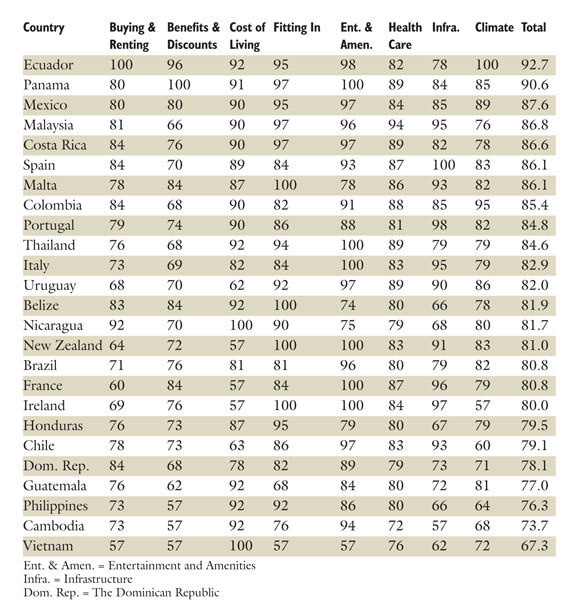
That’s what our Annual Global Retirement Index does. Using input from our team of correspondents on the ground all over the world, we combine real-world insights about climate, health care, cost of living, and much more to draw up a comprehensive list of the best bang-for-your buck retirement destinations on the planet.
Keep in mind that, even though only 25 countries feature on our list, all of them are worth your attention. We selected them from among all the countries in the world for their qualities as retirement hot-spots, so even the lowest-ranked nation on our index is still very much an option worth considering.
Take into account, too, that ultimately no list or formula can automatically deliver the best destination for you. Only you can decide that. Only you can assess your personal preferences, needs, budget, and desires, and look at the options available to see which nation best suits your needs.
Are you an urbanite or do you prefer the wide-open spaces? Would you prefer a tropical climate with year-round sun or more temperate weather that reminds you of home? Would you rather live by the sea or on a mountainside? Sample the exotic delights of Asia or explore the rich cultural heritage of Latin America? Only you can make these calls. In assembling this index, we aim to deliver an in-depth guide to the best countries available to you today. It’s been compiled using the solid judgment and on-the-ground intelligence of our correspondents around the world. All of them are expats who have become experts on their adopted countries. Through their insight, we hope to give you an indication of the relative strengths and weaknesses of each locale and a flavor of the life that could await you in each. That way you can focus your own search in a well-informed way.
We’re constantly looking to improve and refine our annual Retirement Index. On top of having access to a larger network of correspondents than ever before, this year we required more (and more detailed) input from the field to make this year’s results the most comprehensive to date. As a result, for instance, Vietnam is included this year for the first time, in recognition of the opportunities we’ve uncovered there for North American expats within the last year.
You can see the full table of results below, but here for your inspection are details of the best in each region…
 

South America


Ecuador—The World’s Number 1 Retirement Haven

From the quaint town of Cotacachi to the vibrant capital, Quito, from Salinas by the sea to the peaks of the Andes, Ecuador’s diversity is a key part of the massive appeal that sees it regain the coveted top spot on this year’s retirement index.
Although prices have risen slightly in recent years, Ecuador’s real estate is still the best value you’ll find anywhere.
This is bolstered by the generous array of benefits the government has afforded to retirees. Over-65s get discounts on flights originating in Ecuador, as well as up to 50% off entry to movies and sporting events. Discounts are also available on public transport (50%) and utilities, with the option of a free landline if you purchase a property.
And the cost of living is low. “You can get a lot more here for your dollar than you could in the U.S. or Canada,” says IL Ecuador Highlands Correspondent Wendy DeChambeau. “A doctor’s visit will set you back around $10, while a main course in a restaurant can be had for as little as $2.50. The bus trip from Cotacachi to Otavalo will cost you 25 cents. For big-ticket items like real estate, you can get a lot more for your dollar here than in the U.S. A couple can live well here on $1,400 a month, including rent.”
You’ll find world-class medical facilities in big cities throughout the country, and you can catch direct flights to and from the States in Quito and Guayaquil. Good Internet is more readily available than ever. Public transportation is so efficient that many expats report not having to even buy a car. And with Ecuador having one of the most robust economies on the continent—its Gross Domestic Product has grown an average of 4.54% a year since 2000—it is likely that this infrastructure is only going to improve over the coming years.
 
When it comes to entertainment, Ecuador offers a diverse range of options. Biking, fishing, zip-lining, hiking, and rock-climbing are all popular and readily available. The country’s location affords it access to a staggering variety of environments, from the vast Pacific Ocean (including the Galapagos Islands, one of the world’s most important ecological sites) and the Amazon to the mighty peaks of the Andes. This diversity ensures you’re guaranteed to find a climate that suits you down to the ground.The steadily growing expat population makes it easy to integrate, as do the friendly locals. “Many of the locals are somewhat bilingual, and they are very welcoming toward North Americans,” says ILCuenca Correspondent Edd Staton. “We also have a steadily growing expat community here.”
The country’s heritage is writ large in its culture, fusing indigenous influences with various European and African peoples who have settled there over the centuries. This multitude of cultures inevitably influences Ecuadorian cuisine, which is as varied as it is delicious and affordable, with new and reputable restaurants springing up all the time.
As many expats note, Ecuador delivers fresh experiences every day, making it the perfect location for someone in search of a happy and fulfilling life overseas.

Colombia—Latin America’s Health Care Hotspot

For North Americans heading south, Colombia is becoming an increasingly popular choice. Given all that this diverse country has to offer, it’s not difficult to see why.
Second only to Ecuador among South American nations this year, Colombia has an incredibly low cost of living; according to IL Colombia Correspondent Michael Evans, a couple can live comfortably on just over $1,200 a month.
What’s more, Colombia boasts one of the finest and most affordable health care systems in the region, a factor that has seen large expat communities sprout up in cities like Bogotá and Medellín.
“You can get health-care treatment comparable to that in the U.S. in any large or mid-sized city,” says Michael. “In a 2014 survey, 18 Colombian medical institutions ranked among the top 45 in Latin America. According to the World Health Organization, Colombia actually has better health care than the United States or Canada.”
There’s no shortage of things to do, either. And accessing the country has never been easier, thanks to an increase in direct flights from the States.
“Even small towns have community swimming pools and tennis courts, and some major cities have golf courses,” says Michael. “In Colombia, you can go hiking, white-water rafting, paragliding, mountain climbing, spelunking, swimming, water skiing, and scuba diving. Colombia is the second-most biodiverse country on the planet. It has beaches, jungles, deserts, and a few steamy volcanoes. You’ll never get bored in Colombia.” 

THE FINAL SCORES

Index_1
Mexico went from 6th to 3rd place in the International Living Retirement Index
 

North and Central America


Panama—Best Retirement Benefits in the World

Runner-up in the Index—and the best retirement destination in Central America—Panama offers retiree expats the advantages of the world’s best retirement program: the Pensionado visa.
“Panama wants you to come—and their policies court you,” says Jessica Ramesch, IL’s Panama Editor. “The Pensionado visa is available to anyone with a lifetime pension of over $1,000 a month. Discounts you can get with the visa include 20% off medical services, 50% off entertainment, 25% off restaurant meals, 25% off air fare, and 25% off electricity and phone bills.”
Add all this to the country’s already low cost of living, and Panama is the very definition of an affordable expat haven. For under $2,000, a couple can live comfortably in a country with a well-earned reputation for being expat-friendly.
Thriving expat communities in towns such as Boquete, Coronado, and Pedasí attest to the ease of integration and afford you plenty of opportunities to meet like-minded types.
“There are active expat communities all over Panama,” says Jessica. “This is possibly the friendliest country toward North Americans, because of its long-standing relationship with the U.S. There are so many activities for expats and Panamanians, it is easy to join different groups and get out there and start meeting people. Panamanians like to meet foreigners. They like to try to practice their English on you or hear you trying to speak Spanish. You even make friends at the supermarket here.”
Although a developing nation, Panama’s array of infrastructure makes it easy to get (and get to) what you need. It has both the fastest Internet and best roads in Central America, and it serves as the air hub for the entire region, with a large and growing number of routes serving U.S. and Canadian cities. This makes Panama one of the easiest countries on our list to get home from.
The Pacific coast of Panama is world-renowned for its beautiful beaches and azure waters: the definition of tropical paradise.
Sunshine is ubiquitous in Panama and gray days are rare. The evenings and mornings are pleasantly cool, and rains rarely last more than an hour. At either extreme, the weather is perfectly manageable. The temperature is generally warm, but not so hot as to be stifling, and the ocean water reflects this, making Panama a perfect place if you love to swim. Unlike some other countries in the region, hurricanes do not pose a threat.
This favorable climate makes Panama a perfect place for those who love the outdoors, with plentiful opportunities for hiking, bird-watching, fishing (among the best in the world), and water sports. It also has a vibrant arts and cultural scene centered on the larger towns and cities.
The John Hopkins-affiliated Punta Pacífica Hospital in Panama Cityprovides care comparable to what you’d receive in the U.S. It’s one of five major hospitals spread throughout the country, although smaller facilities also provide first-rate service at highly competitive prices. Because of its small size, you are never more than an hour’s drive from a medical facility in Panama. The local health-care system is both cheap and reputable. A visit to the doctor can set you back as little as $5.
 

Mexico—Thriving Expat Communities South of the Rio Grande

One of the world’s best expat havens lies just south of the border, proving that you don’t have to traverse the globe to find your own piece of paradise. Due to its proximity to the U.S., the comforts of home are never far away in Mexico. English is widely spoken in expat havens (though Spanish will help tremendously) and U.S. food, products, and sports are also popular.
In Mexico I can get almost anything I could get back home, between the U.S. chain stores and the local shops and markets plus I can get all the wonderful local specialties,” says ILEditor Glynna Prentice. “The big difference is the prices. Tickets to a top-notch concert may cost me $8 or even less…and I can walk to the concert hall through a beautiful colonial city. I can buy a week’s worth of groceries for $15 or $20, and I don’t know anyone who pays more than a few hundred dollars a year in property taxes.”
Established expat havens in communities such as Puerto Vallarta and San Miguel de Allende ease the integration process, while excellent property can still be found for far less than you’d pay in the States. In communities where expats flock, health care is as good as what you’d expect at home, but delivered at a much lower cost, leaving you with plenty of money in your wallet to enjoy the innumerable activities and cultural treasures this large and diverse country has to offer.
From the pristine beaches of Puerto Vallarta and the scenic streets of San Miguel de Allende to thebeautiful City of Mérida, the breathtaking Colonial Haciendas, the mystical “Cenotes” and the stunning Mayan ruins of the Yucatán, Mexico has it all.
Hacienda Katanchel
Hacienda in Yucatan (Photo: Google)
This country can cater to a wide range of tastes—whether you’re in search of a quiet getaway or on the hunt for adventure. The country’s large size also affords it a diverse range of climates to accommodate every tolerance of heat, humidity, and rainfall. Good Internet and infrastructure can be found throughout most of the country, and Mexico’s famed cuisine is another much-loved plus. Regular flights to and from the U.S. are also a distinct advantage…or you could drive home if so inclined.

Asia

Malaysia—Great Value for Money in a Cultural Melting Pot

Every year, more and more expats are waking up to the amazing opportunities Malaysia has to offer. The country has one of the most robust economies in Asia, and this is reflected in the consistently high standard of living available to locals and expats alike. It’s just one of many factors that led to it being ranked the highest Asian nation in this year’s index.
Quality of life in Malaysia is cost-efficient as well as excellent. In typical expat locations such as Kuala Lumpur and Penang, high-quality real estate is available for rent at a low cost. Why buy when you can rent a 1,600-square-foot apartment with a swimming pool for just $850 a month?
 
“I rent a 1,600-square-foot apartment with an amazing pool, just five minutes’ walk from the ritzy Gurney Plaza shopping mall,” says New Yorker Thomas O’Neal of his new life in Penang. “It costs me just $850 a month. I don’t need a car, either, so I’m saving money left, right, and center.On a modest budget, you truly can savor a life of luxury here. With your money going further, you can afford to treat yourself to the stunning array of local food—which mirrors Malaysia’s diverse cultural make-up. For as little as $5, you can enjoy an excellent meal, with a bottle of wine setting you back the same price. The street food is similarly scrumptious and one of the true charms of Malaysian cuisine.
“I love the weather—82 F on average—and the ease of getting to Thailand, Cambodia, Vietnam, and Laos. When you combine that with a cost of living of $1,500 per month, including my rent, it’s almost unbeatable.”
The country makes a perfect base from which you can explore the innumerable natural, historical, and cultural treasures that Southeast Asia has to offer. The proliferation of cheap Asian airlines in recent years has made it easier (and more affordable) than ever to explore Thailand, Indonesia, India, and Japan. In Malaysia, Asia is truly at your doorstep.
Direct flights to the U.S. are also available, so getting home for the holidays needn’t be a concern. Neither is Internet access, as every year high-speed Internet makes more and more inroads into the country. It’s already widely and cheaply available in popular expat destinations like Kuala Lumpur and Penang.
As a throwback to the British colonial period, English is widely spoken by locals, making it all the easier to adjust and find your way around. And cities like Penang have plenty of social occasions and festivities for you to enjoy, perfect opportunities to mingle with locals and expats alike.
Because of its easy mix of the archaic and modern, Malaysia has been described by expats as stepping back in time, yet with all the benefits of modern comforts. Twenty-first century conveniences abound, but Malaysia holds onto enough of its Old-World, Asian charm to make it a real haven for those eager to experience new cultures and traditions. The public transport network is comprehensive—you don’t need a car, particularly in the cities. And the quality of the roads is first-rate, so if you do decide to invest in a vehicle, dirt tracks won’t be an issue. Health care quality is similarly top-notch, particularly in the larger cities, where it is comparable to that in any First-World nation. A doctor’s appointment will set you back as little as $15.

Thailand—Low-Cost Health Care and Lots to Do

As Asia’s appeal to North American expats continues to grow, Thailand has become a popular destination. The country combines the best of authentic Asian cuisine and culture with enough North American influences to help you feel at home.
Thriving expat communities already exist in the larger cities, such as Bangkok and Chiang Mai, and resort areas, such as Phuket and Hua Hin. The Thai people are also well-known for their welcoming and accepting nature, their hospitality readily extended to expats.
“Here in Chiang Mai, it is easy to make friends if you make the effort. There are lots of opportunities to get involved with both locals and other expats,” says Steve LePoidevin, who relocated to Chiang Mai from Canada. “There is a large expat community in Chiang Mai, with a Chiang Mai Expat Club that meets monthly, as well as many expat clubs that get together weekly. Whatever your interest, from computers to hiking to motorcycles, there is a group here dedicated to that hobby!”
The choice of restaurants and dining spots is vast in Thailand, and there’s much else besides to immerse yourself in. Choices for concerts, gigs, and exhibitions abound in Bangkok, and Chiang Mai has a huge art scene.
“There is very little that you cannot find here in terms of cuisine, whether you are looking for a small bistro or a five-star dining experience,” Steve says. “There are many art exhibitions on a regular basis and lots of concerts. Chiang Mai has a large arts community as a result of the universities here.”
But culture isn’t the only draw. The country is an outdoor-lover’s paradise, with a rich mosaic of rainforests, exotic wildlife, and breathtaking temples. On islands such as Koh Samui, Thailand also boasts some of the most beautiful tropical beaches you’ll find anywhere in the world, with properties available at highly affordable prices. But then, affordable homes and a relatively low cost of living can be found right across Thailand. Even in the likes of Chiang Mai, a couple can live comfortably on a modest budget of $1,500 a month.
Excellent health care is available throughout the country, but the best care to be had is in the city centers, especially in Bangkok. Basic doctor’s visits and dental procedures (such as cleanings and fillings) can cost as little as $30, while a basic health insurance plan starts at around $300.

Europe


Spain—Europe’s Most Affordable Retirement Haven

For those seeking sun and affordable living in Europe, Spain remains by far the best option available, evidenced by its standing as the top European nation in this year’s index.
“Spain is a great favorite with many people, including me,” says IL Editor Glynna Prentice. “It has the rich history and traditions that you expect from Europe, and all the First-World conveniences. But it also has a fun-loving, late-night culture, wonderful food, and people who place great value on family and friendships, and that’s very appealing.”
For years, Spain’s famously warm climate has been attracting expats from colder climes. So if it’s sun you’re after, you can do much worse. The aptly named Costa del Sol (“Coast of the Sun”), a 100-mile stretch along Spain’s southern Mediterranean coast, is blessed with some of the best summers (and beaches) in the world. But even the more northern reaches of the country (such as Catalonia and parts of the northwest coast) provide tee-shirts-and-shorts weather late into the year. Winters in these areas are never worse than mild.Although not as cheap as in most of Latin America, property in Spain is often of a high standard and far better value than in many other European countries. Likewise, Spain’s cost of living is lower than what you find in much of Europe. A couple can live comfortably in many cities in Spain for about $2,600 a month, including rent, making Spain a great warm-weather, low cost choice for anyone who wants to spend time in Europe.
Spain is truly a country that has it all. “Whether you want to dine like royalty in San Sebastián, ski in the Pyrenees, run with the bulls in Pamplona, explore museums in Barcelona, hit the beach in Alicante, or wander Moorish palaces in Granada, Spain delivers,” says Glynna. “Spain is incredibly diverse, with something to suit everyone.”
Spain’s people, cityscapes, and famed food draw influence from the many groups who have settled there over the centuries: Basques, Moors, Celts, Catalans, and others, with each region flavored by its own identity. It all guarantees you have plenty to see and do.
For lovers of wide-open spaces, Spain’s vast, photogenic landscapes are a hiker’s heaven. Owing to its location at the meeting point of Eurasia and Africa, it also boasts some of the best bird-watching on the planet: Each season brings different feathered treasures, as they migrate from one continent to the other.
All the First-World amenities you would expect of a European country are abundant in Spain. The Internet is reliable and fast, with coverage everywhere. Public transport is so efficient that you only need a car in the most remote regions. Home comforts—U.S. television, movies, and music—are easy to come by, too.
Spain’s health-care system is routinely recognized by the World Health Organization as one of the best in the world.

Malta—The Mediterranean’s Hidden Treasure

Sitting right at the heart of the Mediterranean, Malta blends the best of southern-European graciousness with one of the best qualities of life to be found in Europe. First-World standards of service and infrastructure, a wealth of historical and architectural treasures from its eons of history (including nine UNESCO World Heritage Sites), world-class golf courses, and the sparkling Mediterranean—all in a country one-tenth the size of Rhode Island—ensure that this tiny island will keep you occupied.
“Malta is small, but it packs a lot into that space: ancient ruins, charming cities, some beautiful beaches, and a varied, interesting population,” says IL Editor Glynna Prentice. “In Valletta, the capital, there’s something going on almost every night—for instance, a concert, a fireworks display or an exhibit. So you’re never bored.”
Owing to its time as a British colony, locals speak fluent English—which, together with their warm and welcoming attitude, makes for easy integration. Malta enjoys plentiful sunshine year-round, on top of world-class health care (consistently ranked among the top five in the world by the World Health Organization) and tasty Mediterranean cuisine. The island also has one of the lowest crime rates to be found anywhere. Malta may be one of the more expensive locations on our list in terms of real estate, but bargains can be found if you’re willing to shop shrewdly.
“You can still find comfortable apartments in beach areas, or even right in Valletta, for under $175,000,” says Glynna.
Due to its small size and excellent public transport network, getting around and seeing the sights is easy. Malta also makes an excellent base from which to explore the wider Mediterranean region.