Costco inaugurated its 34th store in Mexico yesterday in Culiacán
with an investment of 40 million dollars. The store will employ 300 people
directly and 500 indirectly.
At the opening attended by government officials, businessmen and tourist
associations, the President of Costco México, Jaime González, said they are
talking about future plans to open a store in Mazatlán and with luck it will
happen soon.
Nuevo Leon, Mexico - 7-Eleven Mexico is launching their own virtual currency as part of a new marketing strategy aimed at
building its online presence.
The currency is called "Big Coins," and it was announced by 7-Eleven Mexico earlier
this week. The Big Coins initiative is a customer loyalty program in which
people will be rewarded with coins by logging into the company's social blog and
reading, sharing, and commenting on posts.
The goal with this program is to encourage interactions between 7-Eleven
Mexico and its customers through the company's mobile app and social website, social.7-eleven.com.mx.
Big Coins are kept in a wallet, and can currently only be used for certain
products and promotion. However, 7-Eleven Mexico is looking for ways to
implement virtual currency in its physical stores.
Grupo Gigante, through its subsidiary Office Depot de México, reported that
it has entered into a contract to acquire the shares of RadioShack de México for
$31.8 million.
On Friday the company released a statement that said, “The transaction
includes a total of 251 stores that for 2014 generated sales of 1.747 billion
pesos ($132.77 million).”
RadioShack filed for bankruptcy protection in the US in February. The company
reached an agreement to sell 2,400 of its nearly 4,000 stores, and said the rest
will be closed.
At that time, RadioShack said its locations in México and Asia were not
included in the agreement.
The acquisition is subject to approval by the Federal Competition Commission
(CFCE) and the Bankruptcy Court in Delaware, USA.
You’re 14 years old, in the sixth year of primary school and your father, a worker in a mezcal distillery, falls ill. Your family’s economic situation becomes precarious, along with the opportunity to continue your studies.
What do you do if you’re an indigenous girl from San Dionisio Ocotepec, in the Central Valley of Oaxaca?
You make mezcal.
La Palenquerita is the result of the efforts of that 14-year-old girl, named Adela, who has created a product that has since won first prize in three regional competitions, and resulted in a meeting with state Gov. Gabino Cué.
The Mezcal Girl, as she is being called, began operating a rudimentary though artisanal distillery whose product was sold in plastic bottles bearing a simple paper label. What was missing was commercialization, and her meeting with the governor soon fixed that.
The state has anted up 825,000 pesos, or US $53,000, in funding to commercialize La Palenquerita. Economic Development and Tourism Secretary José Zorrilla said Adela’s mezcal will be included in a national catalogue of mezcal brands and sold in supermarkets.
Export opportunities will be explored as will the distillery’s inclusion on the state’s mezcal route.
The Organization for Economic Cooperation and Development (OECD) reported
that for the month of January of this year México had the third lowest
unemployment rate of all member countries. It ranked only behind Korea and
Japan.
According to information released by the OECD, México’s unemployment rate for
January stood at 4.4 percent, up 0.1 percent from the prior month, but well
below the OECD average of 7.0 percent for January.
The rate of unemployment among Mexicans between the ages of 15-24 dropped to
8.3 percent in January from the 8.8 percent reported in December. The
unemployment rate for those 25 and older rose to 3.5 percent from the 3.3
percent seen in December.
The rate of unemployment for Mexican women was 4.4 percent, while the rate
for Mexican men stood at 4.3, both unchanged from last December.
The five OECD countries with the lowest unemployment rates were Korea (3.4
percent), Japan (3.6 percent), México (4.4 percent), Iceland (4.5 percent) and
Germany (4.7 percent).
South Korea’s Kia Motors
announced that it will start selling its vehicles in México beginning in July.
It plans to sell its compact car, Forte, its utility vehicle, Sorento and its
SUV, Sportage, a spokesman of the company told reporters.
Additionally, in the first half of next year Kia Motors will
begin the production of its cars in México from its new $1 billion manufacturing
facility, which will alleviate a shortage of cars for the U.S.market that has
hampered the growth of Kia and its sister brand Hyundai, which owns 34 percent
of Kia. The companies share the development of engines, transmissions, car
platforms and automotive technology.
Kia has grown rapidly in the U.S. in recent years. Its sales
this year are on track to reach about 600,000 vehicles, double the volume it
sold in 2009.
Pres. Enrique Peña Nieto (C) praised multinational businesses for investments. PHOTO COURTESY OF PRESIDENT’S OFFICE
BY MAGALI MARLENE JUÁREZ
The News
MEXICO CITY – In a volatile global market, an investment of $11.17 billion by members of the Executive Board of Global Companies organization signaled confidence in Mexico, President Enrique Peña Nieto said during a meeting Wednesday with the directors of 39 multinational companies whose interests are represented in the country.
“This confirms a continued desire to invest in Mexico,” he said
The companies that form the organization have announced a plan to invest more than $11 billion to expand their existing presence in the country, as well as an investment of $13.5 billion for expenditures, the president said.
“Through the direct and indirect creation of jobs fostered by these investments, 56,000 jobs will be created in 2015,” he said.
In a private meeting with members of the board, the president introduced a detailed report of actions taken by his administration to improve the quality of life for Mexicans.
The structural reforms that have been passed have already improved the education, security, health and employment sectors, he said.
The members of the board are interested in ensuring that Mexico remains as an attractive destination for global investment, as this will help generate better paying jobs and more highly qualified employees, said Pedro Padierna, president of the board and head of Pepsico in Mexico.
The investments will lead to the direct creation of 9,000 jobs and 46,000 indirect jobs in the energy industry, aeronautics, pharmaceutical and in technology.
MAZATLÀN._ Las expectativas del Carnaval Mazatlán 2015 se cumplieron.
Después de seis días de fiesta y de sumergirse en "Los Sueños de Momo", la máxima celebración "bajó el telón" con 100 mil turistas, 192 mil personas que recorrieron la zona carnavalera y derrama de 486 millones de pesos.
El Alcalde Carlos Felton reportó en conferencia de prensa que el Carnaval estuvo exento de números rojos. La Secretaría de Seguridad Pública Municipal informó que solo hubo detenidos, 421 en total, un joven que fue herido con picahielo que arrebataron de una carpa de cervezas, y 27 hechos de tránsito.
"Por supuesto nuestra policía, Tránsito, Protección Civil que la verdad estoy gratamente sorprendido. Muy buenos comentarios, inclusive de la forma en que trataron a las personas que incurrían en alguna situación de delito o de flagrancia, el trato que se le dio fue apegado a lo que marcan los derechos humanos", aseguró.
"Estamos muy contentos de darles a conocer algunas cifras de los resultados del Carnaval 2015 en Mazatlán, el cual se habla de un Carnaval exitoso, por fortuna tuvimos la visita de reporteros de la Ciudad de México que dieron cuenta de los eventos que se llevaron a cabo, del orden, de la asistencia, la alegría, del bullicio, de tantos sentimientos que nos despiertan unas fiestas; sobre todo de la seguridad que se vivió y se percibió".
Los datos que expuso señalan que unas 100 mil personas visitaron el puerto para participar en la fiesta. De ese total, unos 50 mil se hospedaron en uno de los hoteles, 20 mil más lo hicieron en casas-habitación con familiares o departamentos y el resto, se regresó ese mismo día.
En la zona carnavalera se concentraron 192 mil personas durante los seis días, contra las 127 mil 600 que caminaron por esa área en 2014. El día más asistido fue el sábado del Combate Naval. Esa noche se registró la entrada de 60 mil personas; el resto de los días fluctuaron entre 15 mil y 22 mil personas, cifra con que cerraron con "broche de oro".
Los desfiles registraron también alta afluencia. El primero, el del domingo, se estimó una participación de 300 mil personas, mientras que el martes fueron unas 250 mil.
"Eventos importantes, las coronaciones, gratamente sorprendidos con la cantidad de personas que fueron, generalmente la coronación de la Reina de los Juegos Florales tiene un aforo que ronda en alrededor de los 10 mil, anduvimos rozándole en los 15 mil, el día que vino 'El Buki' había más de 16 mil personas y también la coronación de la Reina Infantil, que generalmente es un día en donde no hay mucha presencia, nos volvimos a sorprender, un estadio prácticamente lleno, un aforo como de 14 mil personas", añadió Felton.
El Gobierno municipal invirtió cerca de un millón de pesos en 14 mil espacios contratados para que las personas pudieran disfrutar gratuitamente de los desfiles. Oficialía Mayor confiscó mil 407 sillas, dos personas detenidas y levantó 57 actas.
El DIF municipal reportó la detención de 90 menores y uno que portaba arma blanca.
Preparan Par Vial y Bandódromo
El Alcalde Felton González confirmó que este año regresarán el Par Vial para los días de Semana Santa y el Bandódromo, que se organizaron como una alternativa para turistas y locales, para evitar que la gente se concentre en la Zona Dorada.
Amman - Jordan and Mexico held the first negotiations session in Amman
from February 9-10 to sign a free trade agreement between the two countries. The
agreement is aimed at promoting bilateral ties in various fields, including
economy and trade volume.
The Minister of Industry, Trade and Supply, Hatem Halawani, said Monday that
the negotiations were a result of His Majesty King Abdullah II's visit to Mexico
last year.
Halawani said the agreement will contribute towards increasing the investment
projects in Jordan, pointing out that the government is coordinating with the
private sector about the agreement. He pointed out that Jordanian products have
reached more than 1.3 billion customers around the world without restrictions
due to such agreements, and industrial exports will be promoted further.
Halawani said during a meeting with the President of the Mexican negotiation
delegation, Francesco de Rosenvic, who is also the deputy Minister of Economy,
that the completion of negotiations will lead to both parties benefitting.
After signing the agreement, Jordan will become the first Arab country
associated with free trade agreements with the entire North American Free Trade
Agreement (NAFTA) countries, which include the United States, Canada and
Mexico.
As the second-largest economy in Latin America, Mexico
is quickly becoming a startup hub to be reckoned with. From Mexico City
to Monterrey, entrepreneurial hubs are emerging with the support of the
Mexican government and local organizations. Mexico is out to change its
negative perception often equated to violence, and show the world
instead that its country that fosters entrepreneurship.
From tech to tequila, if you’re looking to launch your company in Mexico, you’re onto something. We’ve listed five reasons startup in Mexico:
1. Location, Location, Location
Mexico is conveniently located between North and South America. The
border between Mexico and the United States is the second largest border
in the world (only the U.S.-Canadian border is longer).
Entrepreneurs
in Mexico are close enough to major tech cities, like San Francisco and
Austin. There are constant opportunities for collaboration between
U.S-based startups with Mexican-based startups.
The effort to bridge the two countries are both local and international. For example, LATAM Tech Meetup aims at enabling closer ties between US and Mexican ecosystems through networking.
500 Startup decided to take over a local Accelerator Mexican.VC, s, in 2012, and opened the first 500 Startups office outside the Bay Area.
Dave McClure at 500 Startups Demo Day
The “Mariachi Valley” is not looking to replicate Silicon Valley.
Mexico is leveraging its diplomatic ties to United States and cultural
ties to other Latin American countries to create a middle ground between
entrepreneurs.
“We have created a soft landing for international companies looking
to launch in Latin America,” explained Marcus Dantus, founder of Startup Mexico.
Latin America’s largest economy, Brazil, is not only a much more
complicated market for foreign companies to penetrate but it’s also not
Spanish-speaking.
2. How Do You Say Dinero in English?
Mexico weathered the global financial crisis in 2008 relatively well and emerged as the “Aztec Tiger.” The country has 44 free trade agreements
— more than any country in the world — twice as many as China and four
times as many as Brazil. With a market of over 122 million potential
customers, Mexico could see approximately 33.3 million smartphone users,
which is more than one-quarter of the country’s population. Foreign
companies know the financial opportunities the Mexican market has.
U.S./Mexican venture capital fund based in Monterrey, Alta Ventures, recently closed a $70 million venture fund,
possibly the largest such VC fund in Mexico’s history; the fund will
invest mainly in Mexican start-up companies. A large portion of the
funds came from Mexican investors. However, local investors rarely
invest in startups.
According to Forbes,
15 of Latin America’s billionaires are from Mexico, including Carlos
Slim, the richest man in the world. Although Mexico has very affluent
individuals, only 5 percent of the startups are financed through angel investors or venture capitalists. The reason being that investors are averse to risk in Mexico, as Jorge Rio explained in a TechCrunch article.
Part of the effort from the government is not only to provide angel
investment for startups but also to educate investors on the advantages
of working with early-stage companies. Although the investment community
in Mexico is still budding, the potential of growth is enormous.
3. Fostering Entrepreneurship
“Mexicans were never taught innovation. We gave him the canvas and then saw the explosion,” said Dantus.
And this tech boost came mainly from the Mexican government. The
Mexican government not only put forward a new reform agenda
addressing labor laws and tax reform, but it also changed laws
to attract foreign investments in various industries, including
technology.
The Mexican government is expected to spend around $600M dollars
funding entrepreneurial activities through 2018 with the creation of INADEM
(National Entrepreneur’s Institute). Mexico has more than 100
incubators, more than 20 accelerators formalized and a crop of
crowdfunding platforms that are sprouting up to meet the funding needs
of aspiring entrepreneurs. As of today, there are 45 venture capital funds registered – up from only 2 funds in 2008 and 14 funds in 2012.
Initiatives like Startup Mexico are creating programs that give
entrepreneurs access to diverse services, learning talks, workshops and
networking, linkage to the ecosystem, funds and accelerators.
Startup Mexico
“We teach entrepreneurs and investors about collaboration,” said
Dantus.”We need more examples of successful stories from Mexico, and we
can only do this if we work together.”
Other accelerator programs include Tijuana Innovadora and Endeavor Mexico,
are a few examples of initiatives that will continue to foster local
entrepreneurs. We are starting to see Mexican startups like WePlann, SeMeAntojaand Conekta get they traction they need.
4. Growing Population and Talent
According to statistics,
half of Mexico’s population is under 20 years old. The talent pool is
large and local universities are gearing up to produce the top graduates
in engineering and technology at rates that challenge its international
rivals. University enrollment in general has tripled in 30 years to almost 3 million
students who want to join Mexico’s growing middle-class. Business
schools across the region now regularly host pitch contests and
hackathons, encouraging the next generation of business leaders to
embrace the concept of the knowledge economy.
Mexican students
For a country that graduates more than 118,000 engineers
each year and with more than 80 institutions specializing in
engineering, entrepreneurship represents hope and the prospects of
upward mobility for many Mexicans.
5. Magnetic Culture
Mexico has given so much to the world: From chocolate to Frida Kahlo,
this country has a very rich culture. Many Mexicans live in cities, but
smaller rural communities still play a strong role in defining the
country’s collective vibrant community.Known for their creativity and hospitality, Mexicans have led revolutions and thrived in the art culture.
You may want to learn to speak Spanish–one of the top languages spoken worlwide–to survive in Mexico though.
Living expenses are low
in Mexico compared to other Latin American countries. Business lunch in
Mexico City may cost you US$8 compared to US$28 in Sao Paulo, Brazil.
The peso-to-dollar value is high—your dollar goes farther on
everything from food and beverages to household supplies to Mexican real
estate. For example, rent in Los Angeles is twice as high as the rent
in Mexico City.
Finally, Mexican food is legit. If you think Tex-Mex is amazing, wait
until you get a taste of the country’s traditional culinary.
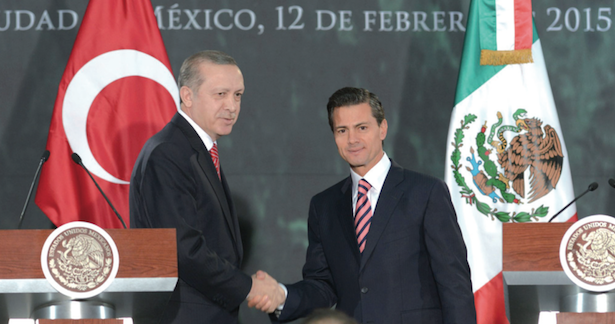
Mexico and Turkey plan to consolidate a free trade agreement this year and reach a bilateral exchange of $5 billion annually in the following years.
Turkish President Recep Tayyip Erdogan and Mexican President Enrique Peña Nieto offered a joint message Thursday saying their countries are greatly interested in strengthening bilateral ties to bring prosperity to their respective nations.
As part of the 2015 bilateral agenda, Turkey and Mexico will establish a binational high-level commission and Mexico will set up an exhibition about Maya culture in Ankara.
The bilateral commission will follow up on developmental and economic growth projects in order to ensure the population of the countries benefit, Peña Nieto said.
The presidents signed a Mexico-Turkey joint declaration. Turkish Foreign Minister Mevlut Çavusoglu and Mexican Foreign Relations Secretary José Antonio Meade Kuribreña acted as witnesses.
President Enrique Peña Nieto (R) shakes hands with Turkish President Recep Tayyip Erdogan in Mexico City Thursday. (PHOTO: NOTIMEX)
Turkey and Mexico are aiming to increase bilateral trade to $5 billion annually in the future. This is a viable goal, considering that 12 years ago bilateral trade barely reached $1.2 million, but it’s now $1.5 billion annually, Erdogan said.
Erdogan and Peña Nieto signed a memorandum of understanding on archaeology, anthropology and the protection and preservation of cultural heritage. Sharing the countries’ experiences in tourism is important, as Mexico and Turkey are popular world tourist destinations, Peña Nieto said.
Erdogan told Peña Nieto that Turkey and Mexico should eliminate tourist visa requirements in order to increase the flow of tourists between the two countries.
The nations should explore the possibility of opening a direct commercial flight route from Turkey to Mexico, via Havana, Cuba.
Turkey plans to discuss signing a free-trade agreement with the Pacific Alliance, as well as signing a free-trade agreement with Mexico, Erdogan said.
President Enrique Peña Nieto (R) shakes hands with Turkish President Recep Tayyip Erdogan in Mexico City Thursday. NOTIMEX PHOTO/SPECIAL
Peña Nieto receives Erdogan to discuss bilateral ties
thenews.mx
Mexico and Turkey plan to consolidate a free trade agreement this year and reach a bilateral exchange of $5 billion annually in the following years.
Turkish President Recep Tayyip Erdogan and Mexican President Enrique Peña Nieto offered a joint message Thursday saying their countries are greatly interested in strengthening bilateral ties to bring prosperity to their respective nations.
As part of the 2015 bilateral agenda, Turkey and Mexico will establish a binational high-level commission and Mexico will set up an exhibition about Maya culture in Ankara.
The bilateral commission will follow up on developmental and economic growth projects in order to ensure the population of the countries benefit, Peña Nieto said.
The presidents signed a Mexico-Turkey joint declaration. Turkish Foreign Minister Mevlut Çavusoglu and Mexican Foreign Relations Secretary José Antonio Meade Kuribreña acted as witnesses.
Turkey and Mexico are aiming to increase bilateral trade to $5 billion annually in the future. This is a viable goal, considering that 12 years ago bilateral trade barely reached $1.2 million, but it’s now $1.5 billion annually, Erdogan said.
Erdogan and Peña Nieto signed a memorandum of understanding on archaeology, anthropology and the protection and preservation of cultural heritage. Sharing the countries’ experiences in tourism is important, as Mexico and Turkey are popular world tourist destinations, Peña Nieto said.
Erdogan told Peña Nieto that Turkey and Mexico should eliminate tourist visa requirements in order to increase the flow of tourists between the two countries.
The nations should explore the possibility of opening a direct commercial flight route from Turkey to Mexico, via Havana, Cuba.
Turkey plans to discuss signing a free-trade agreement with the Pacific Alliance, as well as signing a free-trade agreement with Mexico, Erdogan said.
Mexican avocado producers want consumers to think beyond guacamole and are implementing new marketing initiatives to take the fruit from exotic to everyday use.
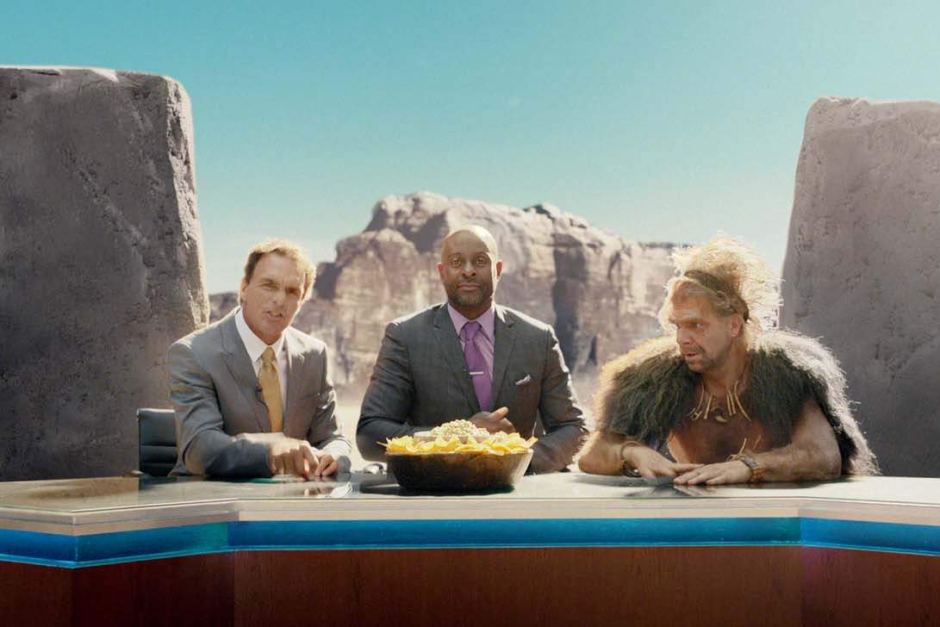
An advertisement for Mexican avocados during the 2015 Super Bowl imagines the “first ever draft pick”, in which countries around the world choose something to represent them. Australia picks the kangaroo, Botswana chooses a zebra and Mexico selects the avocado.
Airing at the end of the first quarter, the advertisement was for Avocados from Mexico, a US-based group which markets on behalf of the Mexican Hass Avocados Importers’ Association and the Association of Growers and Packers of Avocados From Mexico.
The ad imagines the “first ever draft pick”, in which countries around the world choose something to represent them.
Australia picks the kangaroo, Botswana chooses a zebra and Mexico selects the avocado.
With an estimated 111.5 million pairs of eyes glued to the game between the New England Patriots and the Seattle Seahawks, there’s no doubt plenty of Americans watched the ad.
CEO of Avocados Australia, John Tyas, said it was a bold business decision by their overseas peers.
“It’s a great ad and I’m sure it’ll get plenty of attention,” he said.
“The United States is a massive market, that’s been steadily increasing over the past couple of years, and it’s very important obviously for Mexican suppliers.”
Mr Tyas said his own organisation had attempted to pull off a similar marketing move in years past.
“A few years ago we did have a one-year agreement with the National Rugby League, but it wasn’t something that really took off,” he said.
“We were trying to emulate what they’ve been able to achieve in the US but things are quite different, they’ve got a very strong Hispanic community, so there’s a lot of history that we don’t have.
“So we’ve modified our strategy and broadened it to try and position avocados as a perfect food for entertaining across a whole range of occasions, not just footy finals.”
There is no fresh Mexican fruit available to Australian consumers, with local growers producing avocados year-round for the market.
Avocados from Mexico Superbowl TV Commercial (Youtube)
Mr Tyas said the traditional supply period, between April and September, was bolstered in the past 12 months by record volumes, which were sold at good grower prices.
“In recent years, the southern parts of the country have increased production, particularly the south-west of Western Australia,” he said.
“We’re seeing more demand for avocados generally, the growth is quite phenomenal.”
Foreign Relations Secretary José Antonio Meade Kuribreña held various meetings with representatives from the government, business and academic sectors of the United Kingdom Monday, while there on an official visit. Mexico and the United Kingdom committed to a goal of doubling bilateral commerce to $7 billion and increasing the number of British visitors in Mexico to 500,000.
Together with Tourism Secretary Claudia Ruiz Massieu, Meade met with the Lord Mayor of the City of London, Alan Yarrow, who acknowledged that Mexico is attractive for British businessmen and investors, and that the Pacific Alliance has adopted a leadership role at a global level.
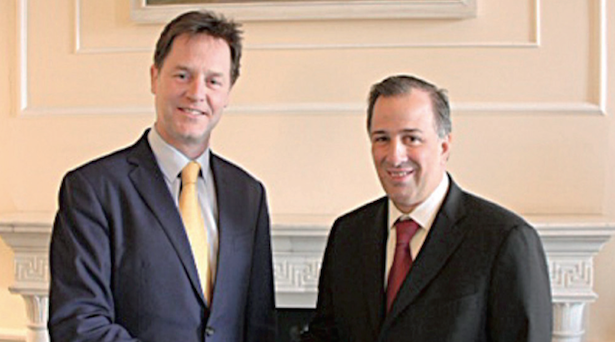
U.K. Liberal Democratic Party leader Nick Glegg, SRE’s José Antonio Meade. (PHOTO: NOTIMEX)
Meade was received by the Foreign and Commonwealth Office Minister for Latin America, Hugo Swire, with whom he discussed President Peña Nieto’s upcoming state visit on March 3 through 5.
Meade Kuribreña held a meeting, for the same purpose, with deputy prime minister and leader of the Liberal Democrat Party Nick Clegg. Both officials analyzed the results of a visit by a British business delegation to Mexico which was led by Clegg himself.
Meade also met with members of parliament, opinion leaders and academics with whom he discussed various topics on the national agenda which are of interest to the British public.
Foreign Relations Undersecretary Carlos de Icaza also met with the president of the Mexico-United Kingdom Friendship Group of the British Parliament, Labor legislator Jeremy Corbyn, with whom he conferred about topics that are part of the binational agenda.
The United States Department of Commerce announced that in 2014 total goods trade between the United States and México was $534 billion, up 5 percent from the $507 billion recorded in 2013.
During last year México exported $294.157 billion in goods to the U.S., while it imported goods from the U.S. totaling $240.326 billion, leaving México with a $53.831 billion trade surplus.
México’s exports were up 4.8 percent over 2013, while imports from the U.S. were up 6.3 percent over 2013.
México was the third largest importer of goods to the United States, behind China in first place and Canada in second.
Director General Adrián Brun González of Kiosko told Mazatlán Mayor Carlos
Felton in a meeting yesterday that his firm plans to open 30 more stores in
Mazatlán this year.
There are presently nine Kiosko stores in Mazatlán which have been very well
received, said the director general, and for that reason they plan to
expand.
Kiosko stores have a presence in the States of Colima, Jalisco and Nayarit.
The company plans to open 100 stores within the next three years, including the
30 in Mazatlán.
Imports of Japanese motorcycles rose 67% in the first 10 months of the year, but those imports remain well below what they used to be in the early 1990s, now that China has become the principal supplier.
In 1992 Japanese motorcycle imports hit a record 54,822 units; between January and October they totaled just 2,280. However, that was a big jump over the previous year, when 1,363 bikes were imported.
This year’s jump has been attributed to aggressive promotions by Yamaha and Suzuki. But China continues to dominate the market with a 72% share, says the Mexican Automotive Industry Association (AMIA), which also reported that motorcycle sales in the first half of the year rose 7.7% to 89,490 units.
Japan’s market share is just 2.5%, India has 17% and the United States 4.5%.
The figures apply only to AMIA members, which include BMW, Carabela, Harley-Davidson, Honda, Yamaha, Suzuki and Polaris. The Mexican manufacturer Italika, which has an estimated 75% of the market, is not a member.
The most popular bikes in Mexico are the small ones — 50 to 250 cubic centimeters — with 80% of the market. Sales of those motorcycles were up 40% in the first half of the year.
Along with aggressive marketing, Yamaha is also opening more outlets. Earlier this year the company said it would open 50 new agencies in 2014.
RABAT – Mexico opened a trade office on Thursday in Casablanca that is its first in Africa, saying it will serve as a bridge for trade and investment opportunities on that continent.
The director-general of trade and investment promotion agency ProMexico, Francisco Gonzalez; and Mexico’s deputy foreign secretary, Carlos de Icaza, were on hand for the ceremony, Mexican diplomatic officials told Efe.
Morocco was represented by its deputy foreign secretary, Mbarka Bouaida; and the secretary-general of the Foreign Trade Ministry, Mohammed Benayad.
Mexico will share the new office, located in Kenzi Tower, with Peru, Chile and Colombia.
Morocco was chosen because of its political stability, its sustained development and its strategic location as a bridge to Europe, Mexico’s ambassador to that North African country, Andres Ordoñez, said.
Mexico also is looking to expand its diplomatic ties with Africa and the Arab world with its plans to open embassies in Angola, Ivory Coast, Ghana, Jordan and Kuwait in the near future.
In addition to promoting expanded trade, the Casablanca office also could help Mexican companies – particularly in construction and agroindustry – establish operations in Morocco, a low-cost gateway to Europe, Ordoñez said.
In that regard, a Mexican trade delegation representing those two sectors is currently visiting Morocco and will meet with business leaders and officials in the foreign trade and investment area.
The delegation will include representatives of four leading Mexican companies: Cemex and Tamsa (construction) and Bimbo and Gruma (food-processing), who will get a first-hand look at the opportunities Morocco offers.
The company is considering stores in other Sinaloan municipalities such as Los Mochis and Culiacán.
Woolworth department store opened its doors yesterday in Mazatlán.
Although not widely publicized as a component of the shopping mall, the store is located in the newly inaugurated Plaza Sendero on Av. Libramiento, corner of Cristobal Colón in colonia El Venadillo.
This is the first of two Woolworth stores planned for Mazatlán, said assistant director of merchandizing Victor Velero Fenton. A second in El Centro is expected to open in approximately six months.
Velero Fenton characterized the store as targeting middle and lower middle class buyers by providing low prices and quality products.
The store is located in the newly inaugurated Plaza Sendero in colonia El Venadillo.
Approximately 35 million pesos were invested in the Sendero Plaza store, providing 62 jobs for local Mazatlecans.
The company is considering stores in other Sinaloan municipalities such as Los Mochis and Culiacán which, said Velero Fenton, they consider “fertile territory” for investment.
According to Banamex, on Wednesday the U.S. dollar sold at its bank at 14.05 pesos and purchased for 13.45 pesos per dollar.
The Bank of Mexico (Banxico) said its interbank rate for the dollar is was 13.74 pesos, an increase of 0.71 percent compared to the closing price on Tuesday.



 Yamaha agency in Mexico City.

