Showing posts with label laws. Show all posts

Friday, April 24, 2015

Canada Relaxes Visa Requirements for Mexicans

by Maureen Dietrich
23 Apr 15
mazmessenger.com


Last Tuesday Canada announced new relaxed visa requirements which will allow Mexicans who already have non-immigrant visas for Canada or the United States to enter Canada without the necessity of obtaining further documentation.

The new requirements will go into effect in 2016.

The Canadian government also plans to initiate a website in Mexico for its Electronic Travel Authorization program where travellers can apply for tourist visas on line. The cost of a tourist visa to Canada from Mexico is $100Cdn, or approximately 1,250 pesos.

(from Noroeste)

Tuesday, March 31, 2015

Mexico applies new security measures for commercial flights

 news.yahoo.com

MEXICO CITY (AP) — Mexican officials have announced new measures that would prevent a pilot from being left alone in the cockpit in the wake of a German airliner's crash in France.

Civil Aviation Director Gilberto Lopez Meyer said Monday that going forward there must be two trained personnel in the cockpit at any time. If a pilot needs to leave the cockpit, another crew member must enter the cockpit to help open the door when the pilot returns.

The co-pilot on a Germanwings flight from Barcelona, Spain to Dusseldorf, Germany, was alone in the cockpit on March 24 when the plane slammed into the French Alps, killing 150 people.

Investigators have said it appears he did so intentionally, while the plane's captain was locked out of the cockpit.

Monday, March 30, 2015

Charges for Music a “Misunderstanding” says Municipality

by Maureen Dietrich
28 Mar 15
mazmessenger.com

Following the petition of independent musicians playing in an established locale to drop a recent requirement that they pay 500 pesos annually for a permit, Official Mayor Salvador Reynosa Garzón said yesterday it is official and those musicians do not have to pay.

He stated there is also a “confusion” surrounding the payment by businesses offering live music. Whereas originally it was stated to be 16,000 pesos annually, it is actually a maximum of 100 minimum salaries, or 6,760 pesos.

The rumoured amount of 16,000 pesos could have been confused with the amount payable for renewing liquor licenses which are currently due, he said.

The only musicians paying 500 pesos annually are those who work on public streets, he pointed out.

(from Noroeste)

Saturday, March 7, 2015

What is “Fideicomiso” and how does affect foreigners?

theyucatantimes.com
by Thomas Lloyd
Top Mexico Real Estate


Millions of tourists from around the world cross the Mexican borders to enjoy long and well-deserved holidays in Mexico’s beautiful beaches. From Puerto Vallarta, to Acapulco, to the famous Riviera Maya, foreigners have been attracted to the area and have started to purchase vacation or retirement homes here. While some decide to go for a lake-side home in central Mexico, or for a skyscraper condo in Mexico City, others decide that what they want and need is to be able to walk or drive no more than 10 minutes to the beach and relax. It is these foreigners that cannot physically own a title to their property except through a bank trust.

When Mexico found itself through rough times back in 1917, the government decided to make it harder for other countries to take advantage of their lands by delimiting a “Restricted Zone”. This zone meant that nobody other than Mexican nationals were allowed to invest in lands located within 100km of any Mexican border, or 50km from any Mexican coastline. However, as time passed, and in order to allow foreign investment in these areas, the government then decided to start issuing something called a “fideicomiso”, which is basically a bank trust.

These trusts are similar to one you may hold in the United States, except that the designated trustee must be an authorized Mexican financial institution such as Citibank, Scotiabank, Bancomer, amongst others. Exactly like in the US, this trust gives the buyer full ownership of the property they are purchasing, but instead of being the “owner”, they are stated as the first beneficiary. This allows the person to benefit from improving, remodeling, fixing, renting, or selling the property without restriction.

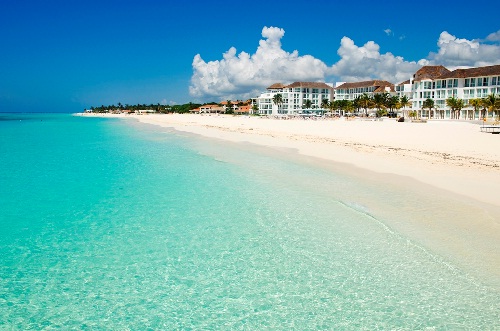
playa1

The first step to becoming a homeowner in the restricted zone is to find a bank or financial institution to hold the trust. Once you have found it, it is essential to sign a Trust Agreement where both parts agree how the trust will be held and what benefits you will enjoy as the first beneficiary. There will be an initial fee to pay for drawing up the agreement, which is usually around $700 USD, but it will depend on the property and institution. Annual fees must be paid to the institution holding the trust; these fees are determined by the value of the property.

It is essential to remember that although the bank legally acts as the trustee and holds the title, your property is not an asset of the bank. The beneficiary has every legal right to occupy, rent, modify or inherit the property as they wish. The trusts are set up for 50-year periods, which are renewable, allowing the purchaser – or their second beneficiaries – to continue enjoying the benefits from their property.

There are three important parts to the bank trust:
  1. The trust settler: this is a physical or legal Mexican national who is the current owner or seller of the property to be placed in the trust.
  2. The trustee: is the government approved financial institution, which will hold the trust for the designated time.
  3. The beneficiaries: this is the legal or physical foreigner acting as first beneficiary to the trust with the rights for use and benefits of the property.

In the Trust Agreement, it is necessary to state whether there will be one or more beneficiaries to the trust. In case of there being more than one, it is important to state the percentages of ownership and the benefits each one will enjoy. Each first beneficiary must have a second beneficiary who, in the event of death, would inherit (at no cost, or tax) the right of use and benefits of the property.

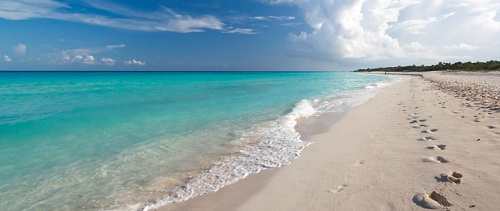
playa2

While many foreigners decide to reside in Mexico with an FM2 visa, which allows them to work and live in Mexico for certain periods of time, it is important to highlight that these visas do not grant you the right of ownership. The only way to become a titleholder without a bank trust – in the restricted zone – is through a Mexican corporation or by becoming a Mexican citizen.

Friday, March 6, 2015

Mexico's Quiet Marriage Equality Revolution

banderasnews.com

go to original
March 6, 2015

"Outside of Mexico, and even inside of Mexico, these advances are not widely known... but it is irreversible," the lawyer who started the wave of cases now sweeping the country told BuzzFeed News.


Courts in more than two-thirds of Mexico's 31 states have granted same-sex couples the right to marry over the past two years in a series of rulings that will likely make marriage equality a reality nationwide in the near future.
The wave of rulings throughout Mexico hasn't caused the uproar that has followed rulings in the United States over the past year striking down state laws barring same-sex couples from marrying. Couples have not rushed to marry, nor have conservatives organized major protests. This is in part because the technicalities of Mexican law have meant these decisions have been much more narrow in their immediate impact.

Each decision applies only to the individuals who have brought the cases, and other same-sex couples will still have to sue in order to marry. It takes multiple cases meeting certain technical requirements for the courts to nullify a state law in Mexico — a hurdle that has not yet been met.

But with new rulings being announced almost every week — judges in seven new states ruled in favor of marriage equality in the first three months of 2015 alone — it seems almost inevitable that this day is coming, say legal experts who have closely followed the litigation. "It's just a matter of time," said Geraldina Gonzalez de la Vega, a lawyer who worked on the first of these suits filed in 2011 and is now a clerk to a Supreme Court minister. "This has spread all over the country."

The first place in Mexico to allow same-sex couples to marry was Mexico City — a federal district that functions like a state, sort of like Washington D.C in the U.S. A marriage equality law was adopted by the city's legislature at the very end of 2009. When opponents took the law to Mexico's Supreme Court, the judges ruled that it was constitutional for Mexico City to recognize same-sex couples and went one step further: They also held that the city's marriages were valid in every state of the country.

But the Supreme Court left state marriage codes restricting marriage to heterosexual couples in place. The first case to argue that state marriage laws restricting marriage to a man and a woman were also unconstitutional seemed like a long shot. Unlike in the United States, where legal activists spent years spelling out the grounds for marriage equality and some state challenges attracted A-list attorneys, the idea to challenge a state marriage code came from a law student in the largely rural state of Oaxaca.

Alex Alí Méndez Díaz has now been involved in lawsuits in 19 states even though he is still finishing advanced studies in Mexico City and has an unrelated full-time job.

"Outside of Mexico, and even inside of Mexico, these advances are not widely known," Méndez said. "It is very slow, it is very invisible — but it is irreversible."

Monday, February 23, 2015

Expat Tax USA, US Federal Tax Liability

theyucatantimes.com

When moving overseas, one of the biggest questions many have concerns Expat Tax. Unfortunately, America is one of a handful of countries that vigorously pursues taxes worldwide – so don’t expect to avoid a U.S. tax debt by moving overseas. As a matter of fact, you’re not even allowed to give up your U.S. citizenship to eliminate a tax obligation.

Be aware that America has tax treaties with over 42 countries where the IRS and the foreign tax agencies exchange tax data on their residents. Many Americans think because they’re earning money in another country – and paying that country’s taxes – they have no liability when it comes to their home country and that they are not required to pay expat tax USA. That’s totally not the case. You still should file a return with the U.S. every year, whether you have income or not. You are not legally required to do so if you don’t owe U.S. taxes, but it’s an important preventative measure as there is a Statute of Limitations on tax disputes. If there is a dispute over back taxes, you start running out the clock on the Statute of Limitations if you file. If you don’t, the IRS can conduct a personal audit at any time in the future and you’ll be liable if they decide against you.

The IRS provides a tax guide for citizens living abroad, this can be found here. There are also some basic facts you need to know about taxation in 2012.


Expat Tax USA: Exclusions

Earnings thresholds

The latest threshold for tax-free earnings for US citizens is $95,100 of foreign earned income for the 2011/2012 tax year. The key words here are earned income. Rental income, dividends, interest, capital gains etc. are not classified as earned income and will be subject to taxation. This exclusion is only applicable if you file your tax return.

Housing limits

In addition to earnings exclusions, some expatriates may be eligible for tax breaks based upon their housing costs. It is possible for US citizens to exclude a portion of the money they spend on rental or property costs. The foreign housing exclusion allows expats to offset some of their living costs against their tax payment. In order to be eligible for this you need to demonstrate that you are a bone fide resident in your host country. This means proving that you were resident in the same foreign country the entire year and that you were physically absent from the US for 330 days of any 365-day period.

The foreign housing exclusion is calculated by deducting the “base amount” from your qualified foreign housing expenses. The base amount is 16% of the maximum foreign earned income exclusion amount, which is $15,216 for 2011/2012. There is also a limitation on the maximum amount of qualified housing expenses. This limit for most cities is 30% of the foreign earned income exclusion ($28,530 for 2011/2012). Please note that there are numerous exceptions (cities with higher limits). These exceptions can found in IRS Notice 2011-8.


Claiming Exclusions

You need to claim these exclusions on your Form 1040 for that year – they are not automatic – and the exclusions only apply to earned income, not rental income, interest or dividends or any income that’s not a result of your work efforts. You will need to fill out and attach IRS Form 2555 (which you can access here) to your 1040 to take advantage of these exclusions – the instructions at http://www.irs.gov/instructions/i2555/index.html are very helpful in this regard. The form will also help you to determine what you do and do not qualify for in terms of being eligible for the exclusions. Year-to-year, Form 2555 will also provide what the latest caps on what those exclusions are.

Calculating your Tax Payments

Any income that is over and above the exclusion amount, after housing allowances have been applied, will be taxed. The tax rates and breaks for 2011/2012 are as follows:
Tax RateMarried Couple Filing JointlySingle Filer
10%Not exceeding $17,400Not exceeding $8,700
15%$17,400 – $70,700$8,700 – $35,350
25%$70,700 – $142,700$35,350 – $85650
28%$142,700 – $217,450$85,650 – $178,650
33%$217,450 – $388,350$178,650 – $388,350
35%Over $388,350Over $388,350

IRS

Self-Employment Tax

Another important aspect to be aware of when it comes to Federal taxes is the U.S Self-Employment Tax. If you’re an employee of a foreign company (which could, in fact, be your own foreign corporation) and have payroll taxes from that country taken out of your pay, you don’t have to also pay social security taxes to the U.S. If you are self-employed, however, acting as an independent contractor, then you must file a Schedule C with your U.S. Tax return and pay the appropriate U.S. payroll taxes on your net earnings. The self-employment tax rate is 15.3% and the foreign income exclusion mentioned before does not reduce this liability.

If you do have your own foreign corporation, or have more than a 10% interest in one, you must file a special form, Form 5471, reporting that ownership stake. If that foreign corporation is making profits, you may owe taxes on its earnings. Find out more about the form at http://www.irs.gov/pub/irs-pdf/i5471.pdf. Basically foreign income from any source must be reported to the IRS, including trusts, capital gains, royalties, etc.

If you are still living abroad as of April 15th of any year, the IRS grants you an automatic extension until June 15 to file your return for the previous calendar year. You can, as you could in America, file more extensions to push your filing date forward all the way to October 15th – just know that, just like if you were still living in America, you are still liable to interest and penalties if you haven’t paid all your estimated taxes by the original April 15th deadline. These extensions are completely necessary if the country you’re living in has a different financial year. New Zealand, for example, closes out its financial year on April 30th instead of December 31st, which means you won’t have your final tax information until after the initial U.S. filing deadline of April 15th!

Saturday, February 21, 2015

Sanciona Comuna renta ilegal de sillas

Sheila Arias
noroeste.com
21-02-2015
El domingo de Carnaval se aseguraron mil 407 sillas.
Fotografía: Noroeste.
 
MAZATLÁN._ Las multas y sanciones por las sillas confiscadas por Oficialía Mayor, que pretendían rentar particulares para observar el desfile de Carnaval, le dejarían a la Comuna un ingreso cercano a los 100 mil pesos, pues la penalidad es de un salario mínimo por cada silla, prácticamente lo que cuesta una nueva.

El Oficial Mayor, Salvador Reynosa Garzón, aseguró que en total aplicaron 18 multas y una sanción masiva a una empresa cervecera, ésta agrupa el cobro por 11 carpas que no fueron retiradas del malecón dos días después del último desfile.

Esto indica que los ciudadanos que quisieron rentar sillas de manera ilegal tendrán que pagar 66.45 pesos para liberar cada silla, lo que equivale al salario mínimo en Sinaloa, que es lo que cuesta una silla nueva en algunos comercios.

En los operativos la Comuna confiscó mil 407 sillas, lo que se traduciría en una recaudación por el orden de los 93 mil 495 pesos, a lo que se suma la sanción económica por las 11 carpas no retiradas.

"Se están entregando las sillas conforme van pagando y se estableció la sanción de un salario mínimo por cada silla, aquellos que tengan retenidas 10 sillas son 10 salarios, los que tengan retenidas 100 sillas son 100 salarios. Y así", sostuvo.

Reynosa Garzón aseguró que en los operativos detuvieron a dos personas, y ya se pagaron las primeras multas, pero no hay tregua, los que intentaron rentar no tienen beneficios.

"Algunas personas fueron (a la oficina), platicamos y se les indicaron los motivos; preguntan que si hay descuento, pero por parte nuestra no hay descuento, es un recursos establecido. Un efecto que pasó es que quien está más preocupado por las sillas es el propietario, a veces no es la persona que las tenía en el Malecón, han ido empresarios o gente que se dedica a renta de mobiliario, y han llevado los contratos demostrando la propiedad, pero en la media que paga se le devuelve su mobiliario a él como empresario", explicó.

-- Y los recursos de estas multas ¿a dónde van?, se le cuestionó al Oficial Mayor.

"Al Municipio, son recursos que entran al Municipio de acuerdo a la Ley de Ingresos, y son destinados a rubros que los presupuestos han establecido", sostuvo.

Thursday, February 19, 2015

Mexican Casinos Coming to Tourist Resorts

Miguel Ángel Osorio Chong, México’s Secretary of the Interior, told reporters that México is preparing to authorize the construction of casinos in popular tourist resorts, including Acapulco, Baja California and the Mayan Riviera. He said the idea is to keep new casinos from springing up in urban areas, where they are more likely to rely on a local clientele.
Osorio Chong said the number of new casinos that will be permitted in resorts has yet to be determined. According to government records there are currently 297 gambling venues in México and, using a formula based on the number of permits issued by previous federal governments, the new project could result in as many as 775 casinos being developed in resorts popular with affluent tourists.
The head of the Mexican Association of Professional Real Estate Agents said certain unnamed “Las Vegas-based firms” had already expressed interest in setting up shop at resort properties in Cancun.
México’s legislature is currently in the process of passing its new Federal Betting and Raffles Law. The bill was approved by the House of Representatives in December and is scheduled to be considered by the Senate later this month. Maria Marcela González Salas, the Director General of Gaming and Raffles, said there is still time to amend the bill to include the resort casino project.
The new legislation is an attempt by the federal government to exert control over the country’s casino industry. The proposed legislation requires current casino licensees to reapply for licensing, which the head of the country’s gaming association has warned could spark a flurry of court challenges if many of these operators are denied new licenses.
In 2013, México reduced casino license terms from 40 to 25 years and revoked the ability of casino licensees to pass licenses on to other operators.
(from CalvinArye.com)

7 Weird and Crazy Facts About Mexico

huffingtonpost.com
By Meagan Drillinger

2015-02-19-CrazyFactsMexico_1.jpeg
Credit: Shutterstock (Edited)

There's a decent chance you've been to Mexico before, because it's like... right there. So you don't need anyone to list reasons that it's awesome. (Tacos! Beaches! Tequila!) But just in case you were actually curious about what's going on beneath that spicy, sunny, oh-my-god-take-me-there-now surface, here's a smattering of strange and true facts about America's southern neighbor.

2015-02-19-CrazyFactsMexico_2.jpeg
Credit: Wikimedia Commons

1. The Caesar salad was invented here.

Julius Caesar did not invent the Caesar salad. And it wasn't Caesar Augustus, either, for that matter. No, it was the brainchild of Caesar Cardini, an Italian-American restaurateur and chef who dreamt up the dish at his Tijuana restaurant. Or so legend has it. The origin has been disputed, as Livio Santini, who worked in Caesar's restaurant, claimed to have brought the salad to the world from his mother's recipe. All that's for sure: That's a damn good salad.

2. There's a 3-foot tamale that weighs 150 pounds.

Sure, you've probably had tamales. And if you live in Chicago, you've probably even seen the Tamale Guy. But you haven't dominated el zacahuil. This tamale, typical of the state of San Luis Potosi, is a 3-foot monstrosity of chile, spices, and hunks of pork or turkey, typically served on grilled banana leaves with pickled jalapeños. If you have tackled one of these, well, you probably won't make it to the end of this list, either from a food coma or heart attack. But good work.

2015-02-19-CrazyFactsMexico_3.jpeg
Credit: Flickr/Francisco Soto

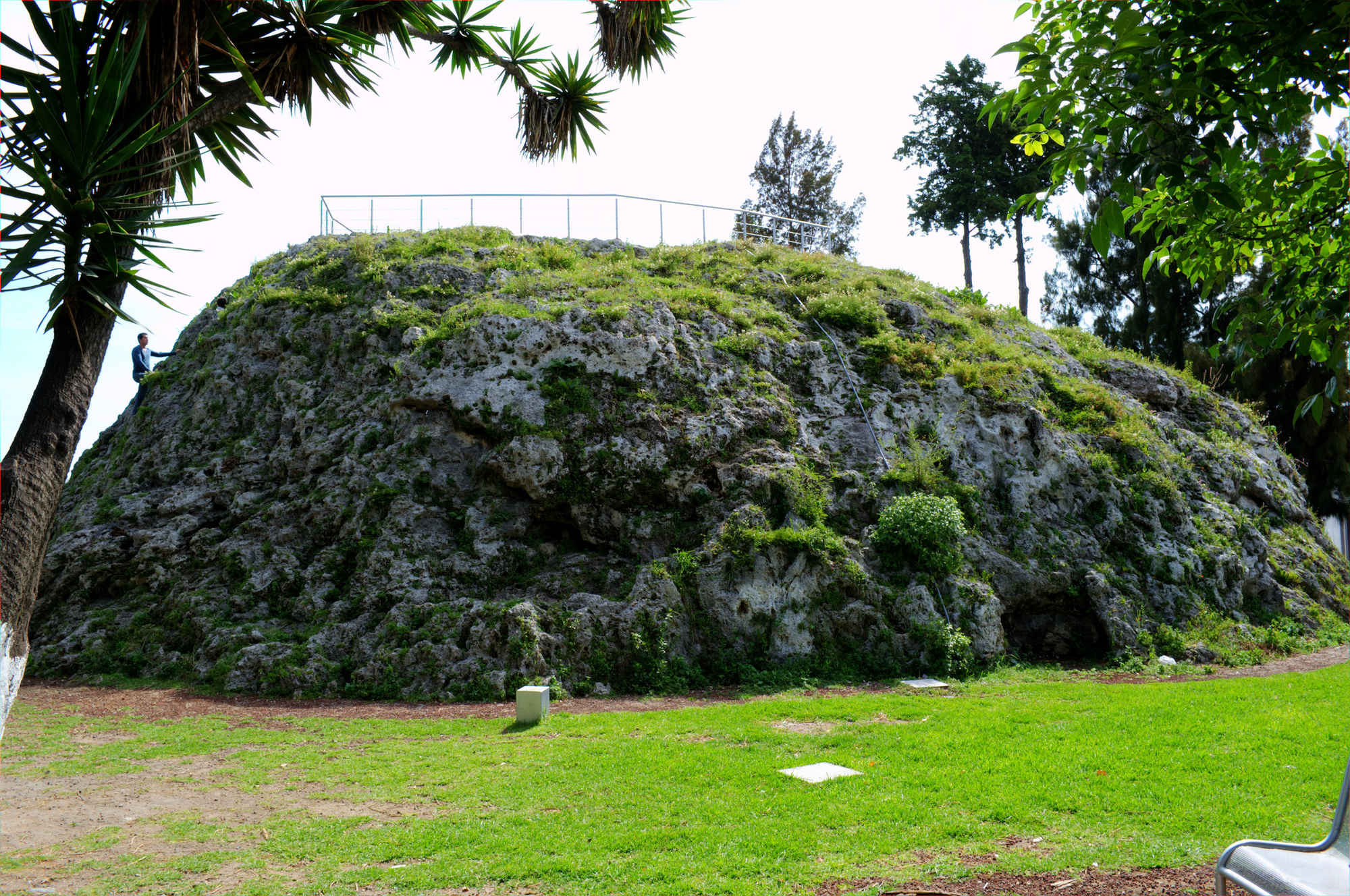
3. Mexico has the world's smallest volcano.

Hawaii has Mauna Loa, the world's largest volcano. Well, Hawaii can keep it, because in Mexico, it's about the motion in the magma, not size of the stratovolcano. The Cuexcomate volcano outside the city of Puebla is just 43 feet tall. To put it into perspective: That's not even half as tall as the Statue of Liberty, and it's equal to about 6.45 LeBron Jameses stacked on top of one another. But why would you have six LeBrons, let alone 0.45 of him? Let's move on....

4. Perform the anthem correctly, or else....

The Mexican national anthem (himno nacional mexicano) is nothing to joke about. There are actually nine or 10 articles in a chapter of the law that go into detail about how to properly honor and perform the national anthem. If you play it incorrectly, you will be fined, and in some cases, will need to issue an apology to the country. I probably shouldn't even make a joke about it here, in case someone in Mexico is reading.

2015-02-19-CrazyFactsMexico_4.jpeg
Credit: Drew Swantak

5. Hot chocolate is literally the drink of the gods.

When Hernán Cortés landed on the shores of Mexico, the Aztecs thought he was a white god and welcomed him with what they thought was a heavenly beverage: hot chocolate. How did Cortes repay them? Rape, pillaging, and burning their homes to the ground. It wasn't on account of the hot chocolate being bad. He just was not a pleasant guy.

6. Mayans fought with hornets.

Swords and spears are all fine and good but, if you ask the Mayans, a tad simple. A more effective method of scaring the sh*t out of enemies: harnessing a nest of hornets and throwing them into an oncoming attack. It's like Wu Tang Clan's dream fights all rolled into one. OK, they were killa bees, but you get the point.

2015-02-19-CrazyFactsMexico_5.jpeg
Credit: ITU Pictures

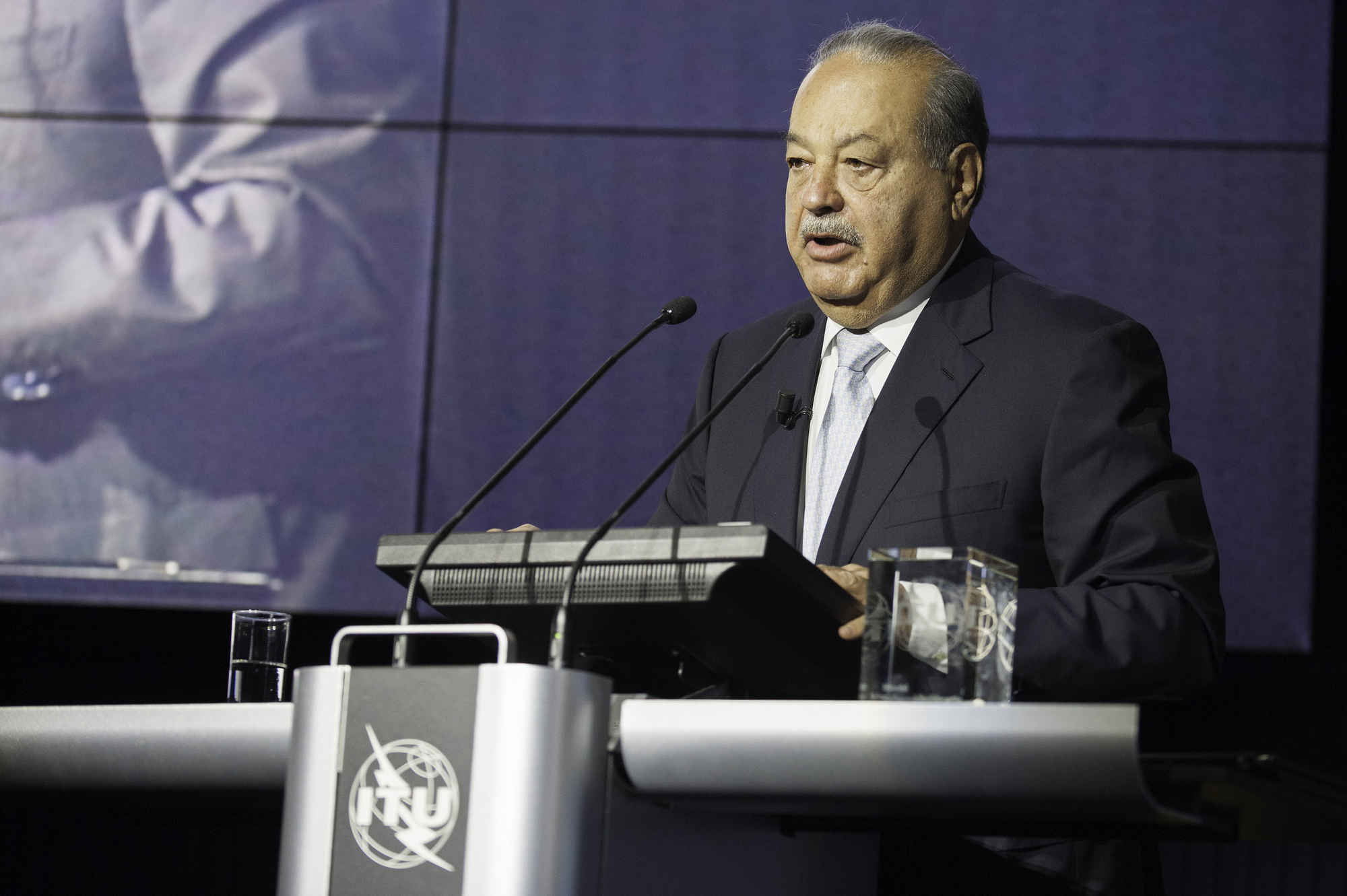
7. The world's (sometimes) richest man lives there.

OK, to be fair, Bill Gates is currently the richest man in the world. But he keeps duking it out for that no. 1 slot with Carlos Slim, the Mexican business magnate, who's currently valued at $72 billion. To put it into perspective, he's worth 7 percent of Mexico's entire GDP. For Bill Gates to be worth that much in the U.S., he'd need to have more than $900 billion and own Alcoa, Phillip Morris, Sears, Best Buy, TGI Friday's, Dunkin' Donuts, Marriott, Citibank, and JetBlue.

Monday, February 16, 2015

Segob announces casino projects

Interior Secretariat spokesperson Marcela González Salas announced a project to create Las Vegas-style casinos in Mexico. CUARTOSCURO

With permits, estimated 775 building projects can begin

thenews.mx
BY PEDRO MONTES DE OCA
The News

MEXICO CITY – In order to halt the growth of casinos in urban areas, the Interior Secretariat (Segob) confirmed that a project to create Las Vegas-style casinos outside of city centers is in the works Tuesday.

They would presumably be built in the Riviera Maya, Acapulco or Baja California, said Eduardo Sánchez, a spokesman for the Mexican Government and Marcela González Salas, the general director for the Gaming Commission of the Interior Secretariat.

In a joint press conference, they stressed that this project aims to keep casinos from operating in urban areas, where there are currently 297.
 
Once permits from local and federal officials have been obtained, an estimated 775 casinos could be built in these resort areas. The numbers are based on the amount of permits that have been issued in past administrations.

At the beginning of the current administration, there were 412 casinos in operation. Some of the permits for these casinos were revoked due to irregularities or because some permits were issued to run various casinos under the same permit, which is no longer allowed, González said.
 
State and federal authorities have worked together to reduce the enormous profits, estimated to be between 500 and 600 million pesos ($33.4 to $40.1 million), of which no taxes were paid.

Segob, the Attorney General’s Office and numerous state governments are also working together to eradicate slot machines.

The federal government has removed 13,000 machines voluntarily so far.

“Gambling addictions, like every other addiction, are associated with other high risk behavior that can impact a person’s physical and emotional well-being,” Sánchez said.

Tuesday, February 10, 2015

The Process of Purchasing Property in Mexico

theyucatantimes.com

The process of purchasing property in Mexico for a non-Mexican is similar to the process in the United States or Canada, except that it requires a few extra steps. These include the requirement of registering and obtaining permission from Mexico’s Secretary of Foreign Relations, and having to establish a Fideicomiso, or bank trust, when buying property in the restricted zone.

Real estate transactions and property rights are outlined through local, state, and federal laws in Mexico; however, the protection for the parties involved are not as detailed or regulated as the property acquisition process established in the US and Canada. While many people may see this as a deterrent, this allows for opportunities as long as you have a good and experienced real estate team representing and protecting your interests.

The most important steps when purchasing a property in Mexico are:

1. Selecting an experienced, certified and licensed real estate agent.
2. Identifying the area you are interested in purchasing real estate in.
3. Researching and studying the Mexican real estate laws and procedures – this is where having a knowledgeable real estate agent helps.
4. Researching properties and having your real estate agent compile a list of properties that meet your criteria.
5. Physically visiting and touring the area and properties with your real estate agent so you can evaluate the pros and cons of each property.
6. Choosing your new Mexican dream home and making an offer.
7. Preparing the promissory contract.
8. Deciding which entity will hold the bank trust and property on your behalf (if you are purchasing in the restricted zone).
9. Preparing the purchase sales contract and having it formalized with the notary public.
10. Inspecting the legal documents and obtaining permits.
11. Formalizing the conveyance and filing with the public registry.

Those are the main steps to purchasing a property in Mexico. Once you have found the perfect property, what do you do? The first thing is to place an offer to purchase.

Offer to Purchases:

The offer to purchase is the first document you need to begin the process of transferring a property from the seller to the buyer. It can also be prepared as a reservation agreement or an earnest money deposit, listing the main points of the future transaction.

The offer to purchase can be as complex or as simple as the buyer deems necessary. This is the preliminary agreement containing the basic information to execute the transaction such as names and personal information for both parties, the description and address of the property, the price and payment terms, the terms and conditions of the offer, and the closing date. Any money released, such as earnest money, should be refundable during this phase.

The offer to purchase is a legal document. Once it has been signed and accepted by both the buyer and the seller, it creates a binding commitment for the buyer to purchase, and the seller to sell. It can be signed before a notary or before two witnesses. Even though it does not need to be notarized, it does have a legal binding effect.

Restricted Zone:

Based on Article 27 of the Mexican Constitution, a non-Mexican citizen cannot hold a real estate title within the restricted zone. This zone is 50 kilometers from the coast and 100 from the United States or Central American boarders. Because the Mexican Constitution forbids non-Mexicans from purchasing within this restricted zone, an innovative and secure method of holding the title was created; this allows foreign ownership through a property trust called a Fideicomiso (or bank trust).

Friday, February 6, 2015

Acquiring the Mexican Nationality

theyucatantimes.com

In order to acquire the Mexican Nationality, two processes can be initiated:

One is for persons who were born from Mexican born parents, in Mexico or in a foreign land or from parents who acquired the Mexican nationality through the Naturalization process.

The second process is for foreigners who reside in Mexico and want to acquire the nationality using the Naturalization process.

This article will be on the process to acquire the Mexican nationality by Naturalization.
In 2007 the immigration department (IMSS) and the department of the Secretary of External Relations (SRE) decided to deny to foreigners the possibility of acquiring the nationality on the base that an FM-3 did not provide residential rights. At the time of the change the arbitrary decision was contested by the author as been a decision contrary to the letter of the law, in 2009 a new bylaw was enacted to make the arbitrary decision into law.

Thus now only persons with an FM-2 or Inmigrado status (immigrant) can apply to acquire the Mexican nationality by Naturalization process.

americanmexico

To be able to understand the process one has to refer to the Nationality law (Ley de Nacionalidad) and its new Bylaw. Article 19. of the law stipulates that the foreigner has to present a request indicating his or her will to acquire the Mexican nationality and formulate the renouncements stipulated in article 17. of the same law once the document called “Carta de Naturalizacion” (Naturalization Card) is emitted, then the article establishes the applicant must be able to speak Spanish, have knowledge of the Mexican history and be integrated into the Mexican society and finally the article stipulates that to apply the established requirements in the article correctly one must refer to the By-Law of the law.

Article 14, Chapter III. Of the bylaw stipulates clearly that a foreigner’s residence in the Mexican territory will be accredited with the immigration document indicating the status of “inmigrante o inmigrado” (one who has immigrated o immigrant) except for refugees. Article 15. of the said bylaw first paragraph repeats the conditions indicated In article 19. of the Law but in its second paragraph it indicates that one is considered as a refugee or has less than 18 years of age or more has had more than 60 birthdays the only requirement will be that he or she can speak Spanish.

Articles 16. to 20. of the Bylaw establishes what is the required documents one must present depending on the applicant’s motive and status indicated in article 20. of the Law.

americans

The question is where should I file my request? In the event that one applies at the local SRE office one must realize that said offices have only one duty, accept, remit and receive the application and because only once every 30 days the diplomatic pouch goes or returns to the local delegation the time one as to wait is much longer than if one invest in going to Mexico city main offices of the SRE to apply and receive the “Carta de Naturalización” along with a lawyer who will assist and supervise the process.

In conclusion, it is recommended that one who is residing in Mexico should acquire the Mexican nationality so that he can enjoy being part of the society and at the same time retain is first nationality. The advantages are numerous, be able to vote, easier processes in banking, fiscal and legal matters, work and having the right to acquire Real Rights on real estate property and not having to report to immigration each and every year.
Source: http://www.bajainsider.com/

Wednesday, February 4, 2015

Temporary Vehicle Import Permit for Mexico

mexpro.com

If you plan to drive a vehicle beyond the Mexico "Free Zone" you will need to purchase a Mexico Vehicle Import Permit. The Mexico Free Zone, also known as the the Liberated Zone, or Perimeter Zone or Free Trade Zone is a customs designation only for that area located along the Mexican international land borders and which run inward up to the point at which the Mexican Customs authorities have their first "interior" check point (this is usually about 20 to 26 kilometers in from the border towns - exceptions are on the peninsula of Baja California and places like Puerto Peñasco where it runs to the ocean front along the main highways.)
NOTE: YOU DO NOT NEED A VEHICLE IMPORT PERMIT FOR DRIVING IN ANY PART OF THE BAJA PENNINSULA OR THE SONORA FREE ZONE (In Sonora, you are only required to obtain a permit if driving further than kilometer 98 of Mexican Federal Highway No. 15.)
NOTE: YOU CAN OBTAIN A "SONORA ONLY" VEHICLE IMPORT PERMIT IF YOU ONLY PLAN TO TRAVEL IN THE MEXICAN STATE OF SONORA.
The temporary vehicle import permit can be obtained from Banjercito, the official Mexican issuing agency. It is valid for any type of vehicle, weighing less than three tons, for up to six months (180 days). The permit may be purchased online at the Banjercito website, at the border or at a Mexican consulate. One can purchase the permit up to six months prior to travel into Mexico.
Despite any advice, official or unofficial, to the contrary, vehicle permits cannot be obtained at checkpoints in the interior of Mexico.

Important Documents Needed to Apply for a Mexico Vehicle Import Permit

It is recommended that one carry three copies of each of these documents.
  1. Evidence of Citizenship, i.e. a Government Issued Passport
  2. If you are not a Mexican citizen, a Mexican immigration permit-such as a tourist, business or immigrant permit.
  3. The Vehicle Title and registration certificate. A bill of sale is not valid proof.
  4. A Valid Driver's License with photo.
  5. Certificate of canceled import permit for any prior temporary import permits.
  6. If the vehicle is financed, is a rental car, is leased, and/or a company car, a notarized letter of permission for importation of the vehicle into Mexico is required from the lien holder or lending institution.
  7. An International Credit Card (American Express, Mastercard, Visa) in the name fo the driver of the vehicle (importer).
  8. If the title of the vehicle is in the name of a spouse, child, or parents - a birth certificate must be presented or a marriage license.
These documents are needed when you travel to Mexico whether or not you purchase your vehicle import permit online or not.

Tourist Permit

If you are traveling to Mexico as a tourist, you must obtain an FMT tourist permit. The FMT allows you to visit or make multiple trips to Mexico for a maximum period of six months (180 days). The Mexican Immigration official issuing the FMT has sole discretion in determining your length of stay and may ask you the expected duration of your trip. As a tourist, you are not authorized to conduct any type of business activity in Mexico.

Business Permit

An FMN business permit is required in order for you to conduct any business activity, including attending business conferences, conducting meetings, or visiting maquiladoras. The FMN allows you to remain in Mexico or to make multiple trips for a period of up to 30 days. The FMN is required within the border zone (within 18 miles of the border) as well as for business travel to the interior of Mexico.

Obtaining a Vehicle Import Permit Via the Internet

Apply online on the Banjercito Website. After submitting the required information to the website, you will receive a pass code. After 24 hours and within 15 days of obtaining the pass code, you can visit any Banjercito location to obtain your permit document.
Purchasing a Vehicle Import Permit Online: You have the option to purchase your Mexican vehicle import permit online.
  • Mexico import permits may be purchased online for auto, RV and boat/watercraft.
  • The permit will be mailed to you.
  • The permit may be purchased up to 60 days before you depart to Mexico.
  • You need a minimum of 10 days between when you apply online and pay for your permit via credit card and your departure to Mexico date.
  • You must cancel your permit at a Banjercito location on the border upon your return to the US.
Applying for a Vehicle Import Permit Online: You have the option to apply for a Mexican vehicle import permit online.
  • Mexico import permits may be applied for online for auto, RV and boat/watercraft.
  • Speeds up the process of obtaining your permit at the Banjercito location at the border.
  • The permit may be applied for up to one-day before you depart to Mexico.
  • You will be issued a pre-registration code which you will need to take with you to the Bajercito location at the border.
  • You must cancel your permit at a Banjercito location on the border upon your return to the US.

Temporary Import Fee

The fee for importation of a vehicle is $44.00 USD plus IVA; this fee is the same whether the permit is obtained at the border, consulates or online.https://www.banjercito.com.mx/registroVehiculos/

Temporary Import Deposit

A guarantee deposit for the return of the vehicle to the US, regardless of the form of payment, we be applied to all vehicles. The amount of the guarantee will be determined by the year of the vehicle. The guarantee will be refunded upon cancellation of the permit at Banjercito offices, as long as it is prior to the expiration date of the permit. The refund will be made in the same form as the deposit was made.
  • 2007 - Newer $400 USD
  • 2001 - 2006 $300 USD
  • 2000 - Older $200 USD
If the vehicle is not returned to the US prior to the expiration date on the permit, or the permit is not canceled upon exiting Mexico, the guarantee deposit will be forfeited.
Before Banjercito issues a permit, they will verify the VIN # to make sure the vehicle does not have any restrictions to be driven in the US or Canada, in which case the permit will not be allowed.
It is important that we remind our customers to cancel the permit at the border prior to returning to the US, to ensure that they receive their guarantee deposit back.
As long as the customers have enough time (between 7-10 days), it is recommended that they process the temporary importation permit online. This will improve their experience and avoid the time spent at the border crossing.
Accepted credit cards for securing the deposit are MasterCard, Visa and American Express. Your card will be imprinted by a Mexican official but the deposit amount will not be charged to your card unless the vehicle is not returned to Banjercito upon the completion of your trip for permit cancellation.

Mexican Auto Insurance

Multiple Entries with your Vehicle Import Permit

Once you have a vehicle import permit you may drive your vehicle across the border multiple times during the valid length of your permit.

CANCELING THE PERMIT UPON EXITING MEXICO

You do not have to exit Mexico from the same port as you entered to cancel your permit. Your temporary vehicle import permit can be cancelled at any Banjercito location along the border. You MUST CANCEL YOUR VEHICLE IMPORT PERMIT UPON YOUR FINAL RE-ENTRY INTO THE US. If you do not, you may not be allowed to drive into Mexico again without the permit.

Other persons driving your vehicle in Mexico

If the documentation shows the vehicle is registered in the name of a spouse, the importation can be done as long as the marriage certificate (and a copy) is presented.
A vehicle temporarily imported by the owner may be driven in Mexico by a spouse or adult children, as long as they have the same immigration status. Other persons may drive the vehicle as long as the owner is in the vehicle.

Warning

Travelers should avoid individuals outside vehicle permit offices offering to obtain the permits without waiting in line, even if they appear to be government officials. There have been reports of fraudulent or counterfeit permits being issued adjacent to the vehicle import permit office in Nuevo Laredo and other border areas. If the proper permit is not obtained before entering Mexico and cannot be obtained at the Banjercito branch at the port of entry, do not proceed to the interior. Travelers without the proper permit may be incarcerated, fined and/or have their vehicle seized at immigration/customs checkpoints.

Monday, February 2, 2015

Time Zones in Mexico

By Suzanne Barbezat
Mexico Travel Expert
gomexico.com

Mexico's time zones - Photo courtesy CENAM
Mexico's Time Zones.  Photo courtesy CENAM

NOTE: On February 1, 2015,the state of Quintana Roo, including the tourist destinations of Cancun and the Riviera Maya are changing their clocks one hour ahead. This is due to the creation of a new time zone, the Southeastern Zone, which will coincide with Eastern time (except for some variation with the dates when Daylight Saving Time is observed). 
There are four time zones in Mexico:
  • The Northwest Zone (Zona Noroeste) is exclusively for the state of Baja California, and is equivalent to the Pacific Time Zone (UTC -8). The Northwest Zone is pictured on the map in light blue.

  • The Pacific Zone (Zona Pacífico) applies in the states of Baja California Sur, Chihuahua, Nayarit, Sinaloa, and Sonora, and is equivalent to the Mountain Time Zone (UTC -7). The Pacific Zone is pictured on the map in beige.

  • The Central Zone (Zona Centro) covers over three fourths of the country - covering all of central and eastern Mexico, including the capital, Mexico City, and stretching all the way to Cancun in the Yucatan Peninsula. The Central Zone is equivalent to the Central Time Zone in the U.S. and Canada (UTC -6). The Central Zone is pictured on the map in dark blue. 
  • The Southeastern Zone (Zona Sureste) The state of Quintana Roo, which is home to Cancun and the Riviera Maya is on Southeastern time  as of February 1, 2015. The state had previously been on Central time. 
Daylight Saving Time
Daylight Saving Time applies from the first Sunday in April to the last Sunday in October. The state of Sonora (pictured on the map in blue and beige stripes) and some remote villages do not observe DST. Areas along the northern border have adapted to the schedule of DST in the United States. 

Tuesday, January 20, 2015

US Highways Now Open to Mexico Long-Haul Trucking


January 16, 2015
After a three year safety evaluation of Mexican trucking companies, the US Department of Transportation has determined that Mexican long-haul operations are as safe as US and Canadian trucking companies.


Mexico City, Mexico — The US has begun accepting applications from Mexican trucking companies seeking authorization for long-haul, cross-border transportation under the North American Free Trade agreement.

The State Department says the policy change is "a significant milestone" in the implementation of NAFTA and will end retaliatory sanctions.

It comes after a three-year pilot program to evaluate the safety of Mexican truck companies that ended in October. Fifteen Mexican companies took part, crossing the border over 28,000 times and logging more than 1.5 million miles in the United States.

US Transportation Secretary Anthony Foxx said Thursday in a statement that the pilot showed Mexican long-haul companies are as safe as US and Canadian trucking operations.

American long-haul companies have been operating in Mexico under NAFTA since 2007.

Original Story

Thursday, January 15, 2015

As Mexico’s Sugary Drink Tax Turns 1 Year Old, the US might adopt Similar Measures

theyucatantimes.com
Mexicans are guzzling fewer sodas, juices and flavored waters since a nationwide sugary drink tax took effect in 2014. The policy aims to help curb rising rates of obesity and diabetes in Mexico, which recently overtook the U.S. as the world’s fattest country. Now public health proponents north of the border say they’re hoping Mexico’s positive start can sway U.S. voters to adopt similar taxes.
If it’s shown that Mexico’s soft drink tax is effective in reducing soda consumption, and that in turn has an effect on Mexico’s obesity rate, I think you’ve got a pretty good case,” said Michael Roberts, executive director of UCLA’s Resnick Program for Food Law and Policy.
In both nations, epidemics of weight gain and associated diseases can be tied partly to the soaring consumption of sugar-sweetened beverages, which has more than doubled in the U.S. and Mexico in recent decades. About half of all Americans drink soft drinks daily while Mexicans as a whole drink the equivalent of 3.6 million cans of Coca-Cola each day.
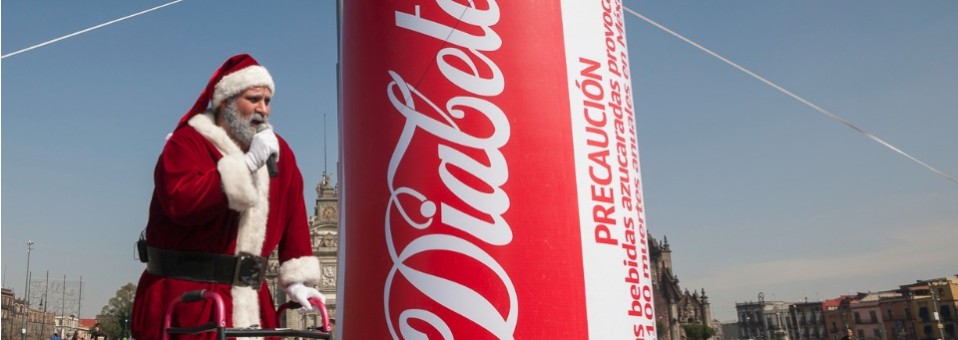
One in six Mexican adults suffer from diabetes
I usually have two soft drinks a week, and maybe a juice. But I have friends who drink a liter of Coke every day with their meal,” said Victor Yerves, 31, a journalist in Mexico City. On a recent evening in Tulum, a Caribbean beach town, customers at streetside taco stands explained they usually enjoy a soda with every lunch and dinner. Plain water, they said, is rarely the preferred option.
Proponents of taxes on sugary drinks, including public health researchers, say raising the price of sweetened beverages is an effective way to reduce consumption and, in turn, lower health risks. Mexican President Enrique Peña Nieto approved the action in October 2013 after years of interest from national health experts, who saw the tax as one antidote to Mexico’s alarming diabetes rates. As many as 10 million Mexicans have diabetes, or roughly one-sixth of the adult population, according to government data. Nearly a half-million people died from diabetes from 2006 to 2012, a rise of nearly 60 percent from the previous six-year period.
In Mexico’s case there’s no alternative but to have a tax. We have a crisis,” said Alejandro Calvillo, director of Consumer Power, the Mexican advocacy group that led the beverage tax campaign in Mexico. The measure, which took effect Jan. 1, 2014, adds 1 peso (about 7 cents) to the price of a liter of sugary refreshment.
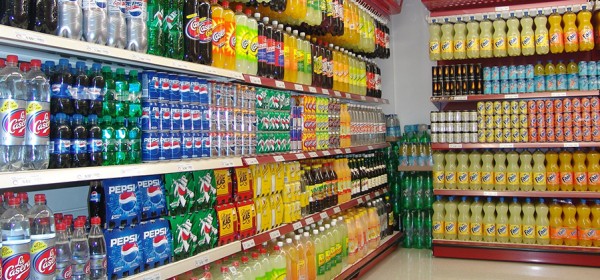
Soft drinks industry a huge business in Mexico
A year later, preliminary data suggest consumption rates are falling, though it’s too early to say precisely how much, said Barry Popkin, who teaches global nutrition at the University of North Carolina in Raleigh and is working with Mexico’s National Institute of Public Health to study the country’s soda tax.
The institute’s earliest results suggest in the first three months of 2014, purchases of sugary drinks dropped by 10 percent from the same period in 2013. “The results were pretty positive. In essence there was a reduction in sugary beverage intake, and there was some increase in healthier drinks, like water,” Popkin said. Researchers should have more conclusive 2014 results on both consumption levels and related health impacts within a few months, he added.
In the meantime, there’s the corporate data. Coca-Cola Femsa, Mexico’s biggest soft drink bottler, saw its drink sales drop by 6.4 percent in the first half of last year, compared to the same period in 2013, in part due to the drink tax and other economic factors. Another Mexican Coke bottler, Arca-Continental, said its drink sales slipped by 4.7 percent in Mexico for the same period. And more than half of Mexicans last year said they had lowered their sugary drink intake compared to 2013, according to an August survey.
The reductions aren’t only a function of higher beverage prices. Like taxes on cigarettes and alcohol, the measure itself signals to consumers highly sweetened refreshments are a vice, Calvillo said. “People are becoming more aware about the risks of sugary drinks,” he said. For example, parents are serving less sugary juice and soda to their young children. Schools are pushing plain water in the classrooms, and Mexicans overall are opting for lower-fat milk.
refrescos-sobrepeso
The measure, which took effect Jan. 1, 2014, adds 1 peso (about 7 cents) to the price of a liter of sugary refreshment.
Gaby Chavaro of Mexico City said she recently noticed a change in the dietary habits of her friends and family. “It’s not so much because of the prices, but because we’re more thoughtful about what we eat,” she said. “We’re more concerned about our health … and are trying as much as we can to stop eating processed foods.”
Mexico’s drink tax is inspiring similar efforts in Chile, Ecuador and Peru, where soft drinks are ubiquitous in the average household. But in the United States, the notion of taxing liquid sweets remains anathema to many residents, despite the country’s troubling obesity rates. Roughly two in three American adults are overweight or obese while more than 29 million people, or 9.3 percent of the country, are diabetic, U.S. government data show.
Diabetes and obesity are wreaking havoc on public health in this country. It’s a personal and economic disaster,” said Roberta Friedman, director of public policy for the Rudd Center for Food Policy and Obesity at the University of Connecticut. She said that sugary drink taxes are a “good public health measure” to confront the problem.
U.S. voters, however, have rejected more than 30 efforts by various cities and states to implement a soda tax, including most recently in San Francisco. Only one city has succeeded so far: Berkeley, California. The small liberal enclave adopted a 1-cent-per-ounce tax in November after an aggressive fight between beverage companies and consumer rights groups, the latter of which received some $650,000 in support from Bloomberg Philanthropies, an initiative of former New York City mayor and public health advocate Michael R. Bloomberg. (His philanthropic arm also gave Mexico a $10 million, three-year grant to tackle obesity and promote the drink tax effort.)
Popkin said that part of the reason tax proposals have failed in the U.S. is that Americans tend to view public health problems like weight gain as an individual challenge, something that people must overcome on their own. Latin American leaders, by contrast, have a more collectivist mindset — the obesity problem is society’s problem. Roberts pointed to America’s “cultural resistance to tax as a public policy tool” as another key difference among the countries.
The beverage industry contends that taxes haven’t gained ground because Americans know they’re a bad idea.
Chris Gindlesperger, a spokesman for the American Beverage Association, a national trade organization, said sugary drink taxes are “discriminatory and regressive” because they punish low-income families the most, since those consumers spend a greater percentage of their income on grocery bills than wealthier families. And indeed in Tulum, Mexico, where patrons gathered at taco stands, some complained that in paying more for soft drinks, people had less money for their daily budgets. “With these prices, there’s not enough money for other things,” one man complained.
Gindlesperger also disputed that taxing beverages could improve people’s health, pointing to the industry’s own initiative to offer low- or no-calorie products as a more effective alternative to drink taxes. Beverage companies in September set a goal to reduce each person’s drink calories by 20 percent by 2025, in part by providing smaller portion sizes and healthier bottled options.
Together we can get much further than by singling out an industry and trying to demonize them,” he said.
Yet even without drink taxes, American attitudes toward junk food and sugar-rich drinks already may be changing. Nearly two-thirds of Americans said they avoid soda in their diet while more than half said they avoid sugar, a July Gallup poll indicated.
Everyone knows someone who struggles with weight. The problem is not disappearing,” Roberts said. “That will continue to put pressure on our society to come up with a solution.”
 
  Maria Gallucci