Showing posts with label expat. Show all posts

Monday, February 23, 2015

Expat Tax USA, US Federal Tax Liability

theyucatantimes.com

When moving overseas, one of the biggest questions many have concerns Expat Tax. Unfortunately, America is one of a handful of countries that vigorously pursues taxes worldwide – so don’t expect to avoid a U.S. tax debt by moving overseas. As a matter of fact, you’re not even allowed to give up your U.S. citizenship to eliminate a tax obligation.

Be aware that America has tax treaties with over 42 countries where the IRS and the foreign tax agencies exchange tax data on their residents. Many Americans think because they’re earning money in another country – and paying that country’s taxes – they have no liability when it comes to their home country and that they are not required to pay expat tax USA. That’s totally not the case. You still should file a return with the U.S. every year, whether you have income or not. You are not legally required to do so if you don’t owe U.S. taxes, but it’s an important preventative measure as there is a Statute of Limitations on tax disputes. If there is a dispute over back taxes, you start running out the clock on the Statute of Limitations if you file. If you don’t, the IRS can conduct a personal audit at any time in the future and you’ll be liable if they decide against you.

The IRS provides a tax guide for citizens living abroad, this can be found here. There are also some basic facts you need to know about taxation in 2012.


Expat Tax USA: Exclusions

Earnings thresholds

The latest threshold for tax-free earnings for US citizens is $95,100 of foreign earned income for the 2011/2012 tax year. The key words here are earned income. Rental income, dividends, interest, capital gains etc. are not classified as earned income and will be subject to taxation. This exclusion is only applicable if you file your tax return.

Housing limits

In addition to earnings exclusions, some expatriates may be eligible for tax breaks based upon their housing costs. It is possible for US citizens to exclude a portion of the money they spend on rental or property costs. The foreign housing exclusion allows expats to offset some of their living costs against their tax payment. In order to be eligible for this you need to demonstrate that you are a bone fide resident in your host country. This means proving that you were resident in the same foreign country the entire year and that you were physically absent from the US for 330 days of any 365-day period.

The foreign housing exclusion is calculated by deducting the “base amount” from your qualified foreign housing expenses. The base amount is 16% of the maximum foreign earned income exclusion amount, which is $15,216 for 2011/2012. There is also a limitation on the maximum amount of qualified housing expenses. This limit for most cities is 30% of the foreign earned income exclusion ($28,530 for 2011/2012). Please note that there are numerous exceptions (cities with higher limits). These exceptions can found in IRS Notice 2011-8.


Claiming Exclusions

You need to claim these exclusions on your Form 1040 for that year – they are not automatic – and the exclusions only apply to earned income, not rental income, interest or dividends or any income that’s not a result of your work efforts. You will need to fill out and attach IRS Form 2555 (which you can access here) to your 1040 to take advantage of these exclusions – the instructions at http://www.irs.gov/instructions/i2555/index.html are very helpful in this regard. The form will also help you to determine what you do and do not qualify for in terms of being eligible for the exclusions. Year-to-year, Form 2555 will also provide what the latest caps on what those exclusions are.

Calculating your Tax Payments

Any income that is over and above the exclusion amount, after housing allowances have been applied, will be taxed. The tax rates and breaks for 2011/2012 are as follows:
Tax RateMarried Couple Filing JointlySingle Filer
10%Not exceeding $17,400Not exceeding $8,700
15%$17,400 – $70,700$8,700 – $35,350
25%$70,700 – $142,700$35,350 – $85650
28%$142,700 – $217,450$85,650 – $178,650
33%$217,450 – $388,350$178,650 – $388,350
35%Over $388,350Over $388,350

IRS

Self-Employment Tax

Another important aspect to be aware of when it comes to Federal taxes is the U.S Self-Employment Tax. If you’re an employee of a foreign company (which could, in fact, be your own foreign corporation) and have payroll taxes from that country taken out of your pay, you don’t have to also pay social security taxes to the U.S. If you are self-employed, however, acting as an independent contractor, then you must file a Schedule C with your U.S. Tax return and pay the appropriate U.S. payroll taxes on your net earnings. The self-employment tax rate is 15.3% and the foreign income exclusion mentioned before does not reduce this liability.

If you do have your own foreign corporation, or have more than a 10% interest in one, you must file a special form, Form 5471, reporting that ownership stake. If that foreign corporation is making profits, you may owe taxes on its earnings. Find out more about the form at http://www.irs.gov/pub/irs-pdf/i5471.pdf. Basically foreign income from any source must be reported to the IRS, including trusts, capital gains, royalties, etc.

If you are still living abroad as of April 15th of any year, the IRS grants you an automatic extension until June 15 to file your return for the previous calendar year. You can, as you could in America, file more extensions to push your filing date forward all the way to October 15th – just know that, just like if you were still living in America, you are still liable to interest and penalties if you haven’t paid all your estimated taxes by the original April 15th deadline. These extensions are completely necessary if the country you’re living in has a different financial year. New Zealand, for example, closes out its financial year on April 30th instead of December 31st, which means you won’t have your final tax information until after the initial U.S. filing deadline of April 15th!

Monday, January 19, 2015

If you are an Expat American filing taxes in 2015, expect more complications

theyucatantimes.com
If you are one of the millions of expat Americans filing taxes in 2015, expect more complications, given two announcements recently made by the IRS.
The Foreign Account Tax Compliance Act has gone live with its International Data Exchange Service sending its first reports on Americans’ international financial accounts to the IRS.
The data exchange links tax authorities in 110 countries and more than 145,000 financial institutions with the IRS to ensure that individuals and institutions are compliant with FATCA.

FATCA is the controversial law that forces international financial institutions to basically become IRS agents if they decide to continue to have American clients. Banks must comply with IRS rules under FATCA, which means either reporting account information on their American clients or signing a statement to the IRS that states they have no U.S. clients. Noncompliant banks will see a 30% withholding on any U.S.-dollar wires to their bank. The law has caused many international institutions to simply close any American-held accounts and not take new American clients.
“The opening of the International Data Exchange Service is a milestone in the implementation of FATCA,” said IRS Commissioner John Koskinen. “With it, comes the start of a secure system of automated, standardized information exchanges among government tax authorities. This will enhance our ability to detect hidden accounts and help ensure fairness in the tax system.”
tax-300x200-702x336

Despite these extra obligations, the IRS has also announced that it will be closing the last of its overseas taxpayer assistance centers due to budget cuts, saying the closures will save US$4 million. IRS funding and staffing has been in decline for the past several years, dropping by US$1.2 billion and around 11,000 employees since 2010.

The union representing the IRS employees disputed the alleged savings, saying that less manpower will hinder its ability to enforce tax code and will cost the Treasury in the long-term.
Following workforce reductions, IRS Commissioner John Koskinen has warned that refund checks may be delayed for millions of Americans this year.

Source: http://news.liveandinvestoverseas.com/

Monday, November 10, 2014

This expat has his own private island

Richart Sowa's Joyxee IslandRichart Sowa's Joyxee Island

Having your own private island would usually require a fair bit of cash, but for British artist Richart Sowa it took recycled plastic bottles — 150,000 of them.
Sowa’s Joyxee Island floats in a bay off Isla Mujeres, near CancĂșn, some 30 meters from the beach. It is 740 square meters in area and boasts a three-storey house, surrounded by palm trees, mangroves, fruit trees, herbs and other plants.
Everything sits on sand and soil atop the flotation provided by the plastic bottles and wooden pallets. Joyxee Island even has three beaches.
Sowa, 61, spent seven years building his floating paradise — his third. The last one, Spiral Island, was located south of CancĂșn but it was destroyed by a hurricane in 2005.
His new private island is linked to the shore with a 30-meter umbilical cord that carries solar-generated power, water and an internet connection. His two-bedroom house has three showers, kitchen and bathroom, dry-compost ecological toilet and a Jacuzzi.
“Living on my own floating island has been my dream for over two decades,” says Sowa. “Now I’ve succeeded I have the freedom to create and move my whole home and garden anywhere I like.”
He is also free to make his island as big as he likes, just by adding more plastic bottles.
Sowa, who makes a living from music and art and offering tours of his island, plans to become self-sufficient. In the meantime, he can nip over to neighboring Isla Mujeres on his ferry, also constructed of plastic bottles, to get supplies. It also serves to carry visitors — it can carry eight at a time.
During the seven-year building project Sowa was single, but once it was finished he looked for a partner to share it with. He found her on Facebook: ex-model Jodi Bowlin, 47, from Tennessee. Today, she shares the island lifestyle with him.
“My first impression of the island was that it was an upgrade from camping – luckily, I’ve always liked that Swiss Family Robinson experience,” said Bowlin.
Source: Mirror Online (en)
- See more at: http://mexiconewsdaily.com/mexicolife/expat-private-island/#sthash.J83yOE8D.dpuf

Friday, October 24, 2014

7½ Reasons I Love Living In Mexico

theyucatantimes.com

Nicholas Gilman from Zester Daily shares with us the 7 1/2 reasons why he loves living in Mexico
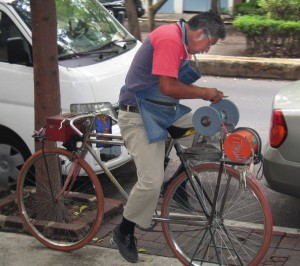
1. Knife sharpeners come to my door. Things are never dull around my kitchen as afiladores (as knife sharpeners are called in Spanish) circulate on bicycles, their distinctive whistle, an import from Spain, resounding through the neighborhood to alert the cutting impaired. Homemakers, chefs and other dull-bladed souls emerge from their kitchens to have knives, scissors, garden shears and the like expertly ground on a round stone that is turned by wheels of the very same bike, right there on the sidewalk.
An afilador, or knife sharpener, in Mexico City. (Credit: Nicholas Gilman)
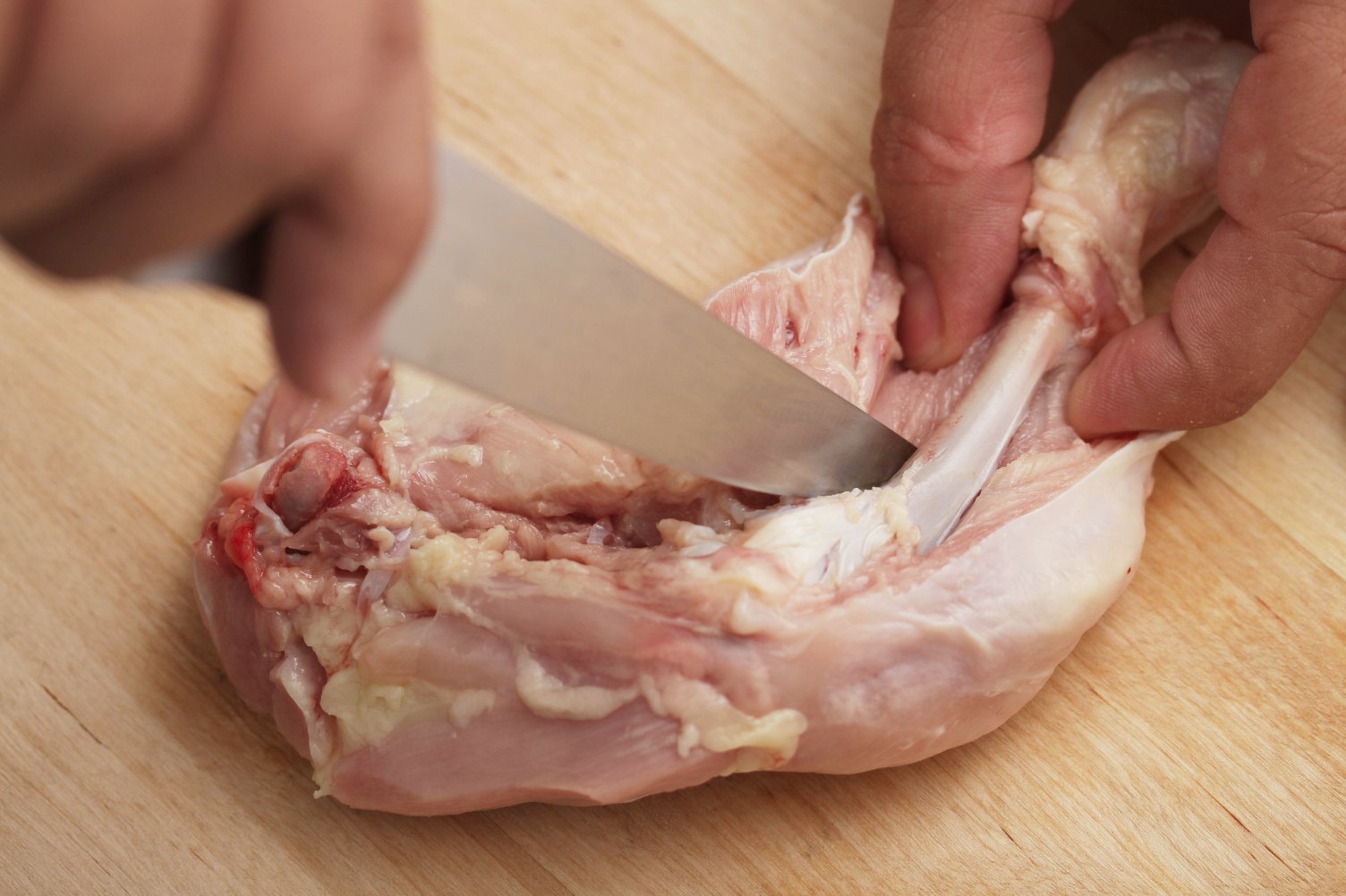
2. My butcher will bone a chicken (or do anything else I want). Like most hopeful amateurs and semiprofessionals, I have watched Julia Child bone a whole chicken with little effort, promising that it’s not as hard as it seems. I wouldn’t know, as I’ve never had to do it. Here, we buy our birds at the old-fashioned market where butchers will gladly prepare according to customer needs. Breasts are boned and pounded, thighs cubed for brochettes. Beef or pork (or a mixture of both as you wish) is ground once or twice. Pork loins are flayed. My butcher Meche may think it a bit odd, but is happy to cut a boned chicken breast into long, thin slices, as my Chinese recipe requires. This would be an impossible dream for a knife-technique-impaired chef like me. Oh, and by the way, there’s no extra charge for this service.
Butcher "boning" chicken (Photo: Google)
Butcher “boning” chicken (Photo: Google)
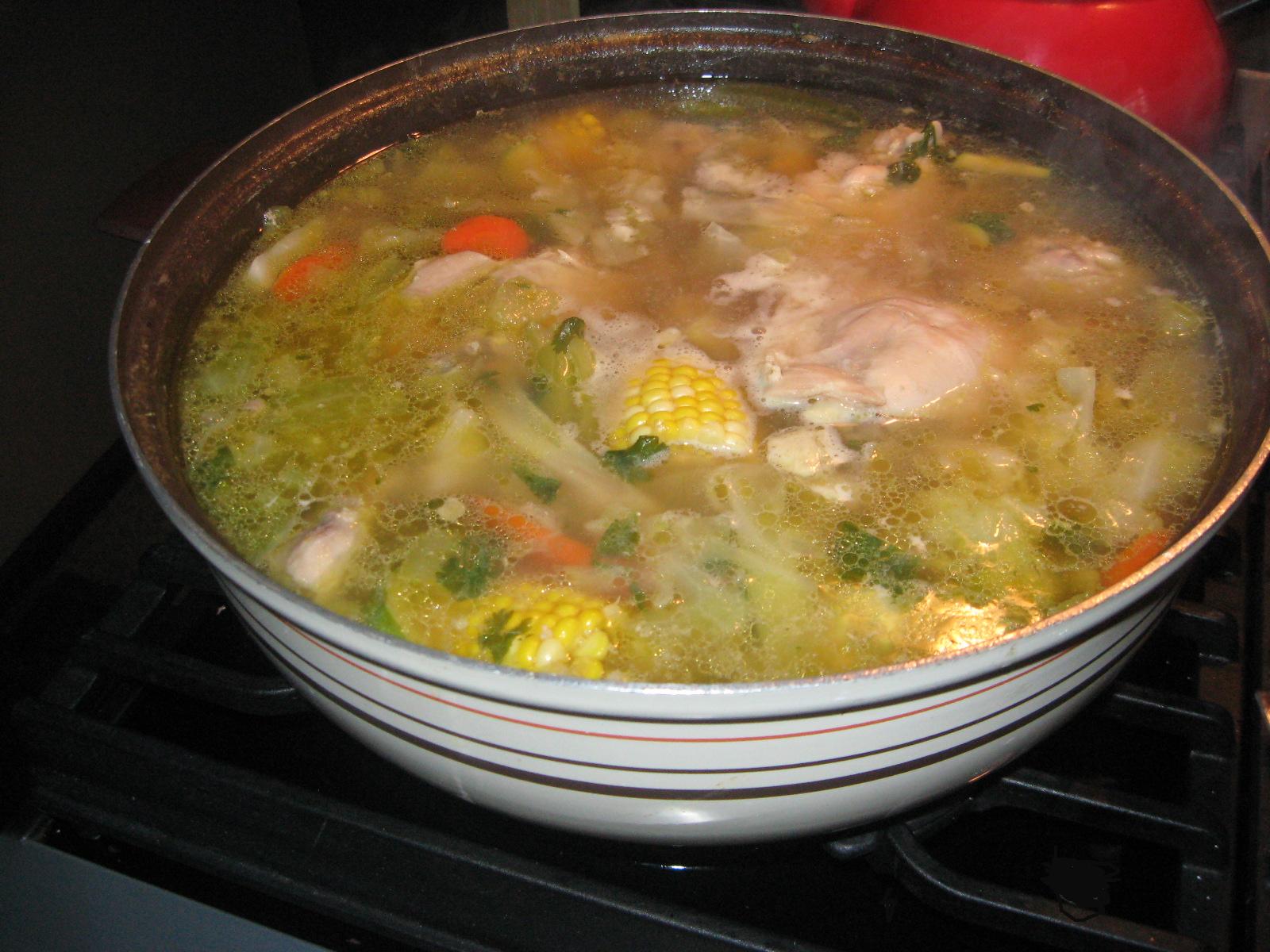
3. I can eat a bowl of chicken soup on the street. Mexico City is host to an abundance of street stalls offering caldo de gallina: chicken soup. Huge pots of carcass-filled broth bubble away, proving that you don’t need a home to produce a homemade product. The soup, which can be ordered with breast, thigh, leg or nothing at all, is made rich by the addition of a spoonful of rice and garbanzos, a bit of raw onion and cilantro, a squeeze of lemon and some chile flakes to taste. Served with fresh warm corn tortillas, this heart warmer could even top that of the best Jewish grandmother.
chickensoup 001
Mexican Chicken Soup (Caldo de Pollo)
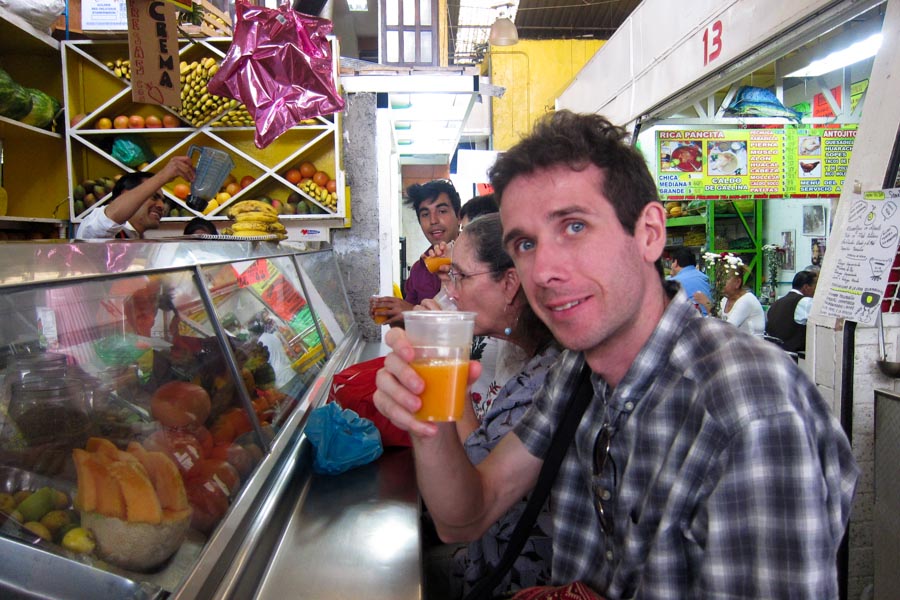
4. Fresh squeezed orange juice is available year round. One of myriad fruit and juice stands is located right at my corner, offering round the clock fresh squeezed juices as well as cut up fruits for less than it costs to do it yourself. Fruit, while seasonal, is brought to the capital all year from the four corners of the republic. Mexico is home to jungles and mountains alike. Mangoes, best in the summer, are always available, as are succulent papayas, at least five varieties of bananas, berries and the more exotic mameys and zapotes. A full liter of orange or tangerine juice costs less than $2.
Mexican juice stall
Mexican juice stall (Photo: Google)
5. Handmade corn tortillas are easy to find. All neighborhoods in the city as well as provincial towns are host to a weekly tianguis (market). Vendors offer the freshest produce, meats and sundries. In the upscale and fashionable areas of the capital these street markets, in keeping with the needs of their sophisticated clients, stock items not typically used in a Mexican kitchen, such as arugula, kale, ginger, leeks and porcinis. As well, braid-sporting women from the country journey into this megalopolis, sacks on their weathered backs, to sell country bounty: wild greens known as quelites, freshly harvested and dried beans and, best of all, hand ground and fashioned corn tortillas. Aficionados know that these beat the tortilleria-bought kind by a landslide: The texture and rustic corn flavor is what it’s all about.
Handmade tortillas
Handmade tortillas
6. I can buy a great baguette around the corner. Some areas of the city have become the visible scene of a new immigration. Young Euro foodsters, coming from such places as the City of Light, where opening a business of any kind is cost prohibitive, or Spain where the economy is in the doldrums, are seeing opportunity knocking in the previously good-bread-starved New World. In middle-class to upscale neighborhoods, patisseries and French boulangeries are opening at, what to anyone trying to watch their weight, is an alarming rate. Beautiful artisanal bread is within arm’s reach. At the same time, friendly traditional panaderĂ­as continue to thrive — customers load aluminum trays with pan dulces for breakfast or supper and crunchy bolillos for lunch. Tradition lives side by side with the nouvelle vogue.
Mexican Baguette Bread Loaf
7. We eat bugs. OK, so this is a mixed blessing. The truth is that I hate bugs, looking at them, eating them. I know they’re good for me, that they are a great source of protein and that consuming them has a long tradition in Mexican culinary history. Top chefs at about every highfalutin restaurant in town have been including creepy crawlies in their menus. Elena Reygadas (of Rosetta) creates artistic Italianate hors d’oeuvres using pretty little beetles. Alejandro Ruiz at his Guzina Oaxaca does a traditional salsa of chicatanas (flying ants to you and me). Meanwhile, ordinary folk delight in munching fried grasshoppers with their beer or a taco of gusanos de maguey (grubs), when the season hits. I’ll try them all and support the movement wholeheartedly and maybe someday I’ll even grow to be a bug lover. Whether I eat them or not, I love the fact that it’s part of the medley of Mexican cuisine.
Gilman_SopeOfSscamoles_Ant.Eggs_-300x266
Sope de Escamoles (Ant Eggs) Photo: Nicholas Gilman)
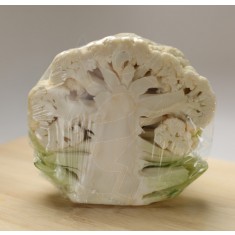
7½. I can buy half a cauliflower in the market. In Mexico, miniscule amounts of almost everything are routinely sold. Aside from cauliflower, you can get a quarter of a cabbage, a pair of chicken feet, a single stalk of celery, or dos pesos of parsley — you can even buy a single cigarette. In a poor country, this makes great economic sense. My own reasoning is not so much economic as prudent — I have far fewer rotting vegetables in my fridge these days.
half_cauliflower
Half Cauliflower
By Nicholas Gilman

Sunday, October 12, 2014

10 things that change once you “Expat Yourself”

theyucatantimes.com

The rewarding experiences one gains from living life overseas can sometimes be crowded out by the inevitable struggles that come with the full, expat-life package. But it’s through those struggles and challenges that you discover more about yourself and the world around you. You embrace lessons learned and broaden your horizons. If you’ve ever lived for an extended amount of time somewhere other than your home country, then you’ve probably experienced some if not all of these changes while living abroad.
expat_yourself
1. You are constantly learning and unlearning language. I’m no expert on the brain, but I have a suspicious feeling that my brain regularly shuts the door on certain native-tongue-vocabulary words so that my search will lead me to the word I’m looking for in my newly acquired language. That’s all fine and dandy; that is, unless I was really hoping to find the word in my native language. It’s one thing to feel a little embarrassed when you don’t know the word for something in the language you’re still learning. It’s a whole new level of embarrassment when you’re talking to close friends and family members and can’t seem to find the English word to express what you’re trying to say. No, I’m not trying to be pretentious and passively brag about the fact that I’m confusing two languages, thereby pointing out that I know two languages. I’m legitimately having a humiliating moment right now and I’m desperately trying to find the word before I let the sentence, “I forgot the English word for it,” depart from my lips.

2. Life is regularly lived out of a suitcase. For some reason, I thought our suitcases would start collecting dust once we made the big move across the world. I even thought to myself, “Wow, what are we going to do with all these suitcases now that we’ve arrived to our final destination?” Now I know. We keep on using them. The suitcases are continually slid up and down the top of our bedroom armoire as we make visa trips, medical trips, business trips, and the occasional vacation sprinkled throughout each of the aforementioned trips. We know airline luggage allowance and how to get the most use out of luggage space like it’s our national anthem. If unloading your bags and pockets, walking through a metal detector (while also herding and maintaining control of your children) and then recollecting all your possessions on the other end were an olympic sport, we would likely take home the gold year after year.

3. This is your life, not a trip. It’s a clear distinction you’re able to make once you’ve packed your life into an allowed amount of suitcases, hopped onto a plane, and then started from scratch in land that’s full of newness to you. Last time I checked, I’ve never had to repair my own toilet or pay bills and rent on any of my trips. Nevertheless, you will still be asked “How was your trip,” when you return back to your home country for a visit every now and again. Your lip might get blistered from biting it so many times. Sometimes you might want to yell from the mountaintops, “I haven’t been on a trip!” Sometimes you might want to snap back with a question of your own, “I don’t know. How have the past 3 years of your life been?” But in reality, the person asking the question means no harm or offense. Instead you give a quick, honest, and polite answer, “So much has happened the past 3 years. We’ll have to sit down to a meal sometime so I can share some of the highlights!”

4. Conversions and exchange rates are always on the mind.  In the kitchen, I have my recipe set out and my conversion app opened up on my phone. When I’m grocery shopping and see vanilla extract, my joy is quickly followed with disappointment once I’ve calculated the exchange rate in my head. We change currencies so frequently, I’m always the dumbfounded customer at the check-out counter searching frantically for the numbers on the bills and coins because I haven’t had time to memorize “the look” of the money. Cue the kind cashier woman giving me a nod of reassurance when I pull up the appropriate bill.

5. The line between normal and strange has blurred a bit. Every culture has it’s clear distinctions on what is acceptable and what’s not. However, to the outsider coming in, who brings with them a set of different, but still clearly marked, cultural “dos and don’ts”, it can cause quite the clash of viewpoints. For 23 years of my life I believed that openly picking your nose in public was just plain wrong, but picking your teeth with a toothpick after a meal was acceptable. Would you believe that the exact opposite is true where we live now? I’m not saying I pick my nose in public now…but I’m also not prepared to deny it.

6. Time is measured differently. It becomes harder and harder to measure things by calendar measurements. You tend to gravitate towards unique mile markers that help you remember how long you’ve lived in one location or how many times you’ve moved or where all you’ve lived. Sometimes a visa situation causes you to make an unexpected move, temporary or permanent. Sometimes you live in one location for language school until you’ve passed all your tests and can move on to another destination. You are never sure how long you’ll be able to stay in one spot so you just throw calendar days out the window. Instead, you measure time with things that stick out to you most. I’ll never forget the words of a TCK whose family has moved more than a few times while living overseas: “We don’t measure our life in years, but in kitchens.” For her, it’s easier to remember how many kitchens she’s cooked in with her mom rather than how many years they’ve lived in certain locations.

7. The word “routine” is not in your vocabulary. Whatever predictable outcome you once had for any given set of events has now been removed as a possibility. In fact, you now put it in the category of “miracle” if something happens the way you once thought it should happen. It’s no longer out of the ordinary to devote an entire day to paying twobills. You don’t expect electricity and water each day. You always have a back-up plan for that “just in case” moment when you’re suddenly without electricity and/or water. Your senses have sharpened because of your need to be on your toes at any given moment for the unexpected…because those moments happen a lot more frequently than they did before you moved abroad.

8. Material possessions do not equate happiness. You don’t have to move overseas to realize this, but there’s something about the nomadic life that makes you really stop and consider what you hold on to and let go of. The possibility of moving to another country is always in the back of your mind. In many cases, you’re better off not shipping a crate of all your belongings due to the fear of it being held up in customs for a year or more. This means that things might have to be sold again and dwindled down to the essentials that can fit in those suitcases of yours. You stop gathering and collecting and start making mental notes of what’s most valuable and worth hauling to another far-away land. You come to find out there are a handful of things that make this adventure of yours so great and everything else is expendable.

9. Anything seems possible. Before you moved overseas, you didn’t think it was possible to pack everything you wanted to take with you in a few suitcases. But you did it, and now you can’t remember half the stuff you left behind. Cooking seemed like such a daunting task with all the substitutions that were required to make it work. Now you’re able to whip up some of your old favorites in a flash and you’ve since added some new, local recipes to your collection (so no substitutions are required). You’ve kissed your comforts goodbye and you’ve survived. You might even be thriving in your new culture at this point.

10. You are different. You leave marks on people and people leave marks on you. Some things don’t matter to you as much as they once did and other things matter more. You’re continually humbled as you frequently find yourself in a position of needing help and guidance…sometimes from a complete stranger. Almost daily you are in a position where nothing is so familiar that you’re able to take it for granted. You knew you would set out on this new adventure as a learner of language and culture, you just didn’t realize exactly how much, in turn, you would learn about yourself.

Tuesday, October 7, 2014

Mexico, one of the top three 2014 Expat Destinations

theyucatantimes.com

If you want to leave your home country behind, move to Ecuador, Luxembourg or México.
That’s according to the largest survey of expatriates in the world. Nine out of 10 respondents from Ecuador reported being satisfied with their lives there, making it the No. 1 destination.
The data comes from the 2014 Expat Insider, administered by InterNations. It includes responses from nearly 14,000 expats from more than 160 countries.
The questions touched on general quality of life, working abroad, family life, leisure and making friends abroad, international romance and expat relationships, and personal finances.

Ecuador took the top spot.
Ecuador ranked high in personal finance (No. 1) and ease of settling (No. 8), which includes characteristics like making friends and feeling at home. Eighty-two percent of respondents found settling down easy there.
Over one-third of respondents, however, said living in the country without speaking English was difficult, although roughly the same number called learning the native language easy.
Ecuador also took the top ranking for personal happiness. Nearly half of respondents said they were “very happy” with their lives, with just as many planning to stay “possibly forever.”

The second spot went to Luxembourg.
The country’s success is likely due to a high ranking in the working abroad category, with 64% of expats saying their job was the most important reason to move abroad. Two in five people, the highest percentage of any country on the survey, found a job in the country on their own.
Less than one-third, however, want to stay in Luxembourg long-term.
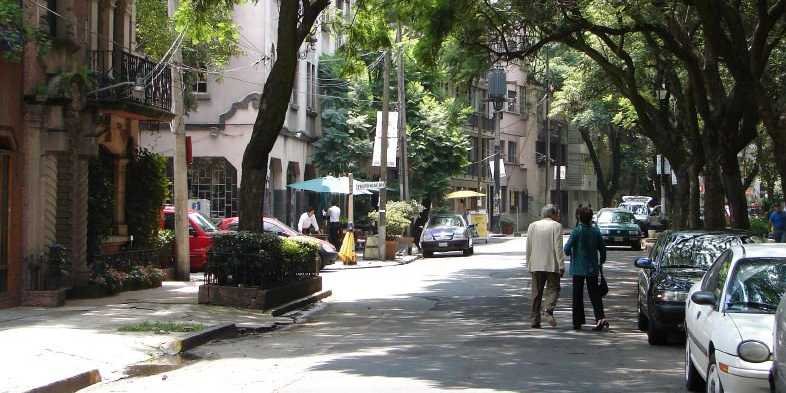
Mexico City Condesa District
Mexico took third place.
Mexico is the clear winner when it comes to the “Ease of Settling In” Index.
Its high ranking here helps account for its achieving third place overall in our expat survey.
Nine in ten expats (91%) are pleased with their expat life in Mexico, the same percentage as for the overall winner, Ecuador.
Another measure of satisfaction is the high number of expats (44%) that would like to stay in Mexico forever.
About one in three expats (28%) moved to Mexico for a job. Interestingly, the next highest percentage (19%) list love as their
main motivation for moving to Mexico.
They either moved in order to join their partner in Mexico or moved along with them.
Mexico ranks the lowest of our top three countries in the Working Abroad Index, coming in at 25th place out of 61.
The lowest ranking was in the subcategory “job security” (32nd place).
Mexico’s results in the Quality of Life Index are somewhat mixed.
On the bright side, Mexico ranks fourth for personal happiness, and the general satisfaction with the local climate and weather also adds to the quality of living.
Only 61% of expats, however, are satisfied with Mexico’s transportation infrastructure. Not even two-thirds (62%) are pleased with their level of personal safety.
Top Expat Destinations

Monday, September 8, 2014

Mexico Moving To Mexico? Read Our Expat Guide To Travelling On Public Transport

expatfocus.com


Mexico is a large country, yet it is easy to get around because of its many modes of public transport. Here is our expat guide to travelling on Mexico’s public transport system.

By Metro

Major cities such as Mexico City, Guadalajara and Monterrey have their own metro systems. The Mexico City Metro system (Sistema de Transporte Colectivo or STC) serves about 1.609 billion passengers and covers the metropolitan area. This is the second largest metro system in North America, the New York metro being the first.

It offers a quick and convenient way to travel around the city and has some of the lowest fares in the world. Twelve lines make up the metro system and they serve 195 stations. The Metro is open on weekdays from 5am to midnight, on Saturdays from 6am to midnight and on Sunday from 7am to midnight. Once you enter a metro station, you will need to buy a ticket (boleto) at one of the ticket booths. This ticket has to be inserted into a slot at the turnstile before passing through. There are signs that display the destination of each line and a map at the station entrance displays all the routes. Signs indicating the platforms and exits are displayed all over the station and inside the trains; there are maps at each door listing the stops for that particular line. 

By Bus

Buses in Mexico can be crowded during peak hours, but the bus network has a reputation of being comfortable, affordable and efficient. Cities and towns usually have a main terminal called the Terminal de Autobuses or Central de Autobuses. Most bus stops display a map indicating the route of the particular bus. There are different classes of buses in the Mexico bus network. Deluxe or executive buses run primarily on busy routes and are air-conditioned with more comfortable seats. The first class buses are also comfortable and most towns have a first class bus service. Second class buses cater to smaller towns and villages, are cheaper and tend to make more frequent stops, so travel can be slower. In these buses, you usually have to pay the fare directly to the conductor. In case you board the bus somewhere in the middle of the route, you may have to stand until someone vacates their seat. 
Microbuses are the smaller, newer second-class buses that run on shorter routes.

For shorter bus journeys on main routes, you can buy a ticket at the terminal and board your bus. However, for longer journeys or in case of less busy routes, you may need to buy your ticket beforehand. The deluxe and first class bus companies enable you to select your seat at the time of purchasing the ticket. 

The Metrobus was introduced in 2005 and comprises five lines that run across Mexico City and also connect to other modes of transport. The buses are quicker that other means of travelling, although peak hours may be crowded. A smartcard can be used to board the buses and these can also be recharged. 

In some areas of the country, smaller vehicles such as minibuses, vans and taxis serve as alternatives to the bus network. These colectivo (collective) vehicles ply between towns, departing only when they are full of passengers. 

By taxi

Taxis can be easily found in most cities and towns. They are affordable and taxis in some cities also have a fixed rate for travelling to certain central areas. In unmetered taxis, the price should be decided upon before you get in and some amount of bargaining may be required here. In taxis with meters, it’s a good idea to confirm that the meter is working before getting in. You can find authorized ticket taxis at some of the bigger bus terminals and airports where you can purchase a ticket to a particular destination and hand this over to the taxi driver. Authorized ticket taxis may have higher fares than regular taxis. 

Colectivo taxis can be found usually in rural areas. They travel on set routes and pick up and drop passengers along the way. You can also rent a taxi for a day, although the cost will be similar to that of hiring a cheap rental car.