Monday, January 28, 2013

Magnificent Mazatlan

Submitted by Irene Middleman Thomas on November 11, 2012 


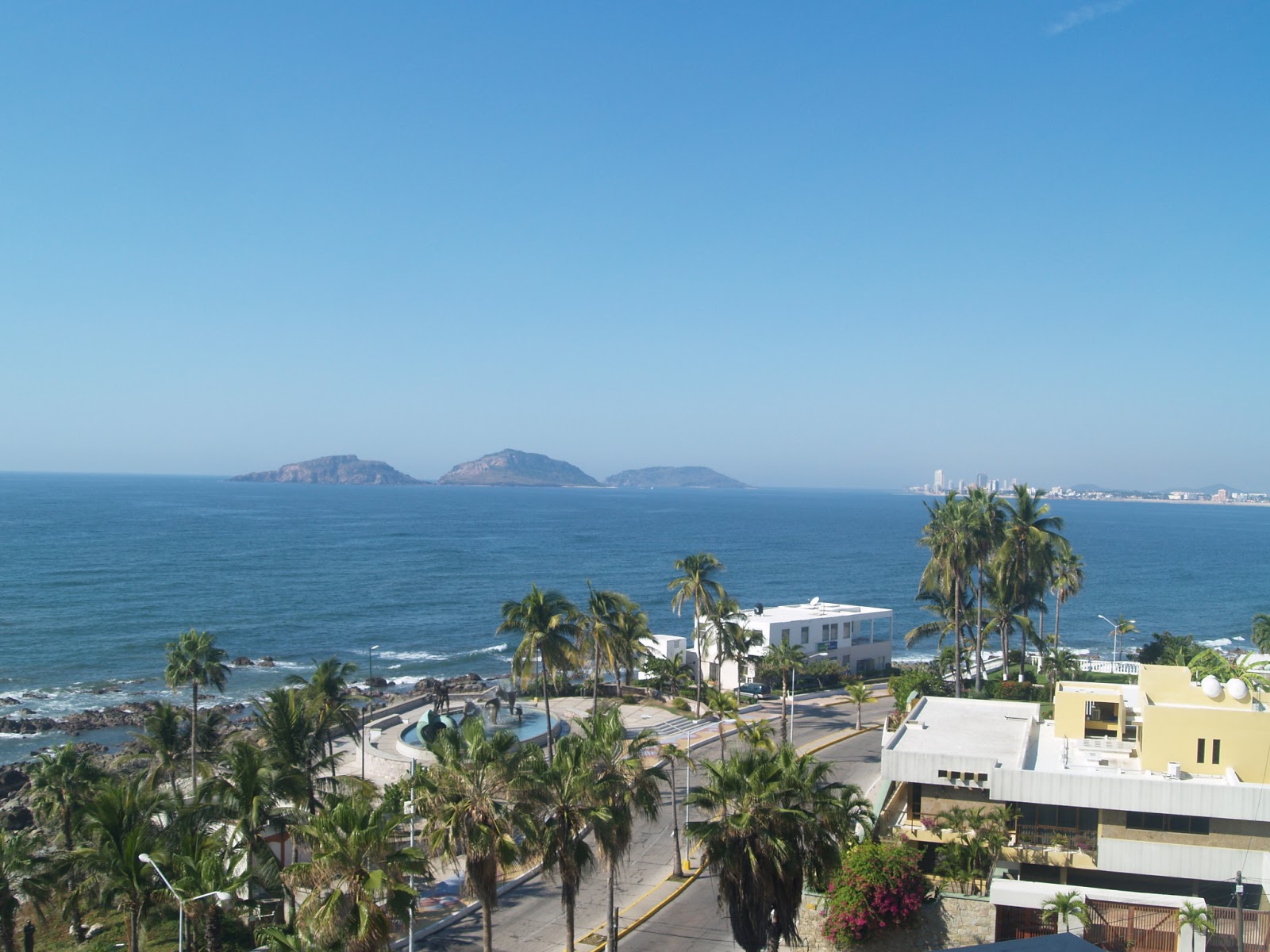
When I lie awake at night, I remember relaxing places I’ve visited to help me to fall asleep. One of my fond memories is of a late afternoon, years ago, that I spent on the beach in the Mexican city of Mazatlan – caressed by the warm, gentle waves, watching the oranges, pinks and yellows of the sunset over the offshore islands, hearing the gulls squawk overhead and smelling the aromas of fresh fish grilling. Mazatlan’s memories call to many, as they do to me.

If it feels familiar, maybe it’s because Mazatlan has been catering to tourists for half a century. If it feels comfortable, perhaps it’s because it lacks the glitzy, ersatz palaces and marble monoliths of other, newer resorts. If my pockets feel full, it’s because Mazatlan still pleases its visitors with very reasonable prices, unlike many other Mexican resort towns. Mazatlan doesn’t try to compete with the luxury of Cancun, the sexiness of Acapulco or the colonial quaintness of Puerto Vallarta. It doesn’t need to: it is special in its own way.

Mazatlan lies on Mexico’s Pacific Ocean coast and is about a 90 minute flight from Mexico City. A port city of some 500,000 residents, Mazatlan happily swells to accommodate the 1.5 million holidaymakers vacationers, sport fishermen and winter long-term visitors from the US and Canada who flock to it each year. Its waters are neither turquoise nor crystal clear, but they are delightfully gentle and warm, a pretty blue and the beaches stretch for miles.

Mazatlan is one of Mexico’s oldest tourist resorts and home to one of the world’s three major Mardi Gras carnivals, comparable only to those in New Orleans and Rio de Janeiro. In 2013, it celebrates its 114th carnival which runs from the 7-12 February. Boasting the biggest commercial shrimping fleet in Latin America with over 500 boats, Mazatlan also has one of the largest tuna fishing fleets in the world.


©Mexican Tourist Board; the small town feeling


Yet, when I visit, I always feel like I’m in a small beach village rather than a large city, due to the way Mazatlan divides its commercial and business sectors away from its resort areas. The city’s existence doesn’t revolve around tourism – it is a thriving metropolis. In fact, thousands of people live and work here without having anything to do with the travel industry.

For those lucky enough to be tourists, however, Mazatlan offers an abundance of riches: one of the longest stretches of uninterrupted beaches in Mexico; water temperatures between 19 and 24 centigrade all year round; night life set to music ranging from mariachi to disco, piano bar to salsa; colonial architecture; a wealth of handicrafts; and an endless supply of sidewalk and seaside restaurants.

Although English is widely spoken in Mazatlan, tourists delight in feeling like they are in real Mexico, not in gringo land (the slang word Mexicans use for foreigners) The city, first settled in 1531 by the Spanish, began to really develop in the mid-19th century. To see Mazatlan as the Mazatlecos do, take one of the open-air golf-cart style taxis (pulmonias) that seat no more than four and are very inexpensive. But negotiate the price with the driver before you get in. Or better yet, do as I do and stroll the impressive 13-mile boardwalk (malecón) between Playa Olas Altas and Playa Norte.


malecón, north beach © Mexican Tourist Board


The 13 mile breezy stretch, studded with impressive statues and monuments, is the pride of Mazatlan, running from one end of the town to the other. Here, I view the hotel zone, and watch fishermen selling their catch at dawn after a night out at sea, lovers embracing, locals gossiping and entrepreneurs selling coconuts, shrimp brochettes and mangoes – dripping with lime juice – on a stick.

The walk takes me past Mazatlan’s outstanding aquarium (plan on spending two to three hours here) and into Old Mazatlan’s Plazuela Machado (Machado Square,) the heart of Mazatlan. On the north side of the plaza is a strip of open-air seafood restaurants. One of the most famous, and one of my favorites, is lively Pedro & Lola’s, named after two famous singers and actors from Mazatlan, Pedro Infante Cruz and Lola Beltrán. Mazatlan, caters to independently-owned cafes – you won’t find the endless strips of US based chains here that you’ll find in other resorts, at least not in the old section. (McDonalds and others like it abound in the hotel zone, for those who like them.) Pedro & Lola’s wide variety of shrimp platters are reasonably priced and delectable. Grilled with butter and garlic, camarones al mojo de ago downed with a good Mexican beer like the local Pacifico lager or the heavier Negro Modelo, is heaven after a day on the beach.


Cathedral © Mexican Tourist Board


I also spend time admiring the twin-spired cathedral (built in 1875,) the city’s main plaza and the beautifully restored Angela Peralta Theatre (built in 1860.). The theatre is a beautiful, neoclassic-style building named after the beloved 19th-century opera diva who died after her only performance in Mazatlan, struck down by yellow fever. Strolling still farther on, the way to Playa Olas Altas, I pass by El Puerto Carranza, an old Spanish fort. Finally, I arrive at High Divers Park, where young men climb to a towering platform and plunge to the sea below, a la Acapulco, or is Acapulco a la Mazatlan, perhaps? This happens in the late afternoons, typically but is not an everyday occurrence – be forewarned.

The most famous beaches in Mazatlan are Playa Norte, popular with locals, Playa Sábalo and Las Gaviotas on the resort strip, Playa Olas Altas and Las Brujas for surfing and high waves and Playa los Cerritos, one of the city’s finest un-crowded beaches on the north end of the hotel zone. Lively Sábalo Beach is perfect for jet skiing, windsurfing, parachuting, sailing, sport fishing, etc, while the adjacent Cerritos Beach and Playa Norte are known for clean sand and peaceful sunbathing. Mazatlan’s Emerald Beach area to the north is being developed as an elegant area with posh shops, hotels and restaurants. There’s a beach perfect for every mood – romance, action, peace, adventure and people-watching.

Everyone should experience the islands off Mazatlan which are accessible by small boat, kayak or island cruise. Isla de la Piedra, actually a peninsula, with its 10-mile-long, unspoiled palm-lined beach, is dotted generously with sand dollars (flattish, sea-urchins which burrow into the sand.) Hammocks and horses are available for rent here, and thatched-roof cafes sell succulent, freshly smoked fish, Isla del Venado’s gorgeous, calm beach, with its superb view of Mazatlan, is just 10 minutes away. Its southern point features many secluded coves filled with soft sand and seashells. Snorkelling, while not quite on the level of the Caribbean, is highly enjoyable and lovely, particularly with the always warm Pacific water. Tiny fish tickle toes and little ‘Nemo’s’ dart away. I was pleasantly surprised by the abundance of large schools of fish and varieties.


venados
Isla de Venados ©Turismo Mazatlán


Mazatlan offers several excellent places for shopping, including Galeria Nidart, which carries both modern art and handicrafts; the Mazatlan Arts and Handicrafts Center; and Sea Shell City, a place that specializes in the exhibition and sale of seashells and other materials from the sea. Perhaps the best shopping, and most personal, happens right on the beach. While some find beach vendors annoying, I enjoyed the experience of mixing with the locals. The pure wool, handwoven rug which I bought for 120 pesos (about £7) reminds me of the spectacular day on which I bought it in front of my hotel from a charming, toothless old man, and the ironwood whale (a local artisan speciality,) beautifully carved, adorns my mantelpiece, bringing back memories of a delightful pre-teen boy named Carlos who sold it me. When dealing with vendors, I try to remember that rather than trying to cheat tourists, they trudge the hot beach all day attempting to feed their families – I’d rather pay them a few pesos more and know that their standard of living might be a tad better that day.

Day trips, easily arranged with various tour companies or taken with local buses from the main bus station, to the colonial mining towns of Concordia, Cosala and Copala, offer a glimpse back in time to the era when gold and silver were found in the foothills of the Sierra Madre mountain range. I enjoyed the cobblestone streets and visiting the local tortilleria in Copala, where I viewed a procession of neatly uniformed primary school children with clean dishtowels bringing back fresh, warm tortillas home for the midday meal. Nature-lovers in Mazatlan also take pleasure in climbing the hills of El Faro and El Cerro de la Neveria.

When to visit Mazatlan? Like most sections of Mexico, this area is quite hot and humid from July through September, and likely to have strong rains. The weather from October through May is delightful, with temperatures ranging from the low to high 20s. It is always recommended to have a sweater handy in the evenings, which can be cool due to the humidity and ocean breezes.

Those wanting to experience Mazatlan’s world-class billfishing should visit from March to December for sailfish, May to December for blue and black marlin, and December through April for swordfish and striped marlin.

Mazatlan is Mexico at its best – you’ll feel safe and at home, yet exhilarated by the truly Mexican character of the town and its people. Mazatlan has spruced itself up, beautified its landscaping and architecture, expanded and constructed, but it has held on to its identity in a way other cities have not. Looking for a real Mexican beach town experience? Mazatlan won’t disappoint!

As the big orangey-red sun sets into the lapping waters of the Pacific at the end of another day, Mazatlan’s guests ease into their lounge chairs, take another sip of their margaritas and sigh blissfully. I remember my own late afternoons doing just that, and wish I was there again, having just another Mazatlan moment.


Mazatlán, Mexico - Travel Destination

A Fast and Affordable Getaway in Sunny Mexico

by André Gayot

Thinking of a sunny winter escape in Mazatlán? With the Mexican Pacific Coast and the southern United States in such close proximity, you'd think getting away for a quick jaunt to the "Colonial City by the Beach," as it is dubbed, would be easy. But the trip can involve more time and money than the relatively short distance would lead you to expect. However, now there's a remedy. Two days per week, charter airline Xtra Airways offers direct flights for less than $200 (round-trip) to Mazatlan from Los Angeles, Oakland, Denver, Houston and San Antonio. Faster and cheaper translate to you having more time for lazing on the beach and more money to spend on fruity cocktails and souvenirs.
 
Pink flamingos in (permanent) residence at Pueblo Bonito Emerald Beach Resort & Spa
Pink flamingos at Pueblo Bonito Emerald Beach Resort & Spa
Some call Mazatlán "the pearl of the Pacific." This climatic location is certainly a kind of a gem with an average temperature of 75 degrees, 60 in the "cold" months and 82 in summer. At the time when the North of the continent freezes, more than 150 hotels with their ten thousand beds, plus numerous time-shares, condos, trailer parks, you name it, fill up with winter "birds" fleeing from the frigid big U.S. and Canadian cities. The fugitives from the cold come here to have their winter ball in the sun, clad in bathing suits and shorts, although nights are cool and a sweater is welcome.

There's more to do here than just sipping beer on the beach. On the subject of beer, this is where a German created the highly-regarded Pacifico right on the Tropic of Cancer. And on the subject of beaches, there are nine of them, but check for dangerous tides in some areas.

Mazatlán started with a few settlers who must have had a hard time surviving until a garrison and military defenses were established in 1793. Thereafter, ups and downs alternated: wars, revolutions, mining booms and busts. Consequently, what is left of this past to still admire dates from the nineteenth century. As for the first settlers, the Nahuatl, the Totarame, the Xiximes, the Cahitas Indians, they apparently dug more for deer hunting (Mazatlán means Land of the Deer in Nahuatl) than constructing pyramids and temples. From a thin population of 500 in the middle of the 19th century, Mazatlán has grown to nearly 450,000. This augmentation was supported by the activity of the commercial harbor, which is the principal Mexican port on the Pacific coast. In the last ten years, tourism has induced an accelerated boom in construction. High-rises have surged fast — too fast, regret some — in abundance along the Malecon, a four-mile ocean-side walk fringed with hotels, apartments and condos.

A Colonial City by the Beach

The fishing industry is the other major sector, hence the not-to-be-missed shrimp and seafood generously served as fresh as it gets in all the restaurants. Mazatlán is a major exporter of shrimp. Nowadays, the city thrives essentially on tourism, which, as everywhere, can be impacted by the world economy. The first tourists here were Hollywood's beautiful people who in the '40s discovered that this then-remote area was a fisherman's paradise filled with marlins, sailfish and mahi-mahi. Mazatlán would be a sleepy tropical town if it were not for the appetites and the dollars of the many visitors. Enough to feed a huge population of musicians, artists, artisans, chefs, waiters, hoteliers, farmers, taxi drivers, jewelers, painters, etc.


Soothing evenings on the beach
Fresh oysters along with rich ceviche
Soothing evenings on the beach
Fresh oysters with rich ceviche


A colonial city by the beach? Indeed the romantic and "muy simpatica" part of the town is situated in its southern part noticeably around Plazuela Machado where Mazatláians dine and enjoy bands and singers performing on the gazebo, and so should you after a stroll in the narrow streets and a visit to the Angela Peralta Theater inspired by la Scala of Milan. In November and December, shows, ballets and concerts are presented daily to the public by local as well as international artists including the famous Cuban National Ballet. The Casa Machado, Edificio Juarez, the nearby Plaza Revolucion, the lively Mercado Central and the unusual Cathedral Basilica, which mixes styles and bears a lighted Star of David between its steeples, also contribute to depict the aesthetics of the colonial era close to the beach.

Ready for the carnival
At the northern end of the city that stretches along a beach of fifteen miles, in the New Mazatlán, sparkles the classy Pueblo Bonito Emerald Bay, boasting 378 luxurious suites and most likely the top choice in resorts. It overlooks quiet and secluded Emerald Bay from the top of a 20-acre gated and manicured domain. No street traffic, for there's no street, no jets above your head — all you hear is the sound of the waves licking the beach. This tranquility is in itself a luxury after the hustle and bustle of the Zona Dorada, the Golden Zone (a ten-minute drive; there's a free shuttle every hour to the other Pueblo Bonito hotel downtown). 

Restaurants, bars, shops and their partying patrons radiate an exciting energy especially at the time of the famous carnival (February) — said to be the second best in Mexico after Vera Cruz. 300,000 participants sing, dance and play to the sound of the big bands loud with many brass instruments, called the bandas Sinoalenses or Tamboreros. 

Don't forget the frenzy at the bullfight on Sunday afternoons. After all this trepidation you will appreciate your 425-square-foot apartment at the Pueblo Bonito with its fully equipped kitchenette that is quiet and soothing thanks to its high ceiling and pastel tones. That's the prelude to the conclusion of a day which will culminate after a sip at Kelly's Piano Bar with a dinner at La Cordelière right on the beach, where fresh seafood is rightly the mainstay, or at The Bistro with its international cuisine. If you overindulge, don't overlook the fitness center and the Armonia spa or burn some more calories on the lighted tennis courts.

Ballet and fun galore at the Mazatlan cultural festival and carnival
Ballet and fun galore at the Mazatlán cultural festival and carnival
The Pueblo Bonito Mazatlán, located close to the Zona Dorada, is an alternative for those who want animation and activities à la Club Med with sports, games, shows and dances. Less luxurious, this all-suite hotel boasts 247 suites, appointed with two queen size beds, a fully equipped kitchenette and a private balcony. In an oceanfront setting, Cilantro's serves the specialty of the house: seafood grill for two, a succulent combination of lobster, fish, scallops, shrimp, calamari and oysters. Las Palomas offers traditional Mexican fare, while Angelo's serves Italian dishes like its signature osso bucco.

But don't spend your entire vacation at the hotel! You don't want to miss the local opportunities: strolling in the historic quarter, golfing at the nearby reputed El Cid course, deep sea fishing, or touring the old mining villages like El Quelite with its cobblestone streets or Copala and its baroque church in the Sierra Madre where John Huston shot one of his famous films.


Volkswagon to manufacture Golf in Mexico


Reported by AAP
Monday, January 28, 2013
 

German automaker Volkswagen says it will begin manufacturing its redesigned Golf model in Mexico in the first quarter of 2014.
"With its existing infrastructure, competitive cost structures and free trade agreements, Mexico is the ideal location to produce the Golf" for markets in North and South America, Hubert Waltl, a member of the board of management of the Volkswagen passenger cars brand, was quoted as saying in a statement Friday.

"The decision to produce the Golf in Mexico builds on Volkswagen's strategy for the North American market," where it plans to invest more than $5 billion over the next three years, the statement said.

"Localisation has become increasingly important in automotive manufacturing" as a safeguard against currency fluctuations and a means of being closer to the market where the vehicles will ultimately be sold, it added.

Volkswagen said it plans to invest around $700 million to adapt the production lines at its plant in the central Mexican city of Puebla to manufacture the all-new VW Golf hatchback.

Earlier this month, the Wolfsburg, Germany-based automaker inaugurated a $550 million engine plant in the central Mexico state of Guanajuato.

Last September, it also announced plans to invest $1.3 billion to build a new Audi plant in Puebla; construction is scheduled to begin this year.

Volkswagen produced a record 600,000 vehicles in Mexico last year, 88 percent of which were destined for export around the world.

The German automaker - whose Mexican subsidiary, Volkswagen de Mexico, was founded in 1964 - owns the Audi, Bentley, Lamborghini, Seat, Skoda and Porsche brands, among others.


Mexico and Brazil eye joint ventures

Plans: Mexican President Enrique Pena Nieto
Mexican President Enrique Pena Nieto said his country and Brazil had agreed to look into establishing joint projects involving state-run energy companies Pemex and Petrobras. 
 
Reforms at Mexico's state oil monopoly Pemex have started to open the company up to more private investment, and Pena Nieto has pointed to the success of state-controlled Petrobras - which trades on several major stock exchanges and has boosted efficiency - as a model for deeper change.

"We agreed to establish or look at alternatives for eventual strategic alliances between Pemex and Petrobras ... for a variety of purposes: technology-sharing, project development," Reuters quoted Pena Nieto telling reporters after meeting his Brazilian counterpart, President Dilma Rousseff.

The Mexican leader gave no further details about the possible tie-ups.

Both presidents were in Chile for a two-day meeting of heads of states from the European Union, Latin America and the Caribbean region.

Pena Nieto has said one of his top priorities is to boost oil production by attracting more private investment into the country's energy sector. He has pledged to press for a constitutional reform of the industry and plans to push legislation through Congress this year.

If Pemex cannot develop new discoveries to replace declining production at the country's largest, aging fields, Mexico risks becoming a net importer of crude within a decade, analysts say.


Quiznos expands to Mexico


Jan 28, 2013
Staff Denver Business Journal
 
 
Quiznos, the Denver-based restaurant chain known for its toasted submarine sandwiches, said Monday it's expanding into Mexico.

The company has an agreement with Quizmex SA DE CV of Mexico City to open more than 150 Quiznos restaurants around the country in the next 10 years, including five in Mexico City this year.

"Quiznos is a highly respected international brand that demands excellence from its partners, Issac Levy of Quizmex said in a statement. "We are very confident in our ability to successfully position the brand in Mexico."

Quiznos, which has expanded internationally in recent years including stores in the Philippines, India and Brazil, will open its first Russian location in March. The company said it expects to open more than 1,000 international locations by 2020.

From Mazatlan to Quebec

ANDY JACKS


quebec
iSTOCK
Mazatlan, Mexico: a vibrant, colourful country full of great beaches.

quebec
Quebec's old town: Great shopping and food.
 
expat
Expatriate Kiwi Andy Jacks.
 

Why did you leave New Zealand? 

We moved to Mazatlan, Mexico, for work. When that contract was finished I took on another as a project manager in Quebec, Canada.

What do you do?

I was a maintenance/engineering manager for an exploratory drilling company based in Mazatlan. I spent two years there. In the last six months I took up a position in Quebec as project manager overseeing the dismantling of pulp and paper mills.

What do you like or dislike about the places you have lived?

Mexico is such a vibrant, colourful country full of ancient culture and history. Most people choose the coastal regions of Mexico, famous for its sun, surf, great fishing and diving but the inner part is equally fascinating - ancient pyramids and beautiful cities. Mazatlan has a wonderful old quarter called Plaza Machado, which has some German influence. Quebec is different again and we are currently based at the top of the Saint Lawrence River. The scenery is different from Mexico, full of trees, churches and light houses.

How does the cost of living compare to New Zealand?

I don't think anywhere can compare to the cheap cost of living in Mexico. While still having relative First World infrastructure, you can live like a king on $2000 a month. Restaurant dining and internal travel is very well priced. Canada is, on the whole, more expensive than New Zealand.

What do you do on weekends?

Whenever we have time off we like to travel and see what the areas have to offer. Guanajuato in Mexico is located in a narrow valley, with the streets narrow and winding and many of the roads partially or fully underground. The historic centre of the city has numerous small plazas and colonial-era mansions and churches built using pink or green sandstone. It's also home to the Festival Internacional Cervantino, which has artists and performers from all over the world. In Canada we have visited many cities, such as Halifax, which has pretty little fishing villages - Lunenberg and Mahone Bay - just out of the main city. Quebec City and Montreal have great shopping and food.

What do you think of the food?

Quebec has a great French influence in its food. A favourite starter is the french onion soup. They are famous for their poutine - french fries covered in gravy and cheese curd.
Mazatlan is the shrimping capital of Mexico so from September onwards fresh shrimp is done many ways. Our favourite is coconut shrimp. They also make great ceviche and salsa.

What's the best way to get around?

 Mazatlan is famous for its Pulmonias - small converted Volkswagens without the roof or sides. You simply step out on the road and wave them down. It's a fun way to get around. The local bus and regional buses are very affordable and safe.

Canada is vast so we drive, take the trains or fly. Flying can be pricey, especially in the remote region we live in. Rental cars are pricey as well.

What's the shopping like?

In Mexico most of the American superstores are in the cities. The Plaza Machado has organic markets at the weekends and you can buy your fish/shrimp fresh from the markets or fishermen. Vegetable stores are everywhere, and chicken barbecue stands are on most corners. Shopping in Quebec is wonderful. It has great cheese and dairy products so we feel right at home in that area.
What's the nightlife like? Mexico is well known for its party atmosphere but be warned, you need some serious training to keep up with the partying of the locals and the gringos!

What is your favourite part?
 
In Mazatlan it would be the old quarter, Plaza Machado. The opera theatre is there. They have an art walk on the first Friday of each month, and lots of markets and shows in the busy season. The streets are narrow with brightly painted houses and buildings.

What time of year is best to visit?

 Late October to the end of May for Mexico - this is the dry and cooler season with no humidity. Visit Quebec in June to October.

What's your must-do thing for visitors?

Mexico is famous for its beaches. Cabo San Lucas has big game fishing and whale season is a must. There is great diving in the Cenotes. The pyramids at Chichen Itza, Coba and Tulum are easily accessible. Teotihuacan's Pyramids of the Moon and Sun are pre-Mayan era. The National Archaeology Museum in Mexico City is state of the art. In Quebec my must-dos would be visiting the national parks in this area, taking train trips, especially in fall season, and the walled city in Old Quebec.
What are your top tips for tourists? Don't believe the bad press about Mexico! As long as you are careful, it is a country of vast geological and diverse cultural differences. Give it a try; just don't drive!

How easy is it for you to get back to New Zealand?

  From Mazatlan it's a two-hour flight to Los Angeles then 13 hours direct to Auckland. From Quebec about 12 hours to west coast of the United States then 13 hours to Auckland.


Mexico: The New China


Robert Benson for The New York Times
Oseas Orocio displays a flying vehicle at Udrones, a 3D Robotics factory in Tijuana, Mexico.
IN November I quit my job as the editor of Wired to run 3D Robotics, the San Diego-based drone company I started with a partner as a side project three years ago. We make autopilot technology and small aircraft — both planes and multirotor copters — that can fly by themselves. The drones, which sell for a few hundred bucks, are for civilians: they don’t shoot anything but photographs and videos. And they’re incredibly fun to build (which we do with the ample help of robots). It wasn’t a hard decision to give up publishing for this. 

But my company, like many manufacturers, is faced with a familiar challenge: its main competitors are Chinese companies that have the dual advantages of cheap labor and top-notch engineering. So, naturally, when we were raising a round of investment financing last year, venture capitalists demanded a plausible explanation for how our little start-up could beat its Chinese rivals. The answer was as much a surprise to the investors as it had been to me a few years earlier: Mexico. In particular, Tijuana. 

Like many Americans, until recently, when I heard “Tijuana” I thought only of drug cartels and cheap tequila. “TJ,” though, is a city of more than two million people (larger than neighboring San Diego), and it has become North America’s electronics assembly hot spot: most of the flat-screen TVs sold in the United States, from companies like Samsung and Sony, are made there, along with everything from medical devices to aerospace parts. Jordi Muñoz, the smart young guy who had taught me about drones and then started 3D Robotics with me, is from TJ — and he persuaded me to build a second factory there to supplement the work we were doing in San Diego. 

Shuttling between the two factories — in San Diego, where we engineer our drones, and in TJ, where we assemble them — I’m reminded of a similar experience I had a decade earlier. In the late 1990s and early 2000s, I lived in Hong Kong (working for The Economist) and saw how that city was paired with the “special economic zone” of Shenzhen across the border on the Chinese mainland in Guangdong Province. Together, the two created a world-beating manufacturing hub: business, design and finance in Hong Kong, manufacturing in Shenzhen. The clear division of labor between the two became a model for modern China. 

Today, what Shenzhen is to Hong Kong, Tijuana is becoming to San Diego. You can drive from our San Diego engineering center to our Tijuana factory in 20 minutes, no passport required. (A passport is needed to come back, but there are fast-track lanes for business people.) Some of our employees commute across the border each day; good doctors are cheaper and easier to find in TJ, as are private schools, although it’s generally nicer to live in San Diego. In some ways, the border feels more like the notional borders of the European Union than a divide between the developed and developing worlds. 

And it’s not just TJ. To the east, in Juárez, Dell computers are built by Foxconn, the company that manufactures more than 40 percent of the world’s electronics (including Apple’s iPhone and iPad). To the south, in Querétaro, a factory builds the transmissions that General Motors installs in its Corvettes. The design of General Electric’s GEnx turbine jet engine and the production of interior elements of Boeing’s 787 Dreamliner also happen in Mexico. Manufactured goods are the country’s chief export, with private investment in this sector among the highest in the world. 

The notion that Mexico offers only cheap labor is just plain off the mark. Mexico graduates some 115,000 engineering students per year — roughly three times as many as the U.S. on a per-capita basis. One result is that some machine specialists are typically easier to find in TJ than in many big American cities. So, for that matter, are accountants experienced in production economics and other highly skilled workers. 

What all these pieces add up to is a model — one that might hold the long-sought answer for how American manufacturers can compete with those in China, India and the next generation of economic powerhouses. That’s because the TJ template isn’t so much about outsourcing as it is quicksourcing. And that’s also the way to create thousands of good jobs in the United States. 

As any entrepreneur can tell you, the shorter and more nimble a supply chain is, the better. 

First, a shorter supply chain means that a company can make things when it wants to, instead of solely when it has to. Strange as it may seem, many small manufacturers don’t have that option. When we started 3D, we produced everything in China and needed to order in units of thousands to get good pricing. That meant that we had to write big checks to make big batches of goods — money we wouldn’t see again until all those products sold, sometimes a year or more later. Now that we carry out our production locally, we’re able to make only what we need that week. 

Second, there’s less risk. If we make an error in a design, we’ve wasted at most a few days’ worth of production. If there’s something wrong in the production process itself, we can spot it fast. We control the component inventory, so we can see what’s going into our goods and know that we’re not being ripped off with used or pirated parts. And if we want to protect our intellectual property, we can do so without having to trust that other companies will uphold our interests above all others. And that’s saying nothing about political risk, environmental risk or P.R. risk, all of which companies like Apple and Walmart have learned about in China the hard way. 


Robert Benson for The New York Times
A drone takes flight. 

Third, it’s simply faster. We still order some parts from China, and even though we use FedEx, it always seems to take weeks, and sometimes months, longer than we’d planned. That’s not a criticism of China; it’s merely intrinsic to any arm’s-length relationship between small buyers and big makers. If we were Apple, we’d get overnight service. But we’re not, so we wait. 

Finally, a short supply chain is an incentive to innovate. If you’re outsourcing the manufacturing of huge parcels of a product, you can’t change that product until you’ve sold all the ones you’ve already made (at least not if you want to stay in business). So that often means sitting on your hands, waiting for Version 1 to sell out before starting to make Version 2. But when you’re doing just-in-time manufacturing, you can change the product every day if you want — whether to take advantage of some better or cheaper component or to improve the design. 

In the land of the long supply chain, meanwhile, things are changing, too. Inflation-adjusted labor costs in China have more than tripled in the past decade. Wages in China’s southern cities are approaching $6 an hour, roughly what they are in Mexico. 

Whether factors like these are enough to turn American businesses from outsourcers to quicksourcers remains an open question. But I’m betting my money that they will. The sense of possibility I felt when I first crossed from Hong Kong to Shenzhen in 1997 is what I now feel when I cross from San Diego to Tijuana. 

The trade routes of the 21st century don’t have to follow Marco Polo from West to East. Indeed, in the new manufacturing landscape, the routes don’t have to take you far at all. 


Sunday, January 27, 2013

Mexico’s Avocado – the MVP of Super Bowl Festivities

Regardless which team reigns supreme at the Super Bowl, you can be sure that Mexico’s avocados will dominate party festivities. As fans cheer on both teams, there is a good chance they might be munching on guacamole made from these avocados.

“Mexico, by far is the largest supplier of avocados for the Super Bowl,” said Phil Henry, president of Henry Avocado Corp. In fact, there has been a dramatic increase in the Mexican product and a decrease in Chilean product for the Super Bowl.

So, just how many avocados does Mexico ship to the United States? Well, APEAM marketing director, Eduardo Serena, projects about 986 million pounds for 2012-13. That’s a lot of guacamole to go around.
In order to keep up production for international demands, specialists from the Institute for Forestry, Agriculture, and Livestock (INIFAP) are conducting a research to implement strategies for avocado sustainability. This research highlights the fundamental role of forests and other environmental resources in generating water supply and soil conservation. These efforts will help secure avocado flows for many more Super Bowls to come.

On February 3, teams on both coasts – the 49ers and Ravens – will battle it out for the title of NFL champion, but it seems the real winner of Super Bowl XLVII is the Mexican avocado.

Friday, January 25, 2013

Why Mexico’s sunny economy is good news for Canada


The Globe and Mail
Published Thursday, Jan. 24 2013

High unemployment, slow growth and crippling debt are common themes in many industrialized countries – but not in Mexico.

The unemployment rate in Latin America’s second-largest economy has fallen to its lowest level in more than four years, at 4.5 per cent, statistics showed this week. Economic growth is outperforming most other countries and the stock market is hitting record highs.
A solid jobs market and stable economy is bolstering the country’s middle class. But it could also carry benefits for Canada too. Mexico is Canada’s fifth-largest destination for exports (though trade is still tiny compared with that of the U.S.) and many Canadian firms are setting their sights on Mexico, betting prospects will keep improving.

Trade between Canada and Mexico grew 8 per cent between 2002 and 2011 (at compound annual growth rates), and EDC expects growth to continue. Mexico's large population, at 112 million and upbeat economic prospects "will have positive effects on their demand for Canadian products as well as open business opportunities for Canadian companies looking at doing business in that market," the agency said.

“Mexico’s recent growth run is impressive, and is set to continue,” said Peter Hall, chief economist at Export Development Bank in a note Thursday.

The country’s economy is expected to expand 3.5 per cent this year – a little less than last year but still stronger than projected growth rates for Canada, the United States and much of Latin America.

Recent amendments to modernize labour laws are also expected to buoy economic growth.
Inflation, meantime, is slowing and interest rates are expected to remain at a record low.

That’s not to gloss over challenges. Crime rates, including drug-related killings, remain high. Still, murders in the country’s hardest-hit states declined last year as turf wars among cartels diminished, and the new government has laid out security plans that aim to curb the country’s crime rates.

While much of the world’s economies, such as China and Brazil, slid in a slowdown last summer, Mexico “was a rare and notable exception...generating remarkably smooth growth,” Mr. Hall notes.

Sturdy consumer spending (though it did subside a little in the third quarter of last year), strong government investment and robust exports are driving growth.

The rate of private investment has cooled a bit lately, but Mr. Hall contends that’s temporary – principally because Mexican exports stand to benefit from a revival in U.S. housing, consumer and corporate markets.
The bottom line, he says: “Over the coming months, this market will be one to watch.”

Mexico Finding Innovative New Use For Avocado Seeds


January 29, 2013

Avocados are delicious, healthy, and plentiful in Mexico, however the seeds create a significant amount of waste due to large scale production and industrial processing. 'BioFase' may have the answer.

BioFase is a company committed to providing sustainable solutions for biodegradable plastics. Their resins are used to produce 100 percent biodegradable and compostable plastic objects.

Modern day bioplastics are usually made from raw materials, such as corn and other food sources. "It was the need to find a green product that utilized waste, as opposed to foods, that gave rise to BioFase," says Scott Munguia, CEO of BioFase.

They identified a need to find new sources and methods to produce real sustainable plastics. Avocado seeds are a significant waste product in Mexico, due to the large scale production and the industrial processing that takes place.

BioFase is proud to offer a product that is not only green, but is also made using a product considered to be waste. At the moment there are no other significant uses for avocado seeds. Some companies use the material as compost, but the majority throw them away, some even paying other companies to handle the waste for them. "We saw an opportunity to create a new industry around avocado seeds," says Mungia.
The company has recently been recognized for its efforts, winning an award at the International and Entrepreneurial Forum "Spin 2012," in Madrid, Spain. In addition to this, the company has also been recognized as one of the most promising green companies within Mexico, achieving top 20 status in the Cleantech Challenge contest.

Currently the company plans on using the plentiful resources of avocado seeds available in Mexico, without recourse to use seeds from other countries, as Scott explains, "In the short and middle term we will use avocado seeds exclusively from Mexico."

"It is economically more convenient to use seeds from our own country. However, we do not rule out the possibility of using seeds from other countries in the long term if our company expands. The plan is to sell the product itself on the international marketplace, once the production and distribution in Mexico is developed."
"The US is an important market for bioplastics and is geographically convenient to explore the potential.

Other Latin American countries, such as Brazil and Chile, are also starting to incorporate green products within their own markets, so we foresee international market possibilities in the future."

Looking ahead to the future, Scott says he would be pleased to see others take up BioFase's lead on this use of avocado seeds.

"We would be glad to see other companies using new raw materials in a sustainable way. It would be a huge accomplishment for our company to see that avocado seeds are considered a new source. As I stated before, we have the commitment to sharing our vision of real sustainability." 


For American Exporters, Mexico Is The China Door

Last year was a tough year for American exporters.   After steady increases since the bottom dropped out of the U.S. economy in 2008, exports fell again in 2012, even to nation’s where consumption doesn’t seem to sleep like China and Singapore.

Out of the top 10 U.S. trading partners, Mexico stands apart. U.S. exports are rising and Mexico is one of the reasons why.

First, back in 2009, U.S. exported $1.5 trillion worth of goods and services around the world. That number rose to $1.8 trillion in 2010 and then to $2.1 trillion in 2011, according to the U.S. Census Bureau.  In fact, U.S. exports have more than doubled from where they were in 2002. It’s as if the U.S. discovered it can make things again.

That’s where Mexico comes in.  Every major trading partner saw a decline of at least five percent in their imports from the U.S. Only Mexico continued to buy American.

In 2012, Mexican based companies, including American multinationals there, imported $199.9 billion worth of goods and services, up from $198.3 billion in 2011, $163.4 billion in 2010 and $128.8 billion in 2009.  Ten years ago, in 2002, Mexico imported $97.4 billion from the U.S.

The U.S. still has a trade deficit with its southern neighbor, but it shrunk last year to $57.4 billion from $64.4 billion in 2011 and $66.4 billion in 2010.  The Mexico economy is moving right along, and the rebalancing of global manufacturing away from China is seen helping Mexico even more. U.S. companies, and Mexican multinationals, will be investing more in production there and buying U.S. goods to help them expand.

According to the Office of the United States Trade Representative in Mexico, trade there is up 377 percent since 1993 (the North American Free Trade Agreement began Jan. 1, 1994). U.S. exports to Mexico accounted for 13.4 percent of overall U.S. exports in 2011.

What are they buying? The top export categories in 2011 were electrical machinery ($32.3 billion), capital goods/equipment ($31.5 billion), mineral fuel and oil ($23.6 billion), vehicles ($18.1 billion), and plastic ($12.7 billion). On the commodities side, farm products to Mexico totaled $18.3 billion in 2011, making it the third largest U.S. agricultural export market after China and the E.U.  There’s also exports of private commercial services to Mexico worth some $25.2 billion in 2011, 4.6 percent more than 2010 and 62 percent greater than 2000.

How about this, computer accessories exports to Mexico in 2011 were $12.2 billion, up from $8.7 billion in 2010, $6.02 billion in 2009 and just $4.2 billion in 2002.  Mexico is our next door China.

For auto parts makers, exports were up to $15.6 billion in 2011 from $12.6 billion in 2010. In 2002, it was $8.6 billion, according to the Census.

Telecommunications equipment exports were $6.06 billion in 2011, up from $5.6 billion in 2010 and $2.7 billion in 2002, according to the most recent data.

U.S. exports also rose last year to France and Russia, two members of the G8.

Although the country is not in the top 10 of U.S. trading partners, France imported $28.4 billion worth of goods and services in 2012, up from $27.8 billion in 2011 and $26.9 billion in 2010.  For their part, U.S. exports to Russia were valued at $9.5 billion last year, $8.2 billion in 2011 and $6 billion in 2010.

Exports to India and Indonesia, two other highly populated countries, were also down, though Indonesia was basically flat, Census data shows.

Mexico stands alone.  Viva Mexico!


Wednesday, January 23, 2013

Monarch Butterflies!


A Sweeney First: Zip-Lining in Mazatlan

 www.travelingwithsweeney.com
 Jan 17, 2013


By Mr. TWS — It’s always fun to try something new, especially if there is a feeling of daring involved. Last week, Sweeney and I had the opportunity to go zip-lining in Mazatlan, Mexico in the Sierra Madre foothills where we’d be whizzing 50 feet in the air for a mile through the trees!


"Sweeney Zip Lining at Huana coa Canopy Adventure"

Sweeney Zip-lining at Huana Coa Canopy Adventure


Sweeney enjoys a little adventure but she’s not particularly fond of heights. So it was with some apprehension that she anticipated this new exploit. Our zip-lining was to be followed by a tour and tasting at the nearby Los Osuna tequila distillery, and Sweeney joked that the itinerary might be better if the order was changed to do the tequila first.


"Huana Coa Canopy Park near Mazatlan"


Huana Coa Canopy Park near Mazatlan


Arriving at the Huana Coa Canopy Adventure Park (about 45 minutes from the resorts of Mazatlan), we were greeted by a friendly, welcoming staff amid attractive grounds.

Before our trip, Sweeney found one online description of zip-lining cautioning that a requirement was to “…be able to be on a small platform approximately 5 stories high without experiencing excessive anxiety or reactions, such as dizziness, hyperventilation, freezing, vomiting or fainting” and one Wikipedia alternative name for zip-lining — “death slide”. Yikes! Nonetheless, she put these cautions in proper perspective and was quite eager to get started. Any apprehension was alleviated by the professionalism of the guides, their attention to safety procedures and maintenance of the equipment.


"Zip Lining Gear"


"Zip Lining Gear at Huana Coa Canopy Adventure"


Our guides, Roel and Jimmy, helped us into the gear: body harness, helmet and leather gloves, modeled by Sweenie below. I believe the slightly tense smile was for dramatic effect. (Incidentally, I appreciate her willingness to let me share what she considers to be less-than-flattering photos. I think she looks cute.) The scarf had to go for safety reasons and was placed with a few other unneeded things in a secure locker provided.


"Sweeney in Zip Lining Gear at Huana Coa Canopy Adventure, Mazatlan"

Sweeney in Zip-lining Gear Looking Totally Ridiculous (Her Words)


The journey to the zip-lining platform continued with a short drive up a very narrow, steep and rough dirt road appropriately in a rugged WWII Austrian truck.


"In the World War II Truck Up to the Zip Lining Platform"

In the World War II Truck to the First Zip-lining Platform


Then it was a final short walk through the terrain (“where the desert meets the jungle”) and up about 50 stairs to the first platform.


"Where the Desert Meets the Jungle near Mazatlan, Mexico"

Where the Desert Meets the Jungle


As we approached the first platform below Sweeney looks like she is considering bolting back to the truck but I think it was just one of the odd poses one sometimes captures with candid shots. We were quickly given brief instructions and an additional mention of safety before mounting the first platform.


"Sweeney at Huana Coa Zip Lining Park"

What is She Doing? Trying to Bolt?


Roel exemplified the attention to safety with his rule that he alone touch the equipment. Carefully monitored by Sweeney, Roel attached the zip-line trolley and harness mount to the cable and to her body harness. He also attached the backup harness strap.


"Roel attaching the gear on Sweeney"

Roel Attaching the Gear

Roel reviewed the instructions with Sweeney — hold the line connecting the trolley to your harness with your left hand; reach your right arm behind you and place your hand very loosely around the cable to be used to keep your body in a straight line by pulling on the cable to right your position if you spin to one side; use your right hand to slow down by pulling directly downward on the cable; keep your feet up and straight forward, and watch the hand signals of the guide as you approach the tower to signal if you need to brake.

"Ready to Zip Line in Mazatlan, Mexico"

Nervous Smile but Ready to Go!


Sweeney was told to sit down in the harness and lift her legs. Doing something a first time sometimes includes the fear of getting hurt, but mostly the fear is about looking stupid. The three main concerns we had were slowing too much and not maintaining enough momentum to get to the platform (in this case we were directed to spin and face backward and use both hands to grab the cable behind, pulling hand-over-hand until reaching the platform); gaining too much speed and coming into the platform hot; and getting twisted around.


"Getting ready to zip line at Huana Coa Canopy Adventure"

Last Chance to Change Her Mind


Sweeney had a few last-second nervous questions and then she was off. I expected to hear a scream but I think she was completely focused on getting it right and she did with a good landing on the second platform. (By the way, the photos don’t capture the height of the zip line which was about 50 feet above the ground.)


"Zip Lining at Huana Coa Canopy Adventure near Mazatlan, Mexico"

And She’s Off!


The full course consisted of nine runs totaling a mile with 10 platforms. There were views of the Sierra Madre and the jungle/desert below us with cactus, flowers and butterflies everywhere, including a black butterfly with red dots that landed and camped on my nose. The only snag for Sweeney was at the end of the third run where she stopped 5 meters short of the platform but quickly recovered using the backward hand-over-hand technique. The perfect form and confident look in the photo below characterize a much enjoyed experience.


"Zip Lining at Huana Coa Canopy Adventure near Mazatlan"


Coming in for the Last Landing


"Rappelling from the Final Platform at Huana Coa Canopy Adventure"


Rappelling from the Final Platform


The last platform had one other new activity — rappelling to the ground below.


"Back on the ground after rappelling from final platform"

Back on the Ground


Though Sweeney’s first time, she handled it calmly with a big smile.

"Huana Coa Zip Lining Guides, Silverio and Jimmy"

Guides, Silverio and Jimmy


The friendly staff and especially our guides, Roel (in earlier pictures) and Jimmy and Silverio (just above) contributed to a fun outing. Their expertise, instructions and frequent humor helped quickly remove any nervousness enabling us to thoroughly enjoy the activity. In fact, the ride was so fun that we wanted to do it again!

Now that we’ve tried zip-lining, we highly recommend it as an activity for any adventure level and from our personal experience can recommend Huana Coa Canopy Adventure if you’re visiting Mazatlan.

For more information: Huana Coa Canopy Adventure

Disclosure: We were guests of the Mazatlan Tourism Trust, but the perspectives and opinions in this article are totally our own — as always!


New Program Boosts U.S.-Mexico Trade Relationship


As part of its ongoing effort to strengthen economic ties between the U.S. and Mexico, a delegation from the Department of State is in Mexico City to roll out the newly-created U.S.-Mexico Business Facilitation Program.

The goal of the new program is to increase trade and job creation in both countries by expediting visa processing for employees of qualifying businesses.

The delegation, led by Assistant Secretary of State for Economic and Business Affairs Jose Fernandez, will meet with top economic officials from President Enrique Peña Nieto’s administration as well as Mexican business and organization leaders.

According to Enrique Alvarez, head of Latin America fixed-income research at IdeaGlobal in New York, the new program is meant to strengthen diplomatic and economic ties between the two countries.

Under past administrations “certain areas have been sort of off-limits to U.S. businesses,” Alvarez said. Now that a new administration is in place in Mexico, he added, “the U.S. wants to learn more about what the inner workings are and what the real aims are behind.”

He also noted that since Mexico is not a real source of consumption of U.S. goods, this new program is “probably going to be more beneficial to Mexico.”

Raul Rodriguez, foreign investment specialist at the Free Trade Alliance, said the creation program proves that, despite a change in administration in Mexico, the two countries continue to need to keep working closely.

“Especially with the new second term for President Obama and the new president in Mexico,” said Rodriguez, “the relationship between both countries is only getting stronger.”

Mexico's economy is growing at a rate of four percent a year, according to the International Monetary Fund -- that's a faster rate than Brazil, the leading Latin American economy in recent years. Mexico is now a close second and, at this rate, is expected to surpass Brazil in as little as a decade.

Mexico is the biggest exporter in Latin America. Over 80 percent of the country's exports are sent to the United States.

In 2012, trade between the two nations amounted to nearly $460 billion.

According to the Census, trade between Mexico and the U.S. makes up over 13 percent of the total goods traded between the U.S. and any country.

Since the beginning of the North American Free Trade Agreement (NAFTA)  between the U.S. and Mexico in 1994, trade has more than quadrupled between the two countries.


Tuesday, January 22, 2013

Ciérrale la puerta a las cucarachas

| Editorial Metroscubicos 


Si en casa padeces la mala experiencia de tener una invasión de cucarachas y no encuentras una manera eficaz y rápida para eliminarlas, aquí te presentamos algunos remedios caseros que han sido efectivos a través de los tiempos, cuando los científicos no habían desarrollado productos tóxicos para eliminar esta y otras plagas.

Las "cucas" son una de las plagas más desagradables y anti-higiénicas que puede haber. Se trata de insectos que se desarrollan principalmente en los climas tropicales y subtropicales, pero a través del tiempo han sabido aclimatarse al calor y hoy día se desarrollan en cualquier lado. Sin embargo, no les gusta el frío ni las corrientes de aire. Permanecen ocultos durante el día en rendijas, grietas o el interior de los aparatos y sólo salen cuando hay mucha población o por la noche para buscar comida.

Cuando la población es importante no transcurre más de una semana sin que invadan otros lugares de la casa a través de cañerías, trepando por las paredes o en cajas, bolsas y envases.

Las especies más comunes son la Blattella Germánica, conocida como cucaracha rubia, alemana o del café; y la Blatta Orientalis, o la cucaracha negra, que procede normalmente sale del alcantarillado y se desarrolla en zonas húmedas.

Desde hace algunos años, otra especie invasora importante es la Periplaneta americana, también llamada cucaracha americana o súper cucaracha. Es de color rojizo, de gran tamaño (llega a medir entre 3 y 5 centímetros) y habita en las zonas costeras, pero sí llega a las ciudades a través de las alcantarillas.

Se considera que son un grave riesgo para la salud, ya que transportan bacterias en su cuerpo y sistema digestivo durante más de un mes, lo que puede causar enfermedades propagándolas por donde pasan. Las cucarachas también pueden ser el detonante de alergias y asma, especialmente en los niños.

Las cucarachas se esconden en lugares húmedos y oscuros. Donde haya papel, madera, superficies rugosas o agrietas y comida, por ello, suele encontrárseles con mayor frecuencia en la cocina o el baño. Sus lugares preferidos son las grietas, hendiduras y uniones. Si se les facilita el acceso a la comida, el agua y escondites, la población de cucarachas se multiplicará rápidamente.

Son un problema difícil de erradicar debido a que viajan de una vivienda a otra, esto puede suceder cuando la población crece demasiado, cuando se mejoran las condiciones de limpieza o cuando se utilizan insecticidas. Las cucarachas se transportan con facilidad: se meten en cajas, bolsas, dobleces en la ropa, etc. Dependiendo de la especie de cucaracha pueden criar y anidar en diferentes sitios.

Los remedios de "la abuela"

Es común que quien padece una plaga de cucarachas acuda a comprar insecticidas que están muy comercializados. Sin embargo, su uso no es del todo efectivo, además de que pueden ser tóxicos para las personas y animales caseros y normalmente dañan el ambiente, por ello se hace necesario el uso de algunos remedios caseros para combatirlas. Veamos algunas opciones:

1.- Limpiar el piso con amoniaco diluido en agua y al finalizar tirar el líquido sucio por la cañería para matar las cucarachas que todavía no han alcanzado llegar a la casa. Más que un método para eliminarlas, es una buena manera de prevenir.

2.- Si conoces los lugares preferidos de las cucarachas (la estufa, refrigerador, impresora, calefactor, etcétera), coloca bicarbonato de sodio sobre hojas de lechuga cerca de todos estos accesos.

3.- Un remedio casero práctico y fácil de aplicar es comprar ácido bórico, mezclar con cuatro tazas de harina, una lata de leche condensada y dos tazas de agua. Coloca todos los ingredientes en un recipiente de plástico que nunca más vayas a utilizar, ten en cuenta que este producto es extremadamente tóxico, hasta que se forme una pasta.

Con la ayuda de unos guantes, toma la masa y elabora bolitas (también puedes optar por hacerlo con migas de pan) y colócalas en los lugares más habitados por estos insectos, en cuanto las vean se las comerán.
Esta fórmula resulta infalible, a los pocos días todas las cucarachas de tu casa se pulverizarán por el efecto del ácido bórico. Si tienes perros o gatos ten cuidado, no se vayan a comer las bolitas de ácido bórico pues podrían morir.

4.- Otra opción es espolvorear ácido bórico en grietas, huecos del fregadero, esquinas y lugares oscuros, esta es una buena forma de evitar que aparezcan en al menos, un año.

5.- Otra forma de erradicar esta plaga es rociar sus escondites con esencia de tremetina o aguarrás puro, morirán antes de atreverse a pasar por el lugar.

6.- Hay quien asegura que el pepino es un repelente natural de las cucarachas, así que si cortas un pepino en rodajas y lo frotas por los lugares en los que suelen estar verás cómo van a desaparecer.

7.- Para que las cucarachas no ingresen a tu casa, coloca hojas de laurel picadas por el sitio donde puedan entrar estos insectos que no resistirán el olor de esta hierba que es insoportable para ellos y huyen rápidamente.

8.- Otro remedio para eliminarla esta plaga es hacer una mezcla con 50% de yeso blanco, 50% de harina de maíz y azúcar. Extiende esta pasta en las grietas donde aparecen las cucarachas, esta es una receta efectiva para exterminarlas

9.- Limpia los rincones de la casa con agua jabonosa y vinagre.

10.- Mezcla dos cucharadas de harina de maíz con cuatro de azúcar, una de cal viva y una de ácido bórico en polvo. Espolvorear la mezcla en los escondites donde las cucarachas frecuentemente se encuentran. Poner la mezcla en un recipiente, esto funciona como cebo.

11.- Para eliminar los nidos de cucarachas, una vez que los ubiques puedes sahumar con hierbas aromáticas o también colocar dientes de ajo u hojas de laurel.

Medidas preventivas en casa

1.- Se recomienda fundamentalmente la higiene y protección de la casa, especialmente en la cocina, baño y bodega.

2.- Mantener la vivienda ventilada e higienizada, ya que las cucarachas viven en lugares húmedos y oscuros.

3.- No dejar platos con restos de comida por mucho tiempo, limpiar la cubierta de la cocina constantemente con cloro.

4.- Aspirar o barrer el suelo después de las comidas.

5.- No acumular papel y desperdicios en cuartos vacíos o lugares oscuros con poca ventilación.

6.- Los residuos domésticos deben ser guardados en recipientes con tapa.

7.- Sacar la basura de la casa en bolsas de plástico y tirarla lo más rápido posible.

8.- Usar un sellador de silicón para tapar los huecos y grietas por donde las cucarachas puedan entrar a la casa o esconderse.

9.- No tener a la mano la comida de las mascotas.

Ciérrales la puerta en la cocina

1.- Para que las cucarachas no se instalen en tu cocina, no permitas que encuentren en ella lo que tanto requieren para vivir (comida, escondrijos y humedad).

2.- Almacena todos los alimentos en el refrigerador o en botes y frascos bien cerrados y procura siempre tener limpio el piso, la mesa y las alacenas.

3.- En cuanto notes que la llave del fregadero gotea repara enseguida y sella las grietas que encuentres en las tuberías y las conexiones.

4.- Limpia los rincones y debajo de los muebles de patas cortas, saca los estropajos, fibras y trapos de cocina a secar a la intemperie.

5.- Procura forrar con papel limpio los entrepaños de las alacenas, renuévalo cada 30 días, que es el tiempo en que puede nacer una nueva generación de cucarachas.

6.- Nunca rocíes insecticidas ni pongas venenos en los lugares donde preparas la comida.

7.- En un edificio o complejo horizontal no es suficiente acabar con las cucarachas de un solo departamento, sino que se deben erradicar de cada una de las viviendas, de las áreas comunes, vestíbulos y de las escaleras simultáneamente. En este caso nunca está de más pedir la asesoría de un fumigador profesional que se encargue del trabajo.