Showing posts with label international. Show all posts

Sunday, February 15, 2015

Mexico’s best doctors listed in new ranking

Doctoralia's website
Doctoralia's website: 60,000 doctors are listed.


Yesterday’s news included a ranking of Mexico’s top cities in terms of entertainment value.
Today’s news includes a ranking of the best doctors.

The website Doctoralia has announced the top doctors in Mexico in 16 different specialties, a ranking based on the votes of patients and other doctors. More than 15 million patients along with 4,000 doctors voted between January and October last year to produce the winners.

Most of the winning doctors were found in just three federal entities: the Federal District enjoyed first place for pediatricians, dermatologists and psychologists, while Jalisco led in ophthalmology, orthopedics and internal medicine. Sonora was home to the top-ranked cardiologist, gynecologist and urologist.

Next on the list was Nuevo León with the top odontologist and psychiatrist. The rest of the winners were in Querétaro, Tamaulipas, Puebla, Baja California and Guanajuato. (The winners in all 16 specialties are listed below.)

The ranking is a new project for Doctoralia, which operates in 20 countries and boasts 120 million users per year, and was implemented in Spain and Italy as well as Mexico.

The site’s co-founder, Frederic Llordachs, said the key to the project’s success has been combining the opinions of patients and other professionals. “. . . the winners are chosen not simply on the basis of the satisfaction of the users but also on the respect and professional validation of their colleagues in a specialty.”

The site has registered 60,858 medical professionals in Mexico, where patients can book appointments, ask health questions or rate the service of each.

Doctors’ pages provide details of their training, career trajectory and fields of expertise and answers to readers’ questions. Patients can rate their doctors on a scale of one to five on the basis of punctuality, service and facilities, and leave their comments regarding what was good about the service and what could be improved.

In some cases fees are also given for the first visit.

For example, anyone looking for a gynecologist in Jalisco might do well to check out Dr. Ricardo Lúa Alvarado in Zapopan, who charges 500 pesos, about US $34, for the first visit, has been given five stars by 54 of his patients and speaks Spanish and English.

He has fielded 171 questions posed on the website with answers that earned a vote of approval from 21 medical experts who agreed. Seventy-three patients gave the doctor a vote of appreciation.

For many Doctoralia users one piece of information will be sure to surprise: the number of medical professionals who received a five-star rating for punctuality.

Source: Sin Embargo (sp)
 
- See more at: http://mexiconewsdaily.com/news/mexicos-best-doctors-listed-new-ranking/#sthash.ASm9KGjq.dpuf

Tuesday, February 10, 2015

Rescata embarcación mazatleca a dos pilotos que viajaban en globo

 Saúl Valdez
noroeste.com


MAZATLÀN._ Tras romper dos marcas mundiales en un globo aerostático, el estadounidense Troy Bradley y el ruso Leonid Tiukhtyaev fueron rescatados por pescadores de la embarcación mazatleca Paúl I, luego de caer en territorio mexicano.

Todo comenzó con la aventura de dos pilotos que salieron de Japón con la intención de romper dos antiguos records mundiales, el primero fue por recorrer 10 mil 700 kilómetros, y la segunda por el tiempo que permanecieron en aire, con un total de 160 horas de vuelo.

Sin embargo, después de la gran hazaña, los experimentados pilotos tuvieron que desviar el Two Eagle, nombre el globo de helio, debido al mal tiempo que persistía en los cielos cercanos a Los Cabos, Baja California Sur.

El sábado 31 de enero, a 7 millas náuticas de la costa, uno de los tripulantes de la embarcación camaronera que pertenece a la empresa Pesca Siglo XXI, divisó el globo cuando caía al mar, fue entonces cuando los otros cinco miembros de la tripulación fueron al rescate de Bradley y Tiukhtyaev, los cuales estaban dentro de una cápsula amarilla.

"Nos dedicamos a rescatarlos, la cápsula estaba volteada, ya ellos tenían inflada su balcita, la calamos, la metimos a bordo, ya nos lanzamos al agua y recuperamos todo, el globo y todo", dijo Abraham Trujillo, maquinista.

El estadounidense presentaba crisis nerviosa a la hora de ser rescatado y fue atendido.

Uno de los miembros de la embarcación comentó que entregaron a los náufragos a la Armada de México 4 horas y media después, y que se adjudicaron el logro.

Ya en Mazatlán, Troy Bradley y su esposa, quien viajó desde Alburquerque, Nuevo México, hasta este puerto, regresaron por la cápsula, parte del globo y el equipo de comunicación con el que rompieron dos records mundiales, además de un tanque de oxigeno y otro de propano con el que mantenían una temperatura alta, debido al alto vuelo.

Los seis tripulantes del Paul I que realizaron la misión fueron el Capitán Francisco Cervantes, el maquinista Abraham Truijillo, el ayudante Esteban Millán, el cocinero Samuel Sernas y los marineros Melitón Soto y Ulises Carranza.

Monday, January 19, 2015

Mexico Int’l Trade Figures Increase

thenews.com.mx

Secretary Ildefonso Guajardo said that public policies have boosted commerce. PHOTO COURTESY OF PRESIDENT’S OFFICE

THE NEWS

Foreign commerce in Mexico increased from 20 to 65 percent of the Gross Domestic Product in the last 25 years, Economy Secretary Ildefonso Guajardo Villarreal said Thursday.

During the award ceremony for the 2014 National Quality Award, the secretary said that Mexico is becoming more important in international commerce as a result of public policy and private initiatives.

Through these initiatives, Mexico has become the main exporter world-wide of 33 manufactured products and 23 agricultural goods, as well as the premier exporter in Latin America, Guajardo Villarreal said at Los Pinos presidential residence.

This accomplishment was achieved thanks to the quality and innovation of Mexico’s productive processes, he said. For 25 years, the National Quality Award has recognized the most competitive, innovative and socially responsible companies in Mexico.

The world recognizes the innovative capacity of Mexicans and their ability to adapt to the changing world in which we live, Guajardo said. The proof of this is evident in direct foreign investment, which reached $30 billion between 2012 and 2014.

Biomédica de Referencia company general director Clara Corona Lau, National Quality Award prize laureate, said that in order to be considered for the prize, competitiveness and innovation are fundamental.

The common denominator that unifies winning companies is that their principle advantage is human capital, the prize laureate said. People involved in these businesses are ready to change their attitudes and habits in order to be innovative, she said.

President Enrique Peña Nieto led the award ceremony, joined by Education Secretary Emilio Chuayffet and Labor Secretary Alfonso Navarrete.
 

Thursday, December 18, 2014

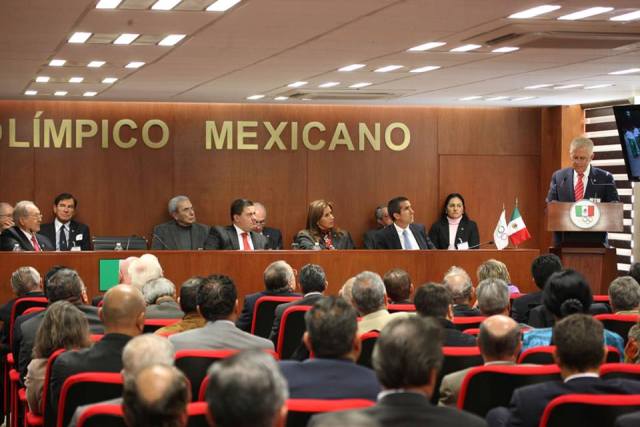
Mexico Olympic Committee President wants to revive joint Tijuana-San Diego Olympic bid for 2024

insidethegames.biz
Wednesday, 17 December 2014

By Duncan Mackay

Mexican Olympic Committee President Carlos Padilla is hoping for a joint bid between Tijuana and San Diego ©COM 


Mexico is trying to revive a joint bid for the 2024 Olympics and Paralympics between Tijuana and San Diego, although its hopes appear set to be dashed by the United States.  


Carlos Padilla, President of the Mexican Olympic Committee (COM), revealed during the organisation's General Assembly today that he hoped to hold talks with United States Olympic Committee (USOC) officials early next month.

The idea of a joint bid had originally been mooted last year when the USOC began seeking expressions of interest for a 2024 Olympic bid.

But it was ruled out because at the time the Olympic Charter did not allow for joint bids for the Summer Games.

That rule has now been scrapped with the adoption of Agenda 2020 at the International Olympic Committee (IOC) Session in Monte Carlo last week.

"With these modifications we now see a joint bid between the cities of Tijuana and San Diego as a feasible project," said Padilla at the General Assembly in Mexico City. 

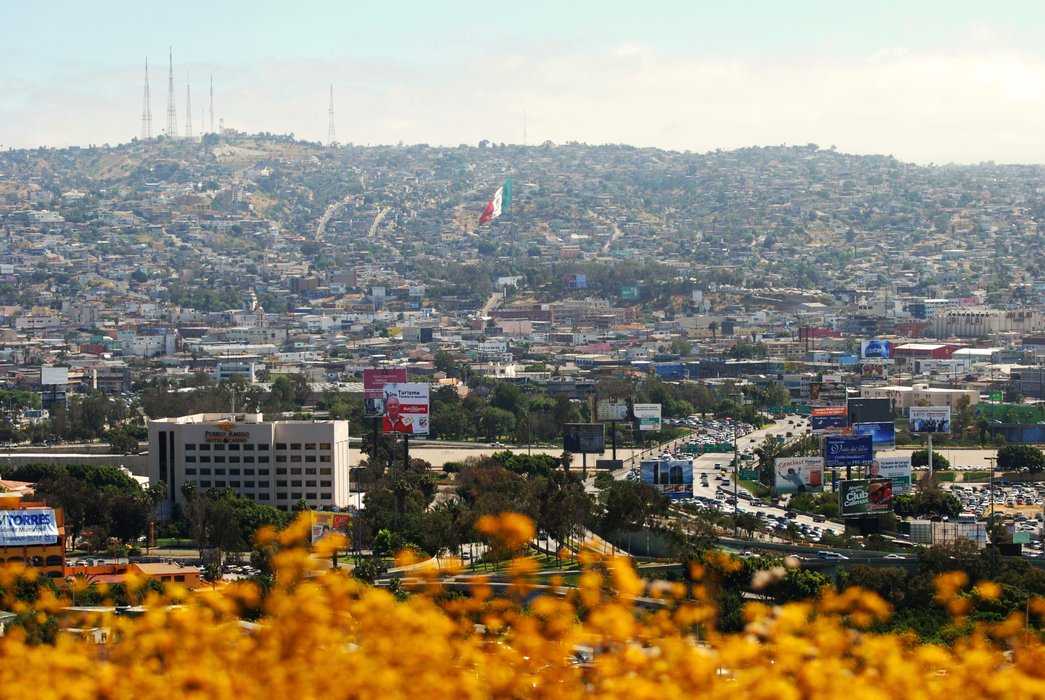
The two cities, which share a 15 mile border, are closely linked economically.

San Diego–Tijuana is an international metropolitan conurbation, straddling the border of the adjacent North American coastal cities of San Diego, California, United States and Tijuana, Baja California, Mexico. 

The population of nearly five million makes it the largest bi-national conurbation shared between the United States and Mexico and the fourth largest in the world.

Californian city San Diego and Mexico's Tijuana share a 15-mile border and are closely linked economically ©Getty ImagesCalifornian city San Diego and Mexico's Tijuana share a 15-mile border and are closely linked economically ©Getty Images
Padilla added that he hoped to meet with USOC chairman Larry Probst "to discuss the idea".

But his hopes of persuading the USOC to back the initiative appear very slim.

The USOC last night formally committed to bidding for the 2024 Olympics and its Board heard presentations from Boston, Los Angeles, San Francisco and Washington D.C.

Probst claimed they would back a "single-city" bid and hoped to make an announcement in January.

This stance was confirmed today by Patrick Sandusky, chief communications and public affairs officer at the USOC.

"We are not considering a joint bid at this time," he told insidethegames.

Earlier this year a political sports commission had been set-up to investigate the feasibility of an Olympic bid from Guadalajara but ruled that it would not be viable.

Wednesday, November 26, 2014

Santander gets new leadership

Santander gets new leadership
Shake-up addresses corporate governance concerns
BY JESÚS AGUADO
AND SONYA DOWSETT
Reuters
MADRID – Santander chief Ana Botín overhauled the management of the euro zone’s biggest bank on Tuesday, turning the page after her late father’s 28-year leadership and giving the Spanish lender a younger, more international profile.
The bank ousted CEO Javier Marín and replaced him with finance boss José Antonio Álvarez, a move welcomed by investors as a sign that Botín, 54, was putting her stamp on a business emerging from a long economic downturn at home.
The new team, which starts on Jan. 1, needs to show Santander can cut costs and build up capital while turning around its business in major markets such as Brazil and Europe, as well as expanding in newer ones such as the United States and Eastern Europe.
The overhaul aims partly to answer big international investors’ concerns that Santander’s board was not independent enough.
Santander replaced two directors and added a third, filling a void left by the death of former chairman Emilio Botín in September, when he was succeeded by his daughter.
In an internal memo seen by Reuters, Ana Botín told staff that she wanted the modernized lender to be “a simple, personal and transparent bank.”
A veteran of Santander herself, she has shown every sign of wanting to further her father’s strategy, including the bank’s global footprint and generous dividend policy.
But she has broken with some aspects of his management after four years running the bank’s British business.
Whereas the average age of board members had been 65 before the overhaul, the new directors are between 48 and 54 and include Briton Bruce Carnegie-Brown, who had been a front-runner to become chairman of the British division.
He will be lead independent director, a new position meant to foster accountability and which some banks are creating following the financial crisis.
“The changes at Santander are a clear message from Ana Patricia to say ‘I’m in charge’ and to show who is holding the reins. She is implementing change at all levels of the bank,” said Enrique Quemada, CEO of investment bank ONEtoONE.
Santander shares closed up 1 percent at 7.161 euros on Tuesday.
CHANGE OF STYLE
José García Cantera, until now head of global banking and markets and who had previously been a top manager at Santander’s Spanish retail business Banesto under Ana Botín - will replace Alvarez as CFO. Frenchman Jacques Ripoll, formerly of the British business, will run global banking and markets.
Tuesday’s shake-up also addresses corporate governance concerns that have often been raised about the bank, which until recently had three Botín family members on the board.
Santander named Sol Daurella, chairwoman of Coca-Cola’s bottling and distribution business in Spain, and Mexican businessman Carlos Fernández González as new independent directors.
They replace Spaniards Fernando de Asua and Abel Matutes, long-standing appointments under Emilio Botín.

Study of Harmful Effects of Chamoy takes Students to Holland

Natalia Hernández, Alejandra Cortez, Liz Valenzuela and Regina Palacios are on their way to Holland to represent ICO.
Four teenage students from Mazatlán’s Instituto Cultural de Occidente prívate school (ICO) will represent Mexico in the 2015 Expociencias International in Holland thanks to their study on the effects of chamoy on the Mexican society, in particular children and young people.
Chamoy is a spicy-sweet condiment made from fruit pulp to which is added limes, chilies and a variety of spices. The sauce is widely used throughout Mexico on everything from potato chips to jicama or as an ingredient in a Michelada beer concoction.
Chamoy is a spicy-sweet condiment made from fruit pulp to which is added limes, chilies and a variety of spices.
Director of ICO’s high school, Rodrigo González Rendón, said this is the first time students from the school are taking part in the international science expo and hopes they will bring home first prize. Two years ago students from the Autonomous University of Sinaloa earned first place at the same international contest.
The students will be participating in the Teen categoria in the area of biology. The young female students explained the aim of their project is to make citizens, in particular children and young people, aware of the effects of eating chamoy.
In their investigation, they discovered at least 70 percent of the populace consume the product. In particular, kids will eat chamoy instead of breakfast.
The students’ research included interviews with gastroenterologists, research on the internet and through books. They discovered that while organic chamoy is a natural condiment based on dehydrated fruit, industrial chamoy is full of chemicals and when a 12 year old consumes two kilos of the spicy sauce, it will produce corrosive, chronic gastroenteritis and atrophy.
The four ICO students will be heading to Holland in June next year to present their study and fight for first place. 
(from Noroeste)

Monday, November 24, 2014

Mexico team wins mobility award

mexico city trafficThey have some mobility issues.

While the automobile has its advantages, it also causes a lot of problems. But a team in Mexico City, who have done some thinking about traffic, says the same automobile can actually solve those problems itself.
That team was the winner of this year’s Audi Urban Future Award (AUFA), which had invited Seoul, Berlin, Boston and Mexico City to develop projects that would offer mobility solutions: improving mobility and enhancing the quality of life.
“Car finds city” was the theme of the award, and the winning Mexico City team appears to have nailed the theme by having the car tell a database where it is, where it’s been and how long it took to get there.
The process actually takes a smartphone to relay that information through an application and a website. Drivers must first agree to share the data on their personal movements, albeit anonymously, and while many might be wary of doing so, the team behind the idea thinks most will be happy to go along if it reduces commuting times and delays.
That team is led by architect and city planner José Castillo. He and data analyst Carlos Gershenson and Gabriella Gómez-Mont, head of the city’s Laboratory for the City, a think tank, call their project “an operating system for urban mobility.”
“Our city needs an operating system to help people make informed decisions about their mobility choices and to support public officials and policy makers in finding long-term solutions for the megacity,” said Castillo, who is also a professor at Harvard University.
The winning team’s project, he says, works in real time and is very low-cost.
The process relies on the collection of real-time data from commuters that is used to assess congestion problems. Other drivers can identify problem areas and avoid them, travel at a different time or use another system of transport.
But the information gathered is also gradually building a database that will create an overview of traffic problems and aid in transportation planning. Other tools are Twitter and Foursquare, which can offer insight into travel habits through their geo-location features.
Audi is active in developing technologies that improve mobility, such as its so-called car-to-x system, which connects vehicles to a city’s traffic control system and advises drivers how fast they should travel to pass through the next set of green lights.
The German automaker sponsors its award program every two years. This year’s winning team took home a cash prize of about 1.7 million pesos, or US $124,000, for their efforts.
For Chilangos, any system that improves traffic flow has to be welcome. According to a “commuter pain index” developed by IBM, Mexico City was “the most painful commuter city in the world” in 2011. Some 4 million vehicles use its roads, and commuters can spend up to three hours to get to work.
Source: Dezeen (en), Autocar Pro (en)

Thursday, November 20, 2014

Ávila: It’s time to promote Mexico

thenews.com.mx

Ávila: It’s time to promote Mexico

Now is the time to finish what we started and make Mexico known throughout the world, said Gov. Eruviel Ávila Villegas at the first University Meeting on Foreign Policy.
Over 80 International Relations students with the top averages in the country participated in the forum.
Addressing the crowd, Ávila Villegas noted President Enrique Peña Nieto’s recent work trip to China and Australia, where he participated in the Asia-Pacific Economic Cooperation Forum and the G-20 Summit.
“Through foreign relations, Mexico is strengthening its presence around the world, driving its economy by attracting investors, promoting the exchange of knowledge and technology. That being said, it is now necessary to finish the job in order to convey the strength of the nation,” the governor said.
“It’s now the 21st century and Mexico is moving. The complex foreign relations of a globalized world urge us to address new challenges and new opportunities so not only can Mexico get the best from the world, but the rest of the world can receive the best of Mexico,” said Ávila Villegas.
The governor added that it is essential for the universities to prepare themselves and get involved in everyday life of the country and the world, to better face the challenges the 21st century has to offer.
On this note, Ávila Villegas announced that he will award 10 Mexico State students participating in the forum with scholarships. To the rest of the participants, he promised to get them in touch with the state government to also receive funding, as they are in charge of protecting Mexico’s image in the future.
The governor also recognized the work of the Foreign Relations Secretariat, who has created forums such as these where university students can get to know the main players in the country’s foreign policy. He added that this is a window of opportunity for everyone to communicate the strength Mexico displays with one single voice.
THE NEWS

Tuesday, November 18, 2014

México on Track to Break 2013 Record for International Tourists

México’s Ministry of Tourism told reporters that based upon information obtained from the Bank of México during the first nine months of this year international tourists spent $12.37 billion during their stay in the country; up 17.4 percent over the same period in 2013.
With these expenditures, the Ministry of Tourism said that for the year 2015 México will probably break the 2013 expenditures by international tourists, which was $13.8 billion.
The 21.1 million international tourists who have visited the country this year exceeds last year’s number for the same period by 3.2 million, or an increase of 18.2 percent. For the year 2013 México saw a total of 23.7 international tourists.
International tourists arriving by air is up 1.4 percent for the January to September period, while those arriving by ground were up 30.5 percent.
(from El Sol de Mazatlán)

Wednesday, November 12, 2014

Emerging Markets: Mexico, The Neighbor Next Door

By Peter Kohli, 
nasdaq.com

Those familiar with my investing philosophy know that I focus on developing markets. Admittedly, in many aspects, Mexico is a different animal, in part because its economy is already so entwined with that of North America. As this line from the IMF annual report demonstrates, “Growth is projected to average 2.4% in 2014 and reach 3.5% in 2015, helped by a firmer US recovery.”
In fact, you could inadvertently gain significant exposure to Mexico just by investing in large-cap North American-based companies. Coca Cola (KO) has said it will continue to invest at least $1 billion a year in Mexico through 2020. Mexico is Coke's largest market outside the United States, and it co-owns bottler Coca Cola FEMSA (KOF). Many other marquee U.S. companies follow this pattern.
If you've read the papers over the last 20 years, you're aware of the sheer volume of formerly U.S.-based manufacturing jobs that have moved to Mexico. Overall, Mexico’s manufacturing cost is approximately 25% lower than that of the U.S., so it's no surprise that up to 80% of their exports are in manufacturing.
Mexico offers an attractive business climate, legal certainty, one of the largest free-trade agreement networks in the world, and highly developed industry groups. Furthermore, it is the second-largest economy in all of Latin America. By 2050, Mexico could have the fifth-largest economy in the world, above the U.K., according to Goldman Sachs.
Its macroeconomic financials are sound, with international reserves of $163 billion (almost three times its foreign debt). The average growth of the Mexican economy for the 2013-2019 period is expected to be around 4%, with a controlled inflation rate of 3.9%.
Ironically, almost everyone is optimistic about Mexico, except for Mexicans. Earlier this year, Moody's raised Mexico's bond rating a full notch, confirming the confidence investors have in the structural reforms of the Mexican government and growth of its economy. That same day in February, Mexico's national statistics service released a survey showing consumer confidence has sunk to its lowest level since the world economic crisis in 2009.
The citizens' pessimism is rooted in worries over rising prices, new taxes, and stagnant wages, among other concerns. This means that even though Mexico's middle class is continuing to expand and thrive in some regions, I wouldn't make the usual jump to concluding they will spend the majority of their new-found money on consumer goods.
To put it in perspective, the growth of the Mexican middle class is miniscule compared with what is going on in China, where the middle class grew six fold over the past 10 years. Mexico's middle class increased 11.4% over the same period, according to an INEGI study — large enough to discourage some illegal immigration to the U.S., but the people remain wary. The middle class represents about 39.2% (44 million) of the country's total population. However, if you look at the top and the bottom of the spectrum, there is one elite upper-class citizen (1.7% or 1.34 million people) for every 49 in the lower class (59.1% or 66.4 million residents).
As long as Mexico's citizens remain pessimistic, and the class spectrum so widely unbalanced, I wouldn't bet on more than a slight uptick in retail sales of consumer goods outside of certain subsectors, such as flat-screen TVs and cellular phones.
What I do think shows promise, however, is the financial sector. The Mexican banking system is profitable, liquid and well-capitalized. Investors can take advantage of the financial services sector with the ADR for Santander Mexico (BSMX).
Another promising sector is infrastructure. Mexico's government expects public and private infrastructure spending to reach nearly $600 billion over the next five years. This compares very favourably with some other developing countries. Investing in ADRs for Cemex (CX) or ICA (ICA) are good bets.
The major Mexican ETFs are not focused on high concentrations of either or both financial and infrastructure companies. They provide more of a broad exposure to the Mexican market. These include iShares MSCI Mexico Capped ETF (EWW) which contains about 18% of financial services firms. There are also major sector ETFs that include Mexico among other regions, such as iShares Emerging Market Infrastructure UCITS ETF (EMIF) (with Mexico concentration of just 8%).
Beyond these, Mexico is distinct in that its mining output has reached levels never seen before. In 2012, it was the largest producer of silver in the world, at about 19% of global production. Gold and copper are produced in volumes of 2.7% and 2.0% of world production, respectively. That said, I am not as positive on mining, the country's fourth largest industry (5% of GDP), as you might expect since in late 2013 the government enacted its first levy — a royalty of up to 7.5% on profits, plus 0.5% on revenues from precious metals. Previously, Mexico had only charged miners income tax of 30%. The moves put it in line with regional competitors like Brazil and Peru.
It's easy to see why the government has gone after such identifiable revenues in a country where tax avoidance is the norm. Mining was not the only sector targeted. Manufacturing exporters lost some tax privileges and value-added taxes were put on things like soft drinks and pet food. As a result, I wouldn't make particularly narrow bets on Mexican mining. Rather, I'd make broader regional bets via a vehicle such as Global X Silver Miners (SIL).
Mexico, for all its strengths, is still an economy in transition and your investments should take that into consideration.
Peter Kohli


Read more: http://www.nasdaq.com/article/emerging-markets-mexico-the-neighbor-next-door-cm412758#ixzz3IsRvxYJD

Monday, November 10, 2014

12 Tips to Make International Travel Easier

travelandleisure.com

Travel Tips: Getting Cash
Being in a strange place can be invigorating and eye-opening. Some of my favorite travel memories include an early-morning run along the Danube River in Budapest, touring the temples of Angkor Wat, and having late-night drinks and steak in Uruguay.
There have also been plenty of business trips where the only sites I saw were those visible from my hotel room window, because I was too busy running from one meeting to another.
Regardless of what type of trip you’re on, there are several steps you can take to ease an overseas journey. Here are 12 of my favorite international travel tips:
Hotel business cards. The first thing I do when arriving at a hotel overseas is take a business card from the front desk. That way, if I ever get lost, I have the name and address of the hotel in the local language. Large populations around the world speak English, but having something in a local language that I can show locals and taxi drivers is an extra bit of insurance.
The six-month passport rule. The expiration date on your passport is actually a bit deceiving. The U.S. lets you use your passport up to the date inside the cover. However, several countries will deny travelers entry if the passport expires in less than six months. Why? If for some unexpected reason you get stuck overseas longer than planned, that country wants to ensure that you have a valid passport to eventually travel back to the United States. To avoid any problems, I always renew my passport during a downtime in travel, about nine months prior to the expiration date.
Getting cash. The way to get cash is usually an ATM, but many U.S. banks charge steep fees for using an ATM that is out of network. You can take out a large amount of cash at the airport ATM so you pay that fee only once, but it’s never advisable to carry large sums of cash. Plus, you risk having too much local currency left over at the end of your trip. Charles Schwab and Fidelity both offer checking accounts that have no minimum balance requirements and reimburse you for all ATM fees, including those from overseas.
Credit cards. The best exchange rates are often found using your credit card. However, many credit cards will tack on a foreign transaction fee, sometimes as high as 3 percent. It’s a pointless fee that no traveler should ever pay. The Chase Sapphire Preferred card and Platinum American Express are two of the cards that don’t levy this fee. Also, never have a hotel or restaurant convert a charge into dollars first. It’s a bad deal.
Fraud alerts. Notify your credit card company’s fraud department of what countries you will be visiting and on what dates. This way, they won’t think your card is stolen and shut it off just when you need it the most. Be mindful of any countries you might be changing planes in; you might need to make a charge during your layover, especially if there’s a delay.
Credit card chips. U.S. credit cards rely on magnetic strips on the back that are swiped at vendors. In Europe, cards have a chip embedded in them which—when paired with a PIN—are used for purchases. It’s a much more secure way of charging goods, but hasn’t been adopted in the States. Most vendors overseas can still swipe your card. But train ticket machines, gas stations, and other machines where we pay without interacting with a person often reject cards that are swiped. Getting a chip and PIN card from a U.S. bank is hard. But many credit cards are now coming with chip and signature technology.
Medicine. I always carry an eye mask and earplugs in my medicine bag because you never know what your hotel room is going to be like. But I also carry Advil, NyQuil, Imodium A-D, Tums, and a handful of other key medications. Yes, even the most historic European neighborhood has a drugstore. But do you want to be running around Germany late at night, trying to translate “diarrhea”? If you’re heading to third-world countries, stocking up on the right drugs is even more important. Many travelers fill a prescription in advance for the antibiotic ciprofloxacin and bring it with them just in case.
Travel alerts. It’s a good idea to check the State Department’s travel warnings and alerts. It’s also smart to print out the address and contact information of the local embassy.
Foreign airline sites. If you are on a tight budget—and don’t have to book through your company’s travel department—look at overseas airlines’ sites in their home countries. I recently booked a ticket from southern Italy to northern Italy on Alitalia. The airline’s U.S. site wanted twice the price of the Italian site. I’m not fluent in Italian, but Google Chrome translated every page for me. I paid in euros, using a credit card with no foreign transaction fees.
Data roaming. Set up your cell phone to avoid international data roaming. Many business travelers have an international calling and data plan. But infrequent travelers don’t. The biggest costs can come from transmitting data overseas. I was in a remote part of southern San Diego last summer, and my cell phone provider sent me a text alert welcoming me to Mexico. Apparently, I had jumped onto a cell tower in Tijuana. I immediately shut off my data roaming, turning it back on only once I was out of that area.
Google Maps. I have a great sense of direction and rarely need a map. I know others aren’t as lucky, though, and have come to rely on their cell phones to get around. If you don’t add a data plan to your phone while abroad, you can still jury-rig a crude version. Using the Wi-Fi in your hotel, plot out a few routes you plan to walk that day. Then take a screenshot of those maps. You can later find the photo, zoom in, and follow the path. It’s not ideal, but it’s a work-around.
Unwanted local currency. I figure out on my last night how much cash I will need and then set aside the leftover money. At checkout the next morning, I take that cash and ask the hotel to apply it to my bill and then pay the remaining balance with my no-foreign-transaction-fee credit card.

ICBC, World’s Largest Bank, Granted Operating License in Mexico

laht.com


BEIJING – Industrial and Commercial Bank of China Ltd., the world’s largest financial institution by total assets, said Saturday that Mexican authorities have approved its bank license application, official news agency Xinhua reported.

It marks the first time a Chinese bank has been granted authorization to operate in Mexico, Xinhua said, adding that ICBC did not indicate when it will open a branch in that Latin American country.

The announcement comes on the eve of a visit to China by Mexican President Enrique Peña Nieto, who will attend an Asia-Pacific Economic Cooperation, or APEC, economic leaders’ meeting in Beijing next week.

“The establishment of the Mexican branch is expected to boost economic exchanges and trade between China and Mexico, and contribute to bilateral cooperation in sectors such as energy, trade, projects contracting, and equipment supplies,” Xinhua reported, citing an ICBC spokesman.

ICBC has expanded its foreign presence over the past two years by opening branches in Spain, France, Italy, Belgium, the Netherlands, Peru, Brazil and other markets.