Showing posts with label lifestyle. Show all posts

Friday, February 6, 2015

No matter what kind of Lifestyle you are looking for, you’ll find it in Mexico

theyucatantimes.com

Reports are that approximately one million Americans live in Mexico. While it’s hard to verify that number, it’s not hard to imagine that it’s true. Some are working, of course, for U.S., Mexican, or other foreign corporations. You’ll find them in cities like Mexico City, Queretaro, and Monterrey.
And some live in Mexico just part-time…spending winter months in vacation homes where the weather is always warm and thecervezas are always cold.

Many Americans in Mexico, however, have moved there to enjoy their retirement years. They live in Mexico full-time and enjoy better weather, a more relaxed lifestyle, and a host of other benefits—including affordable top-quality health care and a much lower overall cost of living.

The most popular retirement destinations for Americans in Mexico

First, let’s get something straight. People from around the globe are retiring to Mexico… and not just folks from the U.S. It just happens to be a close destination for those from the U.S. and Canada. From Canada or the U.S. you can easily drive to Mexico.
Several locations in Mexico stand out, of course, as retirement destinations for foreign expats. Some of the most popular are:

Lake Chapala, Jalisco: In the little towns along the north shore of Mexico’s largest freshwater lake, you’ll find the largest community of U.S. retirees outside the U.S. This lakeside area in the country’s central highlands, just 45 minutes south of Guadalajara, is already home to about 10,000 full-time expatriates from the U.S. and Canada (and nearly twice that many during winter months). The towns on the lake—particularly those along the north shore—are comfortable enclaves with cobblestone streets, Spanish-colonial architecture, and some of the world’s best weather. The average year-round temperature is a spring-like 68° F, and a tight-knit expatriate community provides all manner of comfortable amenities and support to retirees—from garden restaurants, to dog-training services, to bridge clubs and yoga classes.
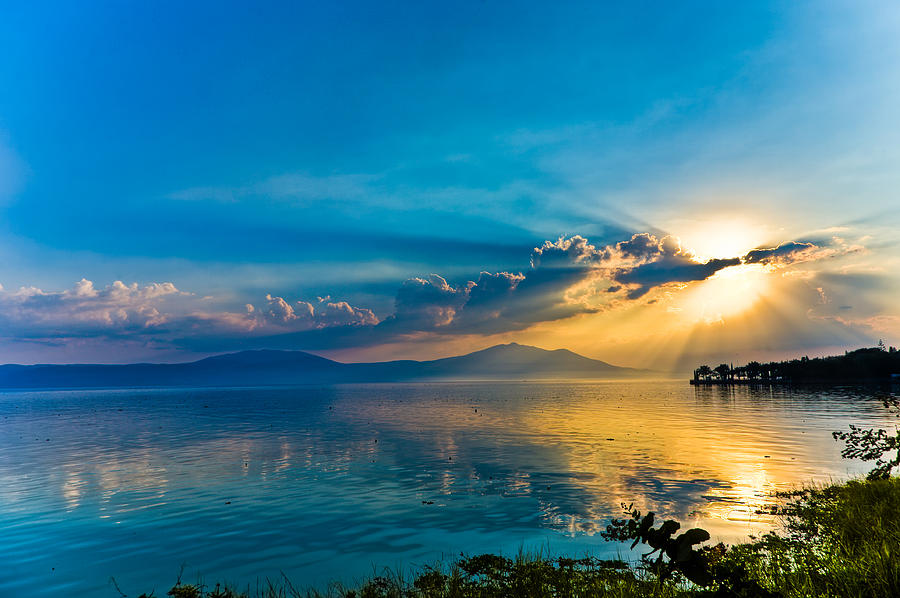
Lake Chapala Sunset (Photo: Tommy Farnsworth)

San Miguel de Allende, Guanajuato: With its high-towered church and its cobbled streets, tidy shops selling carefully embroidered linens and hand-painted plates homes that belong in the pages of Architectural Digest, and lush courtyard gardens in bloom year-round, this city is like something out of a children’s fairytale book. San Miguel has other benefits, too—proximity to the U.S., an excellent climate, an affordable cost of living, an established expatriate community, local golf courses, and the kind of shopping (for everything from food to office supplies) that you’re used to back home.

San Miguel de Allende Cathedral (Photo: Google)

Puerto Vallarta, Jalisco: When Liz Taylor and Richard Burton famously came here in the early 1960s, Puerto Vallarta wasn’t much more than a sleepy fishing village. A place where misty tropical mountains wrap arms around the crescent moon-shaped Banderas Bay.

Today, it is one of the world’s top tourist destinations, with an international airport, pro-tourney golf courses, designer shopping, world-class restaurants and beautiful people from around the world. Vallarta’s expat community is vibrant, too…you’ll find many activities to keep you busy, from outdoor activities to art galleries and charitable events to volunteer options and more.
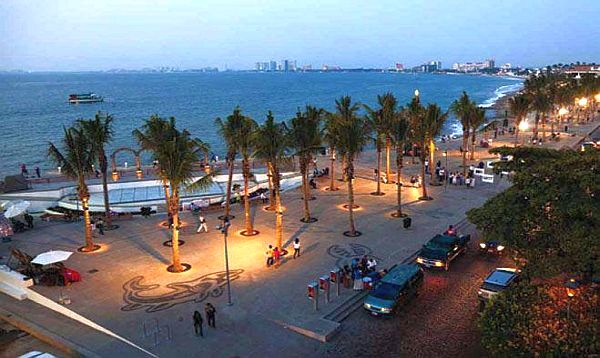
vallarta
Puerto Vallarta (Photo: Google)


Baja California Sur. The southern half of the long Baja Peninsula is a nature wonderland: a dry, sparsely-populated desert terrain blessed with two spectacular coasts: the Pacific to the west and the fertile Sea of Cortez, which separates it from mainland Mexico, to the east. Three easy-going destinations favored by expats are Todos Santos, Loreto, and La Paz. Artsy Todos Santos, on the Pacific side of the Peninsula, has a well-established little expat community. Loreto, on the Sea of Cortez, is the gateway to the UNESCO-designated and –protected marine park just offshore. With world-class kayaking, snorkeling, diving, fishing, and dolphin- and whale-watching available, Loreto attracts nature- and sports-lovers. Laid-back La Paz, four hours south of Loreto on the Sea of Cortez, is the capital of Baja California Sur and a low-key favorite that feels much like Southern California 60 or 70 years ago.

Baja California Sur (Photo: Google)

Mazatlán, Sinaloa: One of Mexico’s oldest and most famous vacation and retirement destinations, Mazatlan is built on the reputation of the world-class deep-sea fishing to be found along the coast, and the 16 miles of beaches running north from town. Other fancier Mexican beach resorts may have stolen a bit of its thunder, but make no mistake…Mazatlan still has what it takes to charm the visitor’s heart and pique the interest of the potential part- or full-time resident. It’s a wonderful blend of resort beach town with a distinctly Mexican flavor…something the mega resorts have largely lost. And reasonably priced real estate is still available.
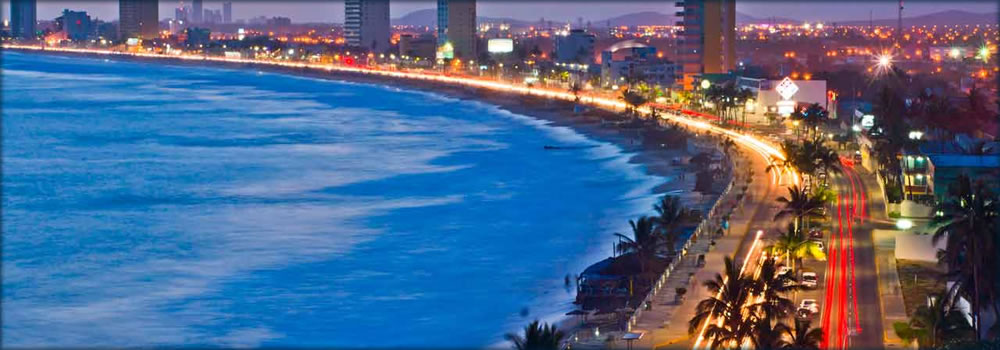
Mazatlán, Sinaloa (Photo: Google)

Huatulco, Oaxaca: A resort community planned by Fonatur, the Mexican government’s national trust fund for tourism development, Huatulco is spacious, green, and well-maintained. You’ll find fabulous homes tucked away on high cliffs overlooking the picture-perfect bays. (There are nine gorgeous secluded bays to choose from here.) And even though Huatulco is a resort destination, it doesn’t feel like one. It’s quiet, laid-back and waiting to be discovered…the “Cinderella” of Mexico’s Pacific resort towns.
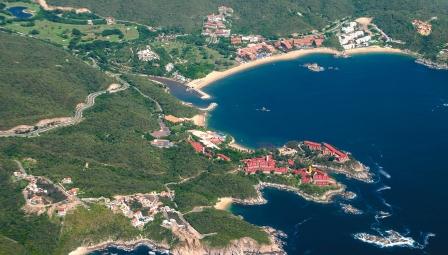
Huatulco
Huatulco, Oaxaca (Photo: Visanat)


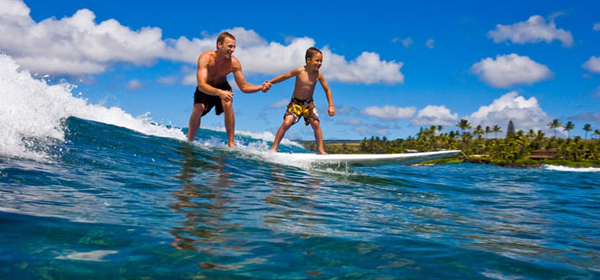
Puerto Escondido, Oaxaca: Puerto Escondido is a little fishing village and a world-class surf zone—a longstanding favorite with surfers worldwide. The downtown area is small, colorful, and crowded, and the front beach is like a picture postcard, truly gorgeous. This is still a fishing village at heart, and its front beach is one of the cleanest and prettiest we’ve seen on any coast. You can still buy a whole, fresh tuna or dorado from fishermen’s children on the main street if you get there before 10 a.m. But the little town is growing, so get there quickly while you can still find the bargains.
surf-en-puertoEscondido
Surfing lessons in Puerto Escondido (Photo: www.costadeoaxaca.com)


Merida, Yucatán: Sidewalk cafés, tree-lined streets, and fresh paint…Yucatan’s best-kept secret is cosmopolitan Mérida. Just a half-hour from the Gulf-coast beaches, this city of 970,000 is a center of commerce and home to universities, hospitals, friendly locals, and beautiful colonial homes that would cost you twice as much in central Mexico’s discovered enclaves. The expatriate community maintains a well-equipped English-language library and hosts monthly get-togethers. The kinds of goods and services you’d expect to find in a comparably-sized city back home are available here, too–from Office Depot to Sam’s Club, Costco, Sears, all the familiar fast-food chains, and several high-end shopping malls.
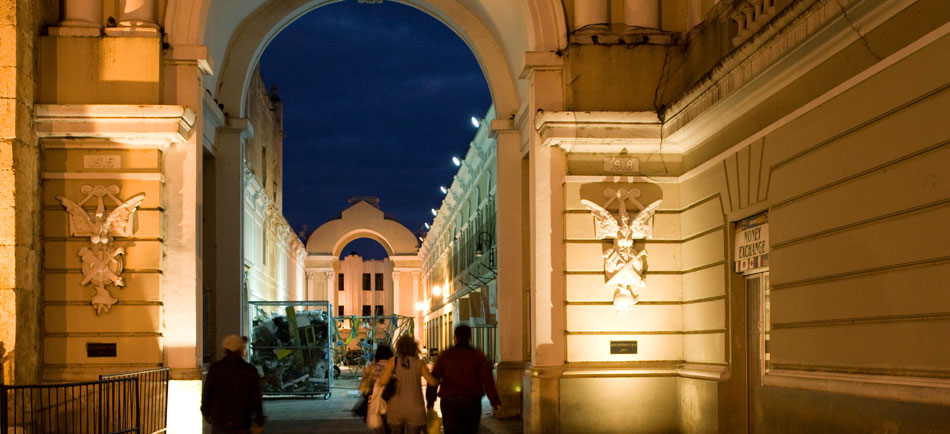
Downtown Mérida, Yucatán

The Riviera Maya, Quintana Roo: The stretch of Caribbean coastline that runs from Cancún to Tulum is known as the Riviera Maya. Arguably, this area is home to some of the world’s most beautiful beaches. There are several intriguing towns along this coast, including Puerto Morelos, Playa del Carmen, Akumal, and Tulum. Playa del Carmen is one of the fastest-growing cities in Mexico. Cruise ships dock here regularly and the beachfront is wall-to-wall hotels and restaurants. Fifth Avenue is just a block or so off the beach. This pedestrian walkway is flanked by sidewalk restaurants and small boutiques selling a myriad of exotic items. This is a fun place with a relaxed, bohemian ambience. If Playa is too “busy” for you, check out laid-back Tulum, an up-and-coming destination that attracts fashionistas and movers-and-shakers while still paying homage to its backpacker roots. And Tulum’s beach regularly figures among the 10 most beautiful beaches in the world.

Riviera Maya Golf Club

Which one is for you?

There are many other locations in Mexico, of course, where you will find U.S., Canadian, and other foreign residents–from small towns like Pozos de Mineral in the central highlands to large cities like Cuernavaca, near Mexico City, and the Pacific Coast resorts of Manzanillo and Ixtapa/Zihuatanejo.
So be assured…no matter what kind of lifestyle or climate you are looking for, you’ll find it in Mexico.

Source: http://internationalliving.com/countries/mexico/one-million/

Monday, January 5, 2015

Mexican Gov't Says No More Fuel Price Hikes in 2015

banderasnews.com

go to original
January 5, 2015 
A 1.9-percent hike in fuel prices on January 1st will be the last price increase for 2015. Although one of the world's major oil producers, Mexico cannot meet its fuel needs and has to import refined oil.
 
Mexico City, Mexico - Mexico's finance ministry said on Friday that a 1.9-percent hike in fuel prices announced on January 1st will be the last price increase for 2015.
"The maximum prices ... will remain at the level established at the beginning of the year, and the monthly adjustments will be eliminated," the ministry said, referring to the incremental monthly increases it has been making for several years to compensate for fluctuating international crude prices.
The 1.9 percent increase is below the 3 percent to 4 percent inflation rate forecast for 2015, it noted.
Although one of the world's major crude oil producers, Mexico cannot meet its fuel needs with its current refining capacity and has to import refined oil.
Original Story

Thursday, September 4, 2014

Increasingly, Retirees Dump Their Possessions and Hit the Road

nytimes.com
 

SOME call themselves “senior gypsies.” Others prefer “international nomad.” David Law, 74, a retired executive recruiter who has primarily slept in tents in several countries in the last two years, likes the ring of “American Bedouin.”
They are American retirees who have downsized to the extreme, choosing a life of travel over a life of tending to possessions. And their numbers are rising.
Mr. Law and his wife, Bonnie Carleton, 69, who are selling their house in Santa Fe, N.M., spoke recently by phone from a campground in Stoupa, Greece, a village on the southern coast of the Peloponnese. He explained that they roam the world to “get the broadest and most radical experience that we can get.”
They recently decided to fold their tent. “Hey, we’re getting to be too old for this,” said Mr. Law about camping out. But they intend to continue what he termed their “endless holiday” in a more comfortable and spacious recreational vehicle.
Between 1993 and 2012, the percentage of all retirees traveling abroad rose to 13 percent from 9.7 percent, according to the Commerce Department.
About 360,000 Americans received Social Security benefits at foreign addresses in 2013, about 48 percent more than 10 years earlier. An informal survey of insurance brokers found greater demand by older clients for travel medical policies. (Medicare, with a few exceptions, does not cover expenses outside the United States). While many retirees ultimately return home or become expatriates, some live like vagabonds.
Lynne Martin, 73, a retired publicist and the author of “Home Sweet Anywhere: How We Sold Our House, Created a New Life, and Saw the World,” is one. Three years ago, she and her husband, Tim, 68, sold their three-bedroom house in Paso Robles, Calif., gave away most of their possessions, found a home for their Jack Russell terrier, Sparky, and now live in short-term vacation rentals they usually find through HomeAway.com.
The Martins have not tapped their savings during their travels, alternating visits to expensive cities like London with more reasonable destinations like Lisbon. “We simply traded the money we were spending for overhead on a house and garden in California for a life in much smaller but comfortable HomeAway rentals in more interesting places,” Ms. Martin said by email from Paris.
ontinue reading the main story
On her blog, Barefoot Lovey, Stacy Monday, 50, a former paralegal and mediator who lived in Knoxville, Tenn., wrote: “I used to dream about all the places I would go as soon as I was old enough to get away. But then ... life happened.” On May 1, 2010 — like many itinerant baby boomers Ms. Monday can quickly recall the date her journey started — she embarked on her dream trip. She “crisscrossed the U.S. three times” and visited Mexico, Ireland, France, Italy, Morocco, Spain and many other countries.
Continue reading the main story

Travel Tips for Vagabonds-in-Training

  • Make sure travel insurance covers medical evacuation to the United States. A rider or separate policy may be required.
  • Bring noise-canceling headphones for immediate access to peace.
  • Consider downloading the Point It app, a catalog of photos of items travelers need with translations in several languages.
  • Buy a few pairs of fast-drying microfiber underwear, which take up less space in luggage than conventional knickers.
“I sold everything I had,” Ms. Monday recalled earlier this summer from San Francisco before she headed to Las Vegas, Dallas, Memphis and Knoxville. “I paid off all of my debt. I have no bills and no money.” She estimates that she now spends $150 a month — sometimes less if she is saving up for a flight — and earns a modest income through “odds-and-ends jobs,” as well as the tip jar on her blog.
ontinue reading the main story
To stick to her tight budget, Ms. Monday volunteers for nonprofits and organic farms in exchange for room and board or finds free places to stay through Couchsurfing.org. The company puts its membership of people 50 and older at about 250,000.
Ms. Monday monitors ride-share boards at Couchsurfing and Craigslist for free or inexpensive transportation, and she travels light. “I get away with a couple pairs of jeans, a pair of shorts, a skirt and four or five shirts and a pair of pajamas,” she said.
When she answers the ubiquitous question, What do you do? Ms. Monday notices that most women respond with encouragement, while many men are less supportive. “They say: ‘You should be home. That’s not safe. You are old.’ I get that from a lot of the men,” she said.
Hal E. Hershfield, an assistant professor of marketing at the University of California, Los Angeles who studies the influence of time on consumer behavior, observes that many “pre-retirees” still assume retirement is a “decrepit, sitting on a porch, maybe playing golf, ice-tea type of life.”
But current retirees are “changing the way they think,” he said, “because they are still healthy and sort of young at heart.” In the last 50 years, retirement “wasn’t this period that we spent years and years in,” Mr. Hershfield continues. “It really, truly was the end of life.”
Photo
David Law and his wife, Bonnie Carleton, on the Great Wall of China.
Galit Nimrod, a research fellow at the Center for Multidisciplinary Research in Aging at Ben-Gurion University of the Negev in Israel, says an extended postretirement trip can assuage a sense of loss from ending a career. Travel can “act as a neutral, transitional zone between voluntary or imposed endings and new beginnings” and “serve as a healthy coping mechanism,” Dr. Nimrod said by email.
Gary D. Norton, 69, acknowledges that he felt “afraid of retirement” when he left his job of 34 years as a science professor at a South Dakota community college.
In 2002, he and his wife, Avis M. Norton, 67, a retired farmer, sold their house, bought an R.V. and started volunteering full time for two nonprofits: Nomads on a Mission Active in Divine Service, or Nomads, and RV Care-A-Vanners, an initiative of Habitat for Humanity.
The couple typically rebuilds houses damaged by natural disasters, projects that usually last several weeks. Mr. Norton, who now specializes in drywall finishing, and his wife, who studied carpentry, say they cherish the chance to give back to society while seeing the country. “Now what we’re doing is so satisfying and fulfilling, even though we have some health issues, we say we don’t want to quit,” said Mr. Norton, who estimated that he and his wife had repaired damaged homes in 28 states.
The chance to volunteer on international conservation projects and the opportunity to live like a local inspired Danila Mansfield, 58, and her husband, Chris Gill, 64, to sell their house in San Jose, Calif., last year. They got rid of nearly everything they owned — the exceptions being two suitcases, clothing and a pair of guitars (Mr. Gill’s prized Gibson ES-335 electric guitar is stowed at a friend’s house, but he totes around a travel guitar) — and do not even rent a storage space.
The purge of possessions was “a little nerve-racking” at first, but ultimately “hugely liberating,” said Ms. Mansfield, who is currently in South Africa. She and her husband plan to volunteer on game reserves to protect endangered species and then study great white sharks.
So far, their travels have surpassed expectations. They drove from San Jose to Florida over five months, before cruising to Europe. High points included meeting a judge at a bar in Amarillo, Tex., who invited them to visit his drug court, catching crawfish with locals in Louisiana’s bayou country and making new friends in Austin, Tex., who invited the couple to stay with them in South Africa.
But Ms. Mansfield has also hit bumps in the road. In Galveston, Tex., and New Orleans, an acute respiratory illness required three visits to urgent care centers. “It was really dragging me down,” she recalled. At one point she cried for home, but then managed to brighten her mood. “I kept telling myself, ‘This is home,’ ” Ms. Mansfield said. “Where I am is home.”

Tuesday, July 22, 2014

Carlos Slim Says You Should Only Work 3 Days a Week


go to original
July 22, 2014 
'With 3 work days a week, we would have more time to relax; for quality of life,' said Slim, Mexico's richest man. 'Four days off would be very important to generate new activities and other ways of being occupied.'


Do you wish that your weekend was longer than just Saturday and Sunday? According to the world's richest man, it should be.
Carlos Slim Helú, the Mexican telecommunications mogul worth approximately $79.6 billion, told attendees at a business conference in Paraguay last week that it was time for 'a radical overhaul' in people's working lives.
As of July 15, 2014, Forbes announced that Slim was the richest man in the world, edging out Bill Gates' $79.1 billion fortune.
According to Slim, people should take more time off in the course of their professional lives, working only three days a week instead of the standard full-time five days per week.
"People are going to have to work for more years, until they are 70 or 75, and just work three days a week – perhaps 11 hours a day," Slim told the conference, including the catch that not only would workers have to work longer days - 11 hours instead of the usual eight - but would have to continue to work well into their 70s, an age many opt to retire before reaching.
However, according to Slim, the benefits for such a short work week are plentiful.
"With three work days a week, we would have more time to relax; for quality of life. Having four days off would be very important to generate new entertainment activities and other ways of being occupied," he told the conference.
To a certain degree, Slim has been applying this train of thought to his own businesses.
According to the Financial Times, Slim's phone company Telmex has implemented a system where workers on a collective labor contract who joined the company in their late teens can retire before they reach 50, and can continue to work for full pay four days per week.
Slim also applies this philosophy to his own work life. He is still active as a businessman at his age, 74.
He also maintains a life full of hobbies, such as art collecting. He opened the Museo Soumaya, an art museum dedicated to both his love for art and religious relics as well as the memory of his late wife, Soumaya Domit.
At the same meeting, Slim also commented on the state of education, saying that education should "not be boring, but should be fun" and that students should learn "not to memorize but to reason; not to domesticate but to train."
Original Story

Wednesday, July 16, 2014

Benefits of retirees in Mexico

Retirement Guide - Retiree Benefits in Mexicomexicorealestatecondos.com

Having a residence visa (FM-2 or FM-3) can offer you the following benefits:
  • Sign up for Mexico’s national health insurance coverage, called IMSS. This has a top rate of less than $300 a year—for both medical care and medicines.
  • Get a senior citizen’s card once you’re 60 years old through INAPAM, Mexico’s national senior citizens’ organization. With an INAPAM card from your Mexican state government, you can get discounts off a variety of goods and services, including medical care and devices; airline and bus tickets; entrance fees to concerts, museums, and archaeological sites; and even get a discount on your property taxes.
  • With an FM-3 you can bring your foreign-plated car to Mexico and keep it here. If you switch to an FM-2 you’ll need to get a Mexican-plated car.
  • With the FM-2 you can be exempt from capital gains tax when you sell a Mexican property, just as Mexicans are.

Monday, July 14, 2014

Health benefits of oceanfront living

mexicorealestatecondos.com 
 July 4, 2014

There are many hidden health benefits to owning real estate in Mexico that you may not even realize.
Living by the ocean has been scientifically shown to reduce stress, battle certain skin conditions, and give your immune system a boost. That’s part of the reason that exposure to “seaside air” has been prescribed as a medical treatment for centuries….its health benefits were apparent even before modern medicine evolved.
With that in mind, here’s a closer look at the many ways your health can benefit from oceanside living.
Reduce Stress by Living at the Beach
Anecdotal evidence has long suggested that the sound of waves lapping at the beach helps reduce stress, induce relaxation and boost creativity. But in an age where knowledge reigns supreme, there’s no need to rely on old wives’ tales; there is actually a growing body of scientific proof in support of these claims.
Researchers have found that listening to waves roll up against the shore triggers quantifiable changes in brain chemistry. When exposed to these gentle, natural sounds, the brain produces waves of its own that create a soothing mental state. These unique brain wave patterns have been shown to reduce stress and improve sleep quality.
Another reason sea air helps you sleep more soundly is that it is rich in negatively charged ions. These ions help you absorb oxygen more efficiently while regulating serotonin levels. Both of these effects help you fall asleep faster, achieve deeper levels of sleep, and awake feeling more refreshed, invigorated and happier.
Treat Skin Conditions with Sunshine and Ocean Water
While sunshine has been on the receiving end of a bad rap in recent years due to concerns about UV levels and melanoma, sun exposure can actually help treat certain skin conditions. Psoriasis, a chronic autoimmune disorder characterized by the unexplained appearance of itchy pink or reddish splotches of skin, responds very well to sunlight. Researchers believe that ultraviolet rays dry out the skin more quickly, leading to faster healing and fewer psoriasis outbreaks.
Swimming in the ocean’s natural salt water has also been scientifically proven to treat dermatitis, an uncomfortable skin condition which causes rashes and localized hives. Controlled studies found that immersion in salt water sped up healing significantly, and reduced the frequency and severity of subsequent outbreaks.
Ocean water has also been found to improve the appearance of your skin, helping you look younger and healthier. Immersing yourself in salt water helps your skin retain its moisture while reducing redness and inflammation. Ocean water is also high in magnesium, which has long been linked to beautiful, young-looking skin.
Immune System and Circulatory System Benefits
When you take a swim in the ocean, you’re immersing yourself in a living ecosystem rich in amino acids, vitamins, minerals and important elements. The physical composition of seawater is also very similar to that of human blood plasma, ensuring these nutrients are easily absorbed. Both mainstream doctors and naturopathic health professionals believe that this environment can give your immune system a significant boost. 
Researchers have also found links between immersion in sea water and improved circulatory system function. Again, the mineral-rich ocean environment is believed to play a role. Over time, stress can deplete your body of essential nutrients, forcing your circulatory system into overdrive. Swimming in ocean water helps speed up the replacement of these minerals, easing pressure on your heart, veins and arteries and improving overall blood flow.

Tuesday, June 10, 2014

How to Sell Your Property Abroad - 10 Tips

shelteroffshore.com
According to the results of a recent survey, 56% of Britons with second homes abroad are considering selling up in 2011 as their overseas properties become too expensive to keep, service and enjoy.
Of those surveyed by Currencies.co.uk, a large percentage of people wanting to sell had second homes in Spain, and the vast majority of respondents wanted to sell directly because of negative financial reasons.
If you have a home overseas and you want to get rid of it in 2011, this article will show you how to sell your property abroad as quickly and as well as possible.  Where once your dream to own a property abroad was perhaps lifestyle driven, it’s perhaps unsurprising that now with the dire state of the economy in the UK and the fact that we are all being fiscally impacted by the downturn, many want to sell up abroad and keep their outgoings much reduced.
Tales of property markets in the likes of Spain and Bulgaria crashing have thankfully reduced significantly as real estate economies have balanced out after peaking far too high for sustainability.  For a vendor this is perhaps the only positive news in an environment where there is little else that’s good to be said about property abroad!
House prices have fallen right across Europe, mortgage lending on second properties has dried up, the general appetite for real estate (particularly in the form of holiday, second or investment properties) has greatly diminished, and so you have an environment where people want to sell up and get out, but even if there are buyers interested, financing is exceptionally hard to come by.
As a property owner who wants to get rid of a home abroad in 2011, this means that you need to work hard to sell quickly and as well as possible.  The good news is that there are ways and means for making your property as attractive as possible so that you stand the best chance of getting a good and quick sale.

1)  Finish What You Start!

In this environment, buyers don’t need to have an imagination – therefore you need to finish up any DIY jobs you’ve started and don’t rush the finish.  Pay attention to doing a good job – and if you don’t heed this advice, don’t expect your potential buyer to pay the asking price!  By not finishing what you start, you’re giving your buyer carte blanche to haggle hard on price.

2)  Clean Up

No one imagines themselves living in a hovel and so your buyer will want to see a very clean home that they can make their own – even if they turn it into a pigsty as soon as they move in.  So, clean your house!

3)  Present a Blank Canvas

Buyer’s need to be made to feel that they can make your home their home – so get rid of family photos, all those bits and pieces you have personalised the property with, and present as neutral a canvas as you can.

4)  Clear Out

Space sells, so cut back on the furniture and furnishing, knickknacks and accessories you have filling up your property abroad.  Pack up your excess stuff and move it out.

5)  First Impressions Count

The first impression your buyer will have will be of the outside of your property – so, is your paintwork neat, are your shutters free from peeling paint, are your rubbish and recycling bins out of sight, is your garden neat and is your pool clean?  Details, details!  They all count.

6)  Make the Most of Your Best Features

What is it about your property abroad that makes it stand out?  Is it the view, the location, the great pool or the high quality kitchen?  Whatever makes your home stand out from the crowd, market that to the best of your ability!

7)  Define the Space

Are you currently using a bedroom as a storeroom?  Well stop it!  Do you have a dining table crammed into the kitchen making the space seem much smaller?  Get rid of it.  Clearly define each room so that a buyer can see what they are getting for their money.

8)  Market the Lifestyle

You bought a second home abroad for the lifestyle – even if your property is an investment property, you bought it for the lifestyle.  Why?  Because it’s an investment because you can rent it out to those seeking the lifestyle it offers.  So, explain to buyers what they can enjoy from your property – the sunshine, the laid back pace of life, the stunning views, the joy of having a getaway abroad…  Don’t make your buyer have to work too hard to imagine it – sell it to them, put the lifestyle on a plate and serve it up.

9)  Attack the Sales Process from Multiple Angles

Put your overseas property on for sale with multiple agents, get it on the Internet, hand out flyers and post it on your social networking pages.  Tell anyone who helps you sell it that they’re in for a reward (maybe an extra 0.1% for an estate agent, or a £50 bonus for a friend?)  Incentivise others to help you sell and work hard at getting your property noticed.

10)  Be As Flexible As Possible

Finally, because money is tight, borrowing is difficult and times are tough, you need to be able to be as flexible as possible on price, buying terms, viewing times and so on.  In other words, to sell your home abroad you need to be as flexible as you possibly can be.

Wednesday, April 9, 2014

How to save Money in Mazatlán without really trying

Who would think you could save money in a tropical beach resort?
Like everyone else, except the very rich who think the word “budget” only applies to governments, we live on a static monthly income that has not heard the phrase “cost of living increase” for the past ten years. As a result, we have always budgeted our monthly expenses, putting grocery money in one envelope, rent in another, car expenses, utilities, dog groomer, haircuts, etc. in others. The one envelope that gets filled last is “mad money.”
And since moving to Mazatlán a strange thing is happening to that mad money envelope. It is never empty. Hmm-m-m. Are we eating out less? No. Are we going to fewer movies? No. Buying fewer clothes? Maybe. Is my husband buying less scotch, me less wine? A definite No.
So, why exactly are we saving money in Mazatlán without really trying?
It took me awhile, but I think I’ve finally figured it out. Here’s what I think:
  • So I’ve had a couple of glasses of wine and an ad comes on television for a perfect non-stick Brownie pan, $19.95US and if you call right away, two for the same price, just pay additional handling and delivery. I would have grabbed the phone, but you can´t order from Mexico – saved $19.95
  • Speaking of television True Grit, which I’ve wanted to see, is available on Pay-Per-View. But our server won’t allow us to order it from Maz. Setttle for watching a free re-run of The Big Bang Theory
  • An explosion of Strawberry Twizzlers, which are not available in Mexico, appears on the TV screen. Salivate a bit and settle for another glass of wine.
  • My son-in-law tells me about a live U2 concert in Seattle, just $150 per ticket. I’ve loved them forever. Settle for a free PBS special on Peter, Paul and Mary.
  • Watch an American ad for a new, snazzy red BMW with turbo power knowing it is three times the price in Mexico. Remember we bought a Dodge Neon because nobody wants to steal a Dodge Neon.
  • On come ads for Target or JC Penny introducing swinging new women´s clothing styles just in time for the party season. Check my wardrobe. Shorts, t-shirts, sandals, one spaghetti-strap dress. It´s 34°C for heaven´s sake! Why would I need anything else?
  • Ah, Travelocity vacation ads of sunny beach resorts. We live in a beach resort. Why would we want to leave? Savings: $1,000US
  • Received a letter from a friend who visited the San Diego City Zoo, entrance fee for 2 adults, 2 kids: $140US. Settle for watching our resident gecko scamper from behind the painting on the wall up to the ceiling, all the while eyeballing me.
  • My daughter-in-law arrived for a visit in Maz totally tanned thanks to five expensive sessions at a tanning salon. She didn´t need to spend the bucks. We just walk 15 minutes to the store and 15 minutes back in the Mazatlán sun and voilá: Free tan
  • Bar drinks. In Canada last year we spent $2.50Cdn for a beer. But in Maz, we discovered we can drink 6 beers between us in two hours for 60 pesos (about $5Cdn) hitting the 4pm-5pm, 5pm-6pm and 6pm-7pm bars at their 2×1 happy hours. Life is good.
  • Back in Canada I took my grandson to see a Harry Potter movie and forked out $24Cdn for tickets, another $6 for popcorn and a drink for us both. Saw the Harry Potter movie here: cost – 30 pesos ($2.60Cdn) each and 20 pesos for popcorn for me and my sweetie.
And perhaps this is the real reason our mad money envelope never lets us down. Liquor sales. In Canada prices are controlled by liquor boards. In Mazatlán, it´s free enterprise. Anywhere, at any store, you will find sales on liquor and wine – 20% off, 33% off, 2 x 1. And according to our family, prices in Maz are often lower than the airport duty free. Go figure.
Well, I´m glad I solved that mystery. Now if I can only figure out why our kids think we would be better off living in Canada……