I am sure the vast majority of my readers know about Día de los Muertos (Day of the Dead). I have spent a number of celebratory evenings following the donkey cart around El Centro pushing and shoving with fellow revelers trying to get a free beer being doled out, thanks to Pacifico and the poor soul on the back of the cart. I have seen the altars and one year Linda and I even spent the last day of October visiting the city’s cemeteries watching and talking to families cleaning and painting the grave sites of their departed relatives and building alters adorned with the loved one’s favorite foods and beverages.
However, every time I read about México, its history and culture, I learn something new. And that was the case when I started reading about this annual celebration.
Everyone associates Día de los Muertos with México, which is understandable. But, the celebration probably originated some 4,000 years ago and was in the cultures of the Olmecs, Mayas, and Aztecs. All of these cultures believed in a life after death.
Their belief in the cyclical nature of life led them to celebrate death rather than fear it. “Life” did not end at death, it just moved to another plane. Día de los Muertos had its origin with this native belief. The Aztecs believed that the deceased had rather be celebrated than mourned.
So once a year, the Aztecs would hold a festival celebrating both the death of their ancestors and the queen of the underworld, Mictecacihuatl (pronounced /miktekasiuat)…[good luck]. Her role was to watch over the bones of the dead and preside over the festivals of the dead. The festival was held throughout the month of August. During this annual festival the Aztecs first honored los angelitos, the deceased children, and later those who passed away as adults.
And then came the Spaniards. Cloaked with the obligation to convert the heathens, they went about changing their celebrations, and just about everything else, to put a little Christianity in them. As we have seen from other efforts of the Spaniards, they had to compromise and Día de los Muertos was no different.
First they moved the celebration to another month, cut their festival down from a month to two days, and made those two days coincide with two Catholic celebrations; All Saints Day and All Souls day. All Saints Day is celebrated on November 1st and honors all of the saints. All Souls Day is celebrated on November 2nd. On this day everyone prays for the dead, but not exclusively for a person’s relatives.
The Aztecs attended mass on these two days, which made the Spaniards feel good; and the Aztecs continued with their celebration of their ancestors and Mictecacihuatl, which made them happy.
However, as with most things, the celebrations have evolved. Mictecacihuatl got a new name, Catrina. Her clothing became more ornate and colorful, and she developed the lanky skeletal female figure we all recognize. People dress themselves up as her, create dolls in her image, and paint her on many canvases. Mictecacihuatl is a big part of Day of the Dead, as she is the one who runs it all.
The Aztecs and other Meso-American civilizations kept skulls as trophies and displayed them during the ritual to honor the dead. The Spaniards quickly changed that to wooden skulls, which were placed on altars dedicated to the dead. The plethora of sugar skulls we now see began in the 17th century when Italian missionaries came to México. Sugar art was commonly found in the Catholic churches of Italy around that time.
When the Italian missionaries got to Mexico and saw the abundance of sugar cane, brought to New Spain by the Spaniards, they continued the art form they had practiced in Italy and made little sugar angels and sheep for Easter celebrations. The indigenous people quickly picked up that art form and starting making skulls; small ones for the departed children and larger ones for the departed adults.
As the years have passed the designs of the sugar skulls have become colorful, creative, and extravagant. Every year from mid-October until the first of November, the city of Toluca, México hosts the Feria del Alfeñique (loosely translated as “Sugar Paste Fair). Hundreds of vendors spend several months preparing for this big event, making colorful sugar skulls, as well as sugar coffins and animals of all kinds. Prizes are awarded to the best skull candy, so vendors take great care in trying to outdo one another with the most beautiful decorated Mexican sugar skulls.
Miniature candy skulls are made for los angelitos and are displayed on home altars on November 1stand then replaced with full size skulls on November 2nd for the returning adult spirits. The names of the dead are frequently written on the forehead of the sugar skull and later eaten by a relative or friend.
In many parts of Mexico, people visit the cemetery where their loved ones are buried. Before November 1st families will go to the cemetery where their loved ones are buried. They pull weeds and repair and paint broken statuary.
Gravesites are then decorated with candles and the cempasúchil flower; this orange marigold was the flower that the Aztecs used to remember their dead. Its color represents the tones of earth and is used to guide the souls to their homes and altars. On November 2nd families sit on picnic blankets next to gravesites and eat the favorite food of their loved ones.
In addition to welcoming their departed loved ones at their gravesites, ofrendas (altars) for them are created in the homes of their family members. Typically, the altars contain photographs of the dead, representations of things they liked, and items representing the four elements: candles for fire, drinks for water, fruit for earth, and fluttering tissue-paper decorations for wind. The dead take in the essence of the food, which will later be eaten by the living.
For some rural based indigenous families the Day of the Dead is a very expensive holiday for them. Many spend over two month’s income to honor their dead relatives. They believe that happy spirits will provide protection, good luck and wisdom to their families. Building ofrendas keeps the family close. It is this time of the year that the souls of the departed return to earth to visit with and to provide council or give advice to family and loved ones.
On the Day of the Dead, the focus is on celebrating with one’s family, alive and dead, and remembering those who are no longer alive. It is on seeing death as another stage following life, not something to be faced with fear.
I’m glad the meddling Spaniards did not take the focus out of Day of the Dead.


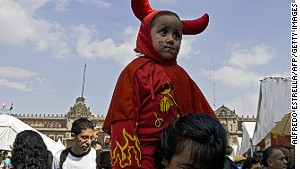
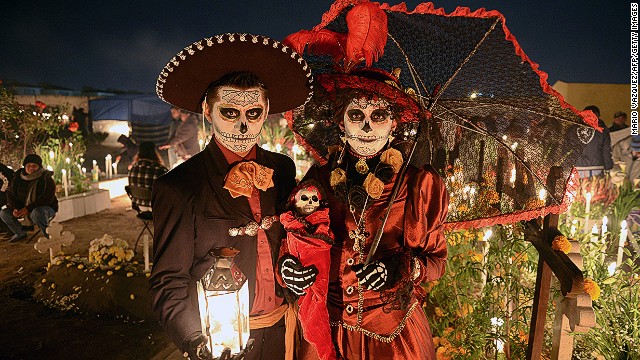 Lots of cultures do ancestor worship. But who else turns remembrance of the departed into a thrilling fiesta? Mexico welcomes home its dead on November 1, aka the Day of the Dead.
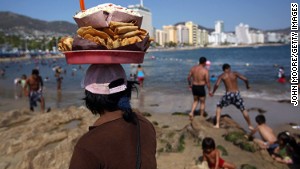
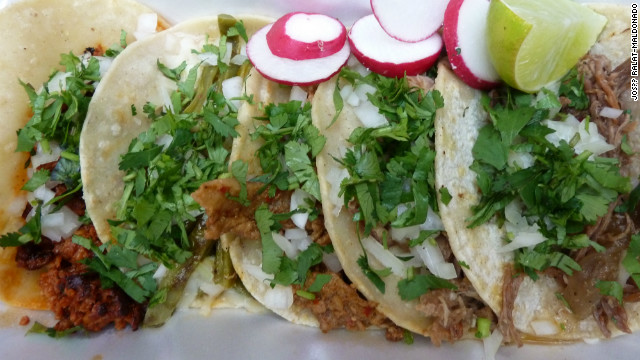 Known as Vitamin T, tacos, tortas, tamales and tostadas are part of everyday life. Mexico's streets offer endless options for fast and delicious meals cooked with super-fresh ingredients.
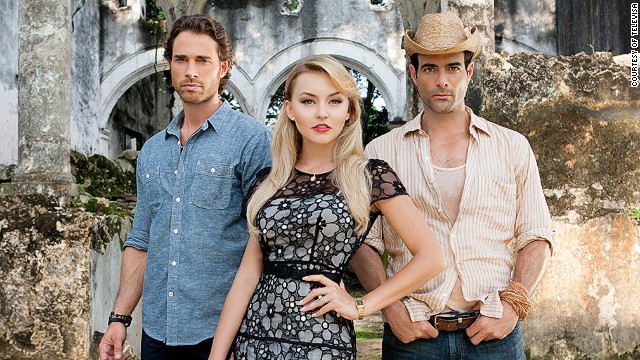 Cold marriages. Sweet betrayal. It comes easily to characters in telenovelas like top-rated "Lo Que La Vida Me Robo" ("What Life Stole From Me"), which has viewers sighing "Dios mio" in countries around the world.
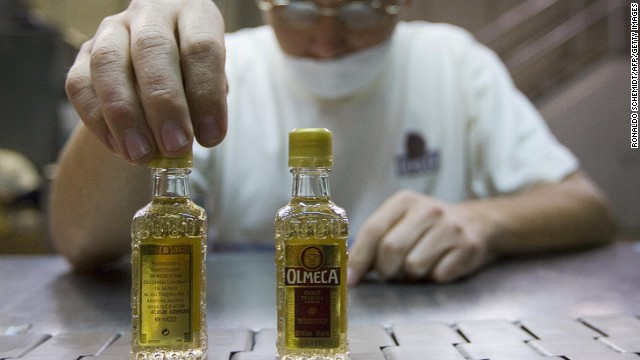 Don't expect to impress Mexicans by knocking down manly shots all night. Real tequila is meant to be sipped and savored, like fine whiskey, which the best tequila can compete with.
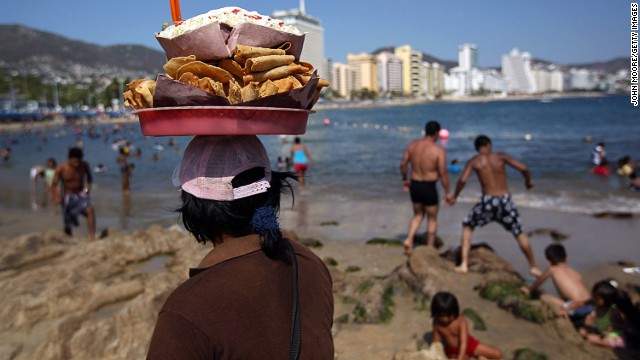 Wake up, guzzle water then inhale some chilaquiles, carnitas or tacos with plenty of revitalizing grease and hot sauce and you'll be back in action by noon. OK, 1 p.m. 2 p.m. latest.
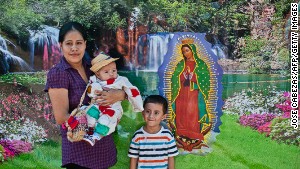
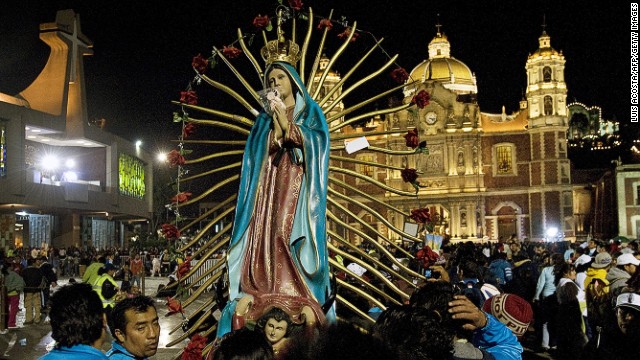 No one does Virgin Mary devotion like Mexicans, 84% of whom are Catholic. Our Lady of Guadalupe, Mexico's patron saint, is venerated at the Basilica of Guadalupe in Mexico City in an annual celebration.
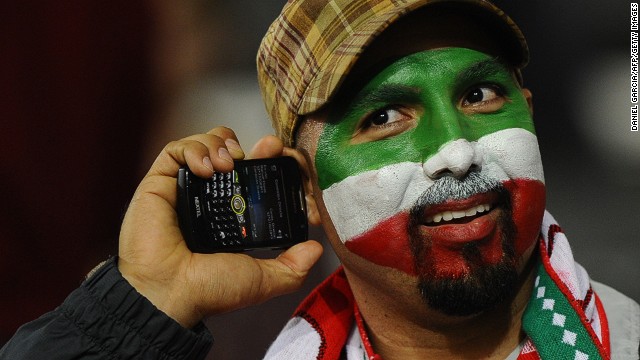 He just told her he's on his way. And he is. Just as soon as the game is over. And he has a few beers with his buddies. And stops by his parents house. And updates his Facebook page. And ... wait, what was he supposed do again?
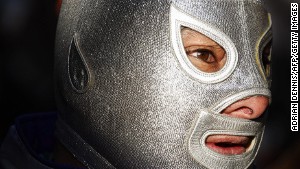
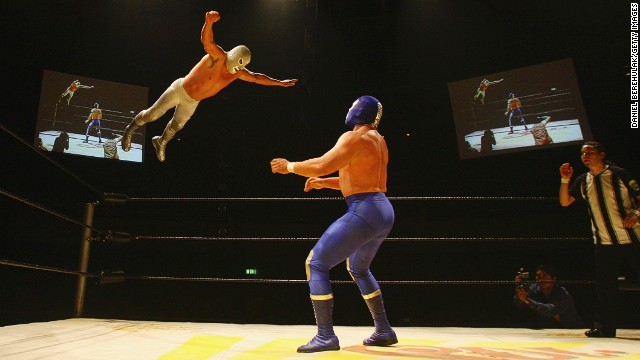 Those hilarious/spooky masks aren't just fun to look at, they're a major part of the drama. Removing one from an opponent's head is one of the greatest triumphs in lucha libre.
 Most countries save their horns for special occasions. Mexico brings out the brass daily. Where else can you hear tubas (tubas!) laying down bass lines on the radio every hour of the week?
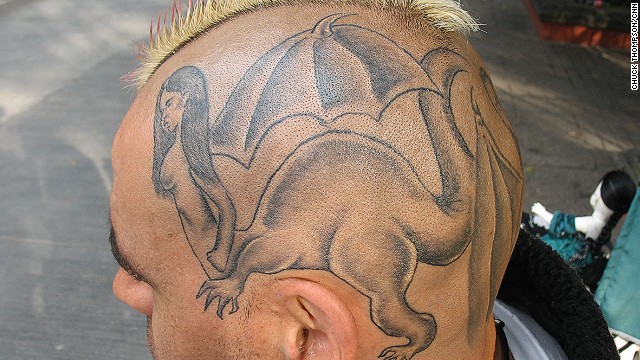 Not sure what message this biker in Mexico City is sending? Wait till he opens his mouth. Mexicans are such masters at double entendre (albur) there's an annual competition to crown a national champ.