Showing posts with label tolls. Show all posts

Wednesday, January 14, 2015

Driving in Mexico: Five Must-Know Survival Strategies

traveldeepandwide.com

The thought of driving in Mexico can be intimidating, unless you become familiar with these five strategies for safety.

1. The Glorieta: Going in Circles

Traffic circles are used everywhere in the world. Everywhere, it seems, EXCEPT in the United States which, for the most part, relies on traffic lights to manage busy intersections. In theory, traffic pours in from any direction but yields to the traffic currently in the circle.
In Mexico, this theme may have a number of variations, including…ta da…traffic lights to meter IN entering traffic. Also, some urban circles may have ramps over or under particularly nightmarish glorietas.
My strategy: In Mexico´s urban centers, urban planners have put signs that diagram the approaching circle and the destination of each of the exiting streets. Although some diagrams require a degree in organic chemistry, I try to mentally note which number exit I will take. As I drive around the circle, I keep track of where I am–out loud: “exit at fourth, passing exit two, passing three, take the next.” This causes my passengers to question my sanity, but hey, it works.

2. Lateral: a ride on the side

In an effort to separate local and express traffic, the lateral (lah-teh-RAHL) is a one or two-lanes separated from the central lanes with a concrete curb. This curb is at the perfect height to give the local llantera (tire man) business. Metal control surfaces mark spots through which you may enter or exit the lateral.
U turns (a retorno) or lefts begin in the lateral on the lane closest to center. Turns are usually controlled by a green arrow, which may appear over any one of the lanes. I had to learn this by observation.
My strategy: Even when you have the green arrow, prevent your own death by checking that no one is running the red. This I also learned by observation. When entering or exiting the lateral, it is best to check your mirrors, squint, and shout ándale! ándale! to ensure your success.

3. Cuota v. Libre: Do you get what you pay for?

The cuota (toll) roads of Mexico are some of the finest highways I have driven. The newest autopistas have SOS call boxes at regular intervals and highly reflected lines and median strips. Angeles verde (“Green Angels”) regularly (and slowly) ply the routes to assist with flats, jump starts or emergency refueling.
These roads also have state-of-the-art toll plazas to extract (in cash or electronically) a cuota approaching the cost of airfare (no exaggeration) to the same destination. For example, a 200 mile trip from Manzanillo to Guadalajara roundtrip set us back $100 US in tolls. To be fair, this cuota provides a point-to-point insurance for all users; it’s a consolation since you’re sharing the road with double trailers bearing 50,000 liters of gasoline
The libre routes are a (at times) delightful immersion into Mexican roadside culture. Local eateries, artisans, and snack vendors line the libre routes. Local street foods are not to be missed! Many local attractions, natural formations, and historical sites are only accessible from the libre.
From a crime awareness point of view, we have never felt unsafe on any of the libres. From a driving safety standpoint, some libres traverse through mountainous areas subject to flooding or landslides. Other libres are poorly lit, sporadically signed, and painfully dotted with topes (speed bumps) and vibradores (rumble strips) to further slow your progress.
How to choose: You will need five hot local tacos in one hand and your wallet in the other. If your wallet weighs more than the five tacos, take the cuota. Unfortunately, you can only buy the delicious hot tacos on the libre. To each his own. Have fun!

4. The Semaphoro and other lights

You may encounter some unfamiliar traffic control devices or patterns in your southward trek.
The blinking green is simply a sign that the light is about to turn yellow. Act on it as if it were an extension of the yellow light; it is actually very helpful. Yellow lights tend to be very brief, or worse, burned out. Let the driver beware.
The red-plus-yellow light means the light is about to turn green. Co-pilots for sleepy drivers, prepare your elbows.
The red-and-blue lights on top of a black and white vehicle mean absolutely nothing. Police and ambulances ride around with their lights on constantly. Now, take a deep breath and repeat after me, “It means absolutely nothing.” However, if accompanied by a squawking siren, a frantic wave to the side by the uniformed policia, or a command over the loudspeaker–get your license and registration ready.
Your left turn signal means “pass me on the left”. This is most often used by heavily loaded trucks climbing a steep grade. On a two/lane road, any slow moving vehicle will use the left turn signal and move as far as possible to the right to allow you to pass.  Unfortunately, most norteamericanos are used to using this to communicate an intention to change into the left lane. Unless you are at a standstill in an urban left turn lane or want to give permission to be passed, forget using your left turn signal.
 
Mexico Roads


Window washer
A young boy washing windows while we stop at a light.


5. Don’t hurry, be happy!

Wherever you drive, there you are. That is, if you are a hotheaded, horn-blowing road rager up north, you will be the same over the border. Consider taking Mexico’s extensive bus system. In heavy, high speed traffic, anyone can find many reasons to be frustrated. Impatient speeding kills more people every year both north and south of the border.
The best insurance is a cool head and a willingness to learn.
Unfamiliar signage and traffic patterns can make any driver feel homesick. Look on the happy side of the trade-offs. Trade shaking at a wintry self-service pump for cordial, sunny full service. Trade boring urban stop lights for vendors, windshield washers, and fire-breathing jugglers. Trade the cold and familiar for the warm and adventurous.
Isn’t this why you’re in Mexico anyway?
Article by, Brent
- See more at: http://traveldeepandwide.com/driving-in-mexico/#sthash.fRD23pYF.dpuf


Tuesday, July 1, 2014

Traveling México's Cuotas (Toll Roads)

rollybrook.com

Last UpDate 23 August 2012

The Mexican cuotas (toll roads) are similar to the interstate system in the USA. The proper name is autopista, but cuota is what the road signs usually say..  The newer ones are divided four-lanes; sometimes, the older ones and mountain roads are undivided 2-lanes. All are limited access highways, usually in good condition and well maintained.
Almost all are privately operated via franchises from the government, and they are expensive.  This high cost results in limited traffic with few buses and trucks on most routes.  I think this alone make them worth the price. 
Toll prices  are listed in pesos on signs at each toll booth.  Some near the USA border will accept dollars at a poor exchange rate. Credit and debit cards (Visa and MC) are accepted at some booths, but certainly not all.  It's best to plan to use pesos. 
Mercifully, the cuotas bypass smaller towns while a free highway(libre) will pass through all of them -- a very slow process with lots oftopes (speed bumps) and, sometimes, wandering livestock.
Large cities are a different story.  Almost without exception, the cuotasdo not pass through nor around large cities.  They will stop short of the city, dump you onto the free highway through the city, and then reappear on the other side.  This is often a confusing damn nuisance.
The system is not complete throughout the country, and some sections may be interspersed with the free highway which will often run more or less parallel to the cuota. There are some cuotas that do not have a companion libre.  The most detailed maps of cuotas and libres can be found here in these PDF route maps. They are a bit confusing at first, but they contain a lot of information.  Unfortunately not all routes are included.  Downloads are very slow.
This website (itis very slow) will allow you to calculate toll charges and expected travel time between cities served by the cuotas. Click on English Version if you wish.  My limited experience is that the listed travel times are a bit underestimated.  The listed fees are not always up to date.
Getting past México City is a major hassle.  Recently there has been partial relief with the opening of a new bypass highway, Arco Norte,  skirting the north-eastern side of the area.  A Google map and details are here.
Most toll plazas will have a junk food shop and rest rooms.  Gas stations are rare on cuotas, so gas up before you start, or plan to exit at a large town to get gas.  Sometimes gas stations can be found just outside the toll plaza, but sometimes one may be too far away.
IAVE (Identificación Automática Vehicular Electrónico) is the system for paying tolls automatically as you drive through electronic toll booths.  If you travel the toll roads often, this can be a real time saver. 
The IAVE stickers can be bought at a toll booth and some banks.  The cost is $300 pesos, but the account comes with a $300 peso credit, so it's actually free.  You can deposit money in your account at some banks and several retail stores (details on the website).  If you have a Mexican credit card, tolls can be charged to your credit card.  When you buy the sticker you receive a bar code as well as an account number, either of which can be used for the recharging deposit, usually with a $12 peso fee..
You affix the sticker to the windshield just below the mirror, and it is read automatically as you approach the gate, the light turns green and the gate goes up, and you drive on.
You can register on the IAVE website with the card number, and you’ll receive a password, so you can check your balance and see all the charges to the account.  It is  a good idea to check after each trip because errors can occur.
Safety: Are the cuotas safer than the libres?  Probably.  There is far less traffic.  The highway is almost always in very good shape.  It's fenced, so there are no farm animals wandering in your path.  The controlled access makes them less attractive to banditos.
There are only occasional solar-powered emergency call boxes on some routes.  If you break down in the middle of nowhere, wait for  the Green Angels (Los Angeles Verdes). The Green Angels are government paid bilingual crews that patrol the cuotas throughout México every day (but not at night) in green trucks, carrying tools, spare parts and gasoline, looking for motorists in trouble. Los Angeles Verdes will provide mechanical assistance, first aid, basic supplies, gas, and towing. The services they provide are free, but there will be a charge for repair parts or fuel. Even though the services are free, tipping is appreciated.
Your toll fee includes limited insurance while you are driving on thecuota.  The coverage will be listed in the fine print on the back of the toll receipt.  The policy offers limited medical coverage and other benefits.  The most commonly used benefit seems to be for road damage.  If a defect in the roadway damages your car (such as windshield cracks from loose gravel, pot hole damage, etc), the insurance will take care of it.  If your car damages the roadway, in an accident for example, you are covered for the repairs to the roadway.  (It is customary in México to charge the at-fault driver with the cost of repairing any damage to the road.  This applies to all highways.)  If you have a minor claim, you can report to the authorities at the next toll plaza and present your toll receipt from the previous booth -- don't toss the receipts.  You cannot file a claim later or without the receipt. If you have a major accident or your car is disabled, move to a safe place, if possible, and stay with the car until a CAPUFE claims adjustor arrives to inspect the damage and write a report.
Details of the insurance is here in Spanish.
Here is an interesting out-of-gas story I gleaned from the internet  
On my way to Lakeside I was low on fuel. I came to a toll booth and asked the attendant (they are almost always pleasant and helpful) how far it was to the nearest gas station. It was too far -- I never would have made it. I told her I couldn't. She said no problem and told me to pull into a driveway. She called another employee who brought a large container of gas and poured it into my tank (apparently I wasn't the first time someone miscalculated their fuel needs). I paid for the gas of course.   It saved me a huge problem. Had I not asked and just hoped I would come upon a gas station, there's no telling how long I could have stayed stranded and, perhaps, in harm's way. I hope this experience will help others.
Here are two experiences shared by friends who had problems on acuota.  One driver waited by his car, the other drove on to the next toll booth.
Out there in the middle of nowhere, we ran over a metal strip at about 110KPH and that blew our left front tire and bounced up an did additional damage to the undercarriage of our car. We hobbled onto a nearby dirt strip.  Unsure of the extent of the damage to the car but certain that that expensive tire had been totally destroyed and was history.   Recently someone had stolen everything in the car including the jack so we had no way to change the tire and were stuck.
Enter CAPUFE (Caminos y Puentes Federales de Ingresos y Servicios Conexos) and I am telling you folks about this adventure since, if you travel Mexico on Federal toll roads, these are the people who will save not only your butt but a substantial amount of your pesos since it is a fact, as advertised, that the operators of each toll road carry insurance to cover problems you may experience as a result of damage to your vehicle caused by problems with the roadway- meaning any kind of problem from potholes to, in our case, metal objects in the road that cause damage upon impact with your car.
Now, CAPUFE will handle everything but you need to know some ground rules and these are those the CAPUFE representatives told me were nationally consistent but I will only warrant that these rules apply upon toll roads in Veracruz State because that is where we happened to be at that hour.
We were standing there in the Veracruz hellish heat and humidity hoping the Green Angels would come along, but in the entire four hours we waited there they never drove by even once. However, the CAPUFE truck that was out there to pick up the metal that had disabled our car did pass by and stopped to help us. They were most gracious and admitted to liability as they had been apprised of the dangerous metal strip in the roadway and had even taken pictures of that object.
Here is what we learned having had that experience:
* The toll road operators do indeed carry insurance to cover problems you may encounter as a result of road hazards on their segments of the toll highways. However, the representatives of CAPUFE may not admit that unless you assert that the accident was their responsibility. Let them know courteously that you know of your rights and be firm but polite in that assertion. After all, you are out in the swamps and at their mercy. You want them to find you an amenable and pleasant person but not a rollover.
* Always carry a camera so you can document your accident and its reasons.
* Do not leave the scene of the accident if it is not too dangerous there, and do not go on to the next casita de cobra or return to the last one if you can help it. Wait there for the insurance adjuster if at all possible as that adjuster will carefully document the incident, take a number of photographs and complete a written report which you must the sign and upon which you must recount the event. In our case, the adjuster had to come all the way from Coatzacoalcos which, if you know that area, is quite a drive from the area of the incident. We were tempted several times to just drive on to the next casita which turned out to be far away indeed but we stayed even though our plans to get from San Cristóbal to Puebla that day were thwarted. Now, we can tell you that our patience probably saved us $10,000 Pesos or more so waiting for the adjuster is the best alternative if you can do so. I would not wait out on that lonely autopista at night, however, if I were you. You'd be a sitting duck on that dark and deserted autopista at night so it ain´t worth the risk and you could probably prevail in a claim anyway if drove to the next casita and presented your case there.
* We were told that repairs and tire replacement could only be performed by approved tallers and that, should we wish to return to our destination of Jalisco, there were three places authorized to perform that work; two in Guadalajara and one in Ciudad Guzman. No way they would pay if we chose to choose our own taller and the nearest one to the accident scene was a backtrack to Coatzaoalcos where we might be stuck for a week or so. No thanks; so we drove back to Lake Chapala from there without a spare or a jack, but we made it.
It was shortly before Christmas when my partner and I were driving on the cuota between Morelia and Guadalajara. Our plan was to exit at Ocotlán and continue toward the Chapala/Guadalajara highway to meet a friend for comida and return to Morelia after our pre-Christmas get-together.
After we paid the toll at Ecuandureo, the cuota roadway deteriorated into ruts, potholes, and other road hazards. About 10 kilometers east of the Ocotlán exit, our car (a Mini Cooper) became very difficult to steer. We have special run-flat tires on the Mini, so we slowed down and continued driving till we could pull off at the Ocotlán toll booth. Yep, the tire was flat--and not just flat, but sliced through the sidewall at the edge of the tread. We knew that this would not be a quick repair, and would certainly not be inexpensive.
I remembered that the cuota system guaranties that a car is insured against road hazards on the toll roads. The back of the toll receipt very clearly says: get off the road at the nearest toll booth and report the damage. By a fluke of good luck, there we were--at the nearest toll booth. I reported the damage to a security man at the toll booth office; he immediately came to see the tire. My partner and I waited while he called the cuota's insurance adjuster.
The adjuster came within 20 minutes, called a flatbed tow truck, completed all the insurance paperwork, and assured us that the cuota would pay for everything because the road conditions were indeed deplorable. Our Mini was lifted onto the tow truck, we were ensconced in the truck's double cab, and off we went to a very well-appointed body and repair shop.
Because the tire is very unusual, none was available in Guadalajara, Morelia, or Mexico City. The repair shop promised to order a tire for us the minute they could locate one, but Christmas and the New Year holidays were imminent and we knew it wouldn't be soon. The repair shop drove us to the Ocotlán bus station, where we got on a bus for Morelia.
The Mini stayed in the Ocotlán repair shop under lock and key for two weeks. This Monday, the tire was shipped from the manufacturer to the BMW dealership in Guadalajara and from Guadalajara to the repair shop in Ocotlán.
The shop sent word that the car was ready, so Judy and I bought bus tickets to go from Morelia to Guadalajara. From Guadalajara, we would have had to take a 2nd class bus over an hour retracig our path back from Guadalajara to Ocotlán, and then a taxi from the bus station to the repair shop. Shortly before we got to the Ocotlán toll booth on the way to Guadalajara (still more than an hour to the west of us), the light bulb went on in my brain. "Let's ask the bus driver to let us off at the Ocotlán toll booth, we'll call the repair shop and get them to send a cab for us!" I talked the driver into slowing down enough to let us hop off at the toll booth (he originally said nobody gets off till we get to Guadalajara! but we prevailed)  We hopped off and called the repair shop  They sent their own car for us. Having that brilliant idea saved us about three hours of travel time, which we got to spend with friends over at Lake Chapala. It tickled Judy and me a lot that we two old ladies hopped off the bus at the toll booth out in the middle of nowhere!
The price of that single tire was over $4,000 pesos. The cost of the tow truck was another $350 pesos. What did we pay? Zero. The cuota insurance worked just as promised. 

Moral of the story: hang onto your toll receipts until you are safely at your destination. In all these years of saving toll receipts, this was the first time I've ever had reason to use one. Worth it? You bet.

Tuesday, June 3, 2014

How to Prepare for a Mexico Road Trip

mexpro.com


Pre-trip tune up and preventative maintenance

Mexico Driving TipsHaving a full tank of gas before hitting the road for Mexico is essential, but it is just as important to make sure all of the vehicle’s other fluids are properly topped-off. Be sure to check all vital fluids, including; engine oil, transmission fluid, antifreeze/coolant, brake fluid, power steering fluid, distilled water for the battery and windshield washer fluid. It is also important to have clean filters for the air, oil and fuel systems. Along with the brake fluid, you will want to check the other components of the vehicle’s braking systems, including the brake shoes, rotors/drums, and lines. It is important to check your tires to ensure the tread is deep enough to provide adequate traction and that tire pressure levels are correct, all around the vehicle, including the spare tire. If your tires are showing signs of excessive wear and tear, be sure to get them replaced before heading down the road. Your vehicle’s hoses and belts also deserve an inspection, and any worn items should be replaced. Be sure to check the vehicle’s lighting, gauges, and electrical systems, including the battery. A fresh pair of wiper blades will come in handy if you should run into any wet weather during your Mexico vacation. The weather in Mexico can often be warm/hot, so you will also want to be sure that your air conditioning is functioning properly and fully charged.

Carrying a few spare parts could save time

Spare parts for many popular vehicles can be difficult to find in Mexico, and often will have to be ordered and shipped from outside the country. You may be able to prevent several days of sitting around waiting for parts to arrive by mail by simply carrying a few inside your vehicle. Spare items, such as: electrical fuses, light bulbs, fan belts, radiator hoses, and fuel filters are good items to carry along. It is also a good idea to carry some extra fluids, like motor oil, brake fluid, transmission fluid, coolant, and distilled water.

Purchasing Mexico auto insurance

Choosing only carriers that have a B+ (Good), or better rating, with A.M. Best, is an easy way to ensure you are getting insurance coverage from a trusted and reliable provider. There are a number of insurance stores set up along the border that offer auto coverage for through unrated, or unfavorably rated, Mexico insurance companies. A.M. Best rates insurance companies worldwide based on the reliability and financial stability. Be sure to check the ratings of any insurance carrier before giving them your hard earned money. You can get comparative quotes through multiple A rated carriers, and easily purchase your Mexico Car Insurance online before you hit the road, through the Mexico Insurance Professionals.

Don’t forget about travel, roadside, medical and legal assistance

Many Mexico Tourist Auto Insurance providers will also offer travel and roadside assistance coverage for Mexico. This coverage, which can be of great value, is a relatively inexpensive option that you can add to Mexican car insurance policy. Or, it can automatically be included in the policy package. Having access to lockout, emergency fuel, flat tire and jump-start services, can really help out, especially when you are far from home. Some of the better travel and roadside assistance packages will also include legal, travel, and medical assistance as well.

Medical insurance to protect you and your travel companions

mexico-medicalAnother important item to consider while planning your Mexico road trip, is travel medical insurance. If your U.S. health and medical insurance does not extend coverage across the border into Mexico, you will want to arrange for a temporary international policy to protect you, and your travel companions. You can get an immediate quote for global medical insurance and then easily purchase your policy online, in just a matter of minutes.
Mexico road map to help you find your way

Be sure to bring along a Mexico road map to help you navigate your way in Mexico. If you should happen to driving through any areas without cellular or Wi-Fi service, you will want to have a good ole fashioned paper map in-hand, to assist you in finding your way and hopefully prevent getting lost.

Other safety and emergency items

Having a mobile phone, and being able to call for help, can be a real life-saver. Most U.S. cell phone contracts do not automatically include service in Mexico. You will want to contact your service provider before heading out and ask them to add Mexico to your calling plan while you will be there.
Carrying some basic repair tools in your vehicle can be useful, and having safety markers and/or road flares to put out when a vehicle is disabled on the side of the road is also a good idea. Having a working flash light in your glove box can really helptoo. Packing a basic first aid kit, bottled water, emergency blanket, sunscreen, insect repellant, and other items that can provide safety and/or comfort during a vehicle disablement are also recommended. Making your own checklist of emergency and safety items is great way to ensure you will have what you need if the unexpected happens.

Friday, November 29, 2013

Holiday Travel Tips for Crossing the US-Mexico Border


go to original
November 28, 2013
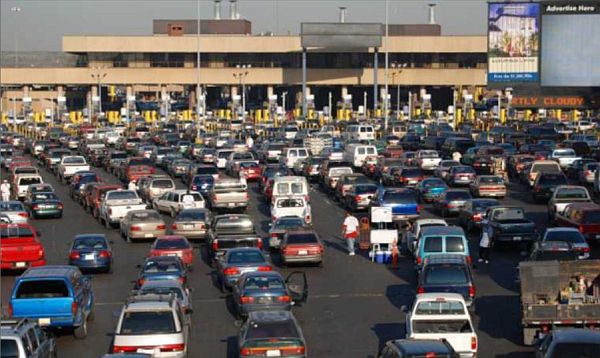
Travelers are asked to build extra time into their trips if they cross when traffic is heavy and consider alternate, less busy, bridges. It is also helpful having documents handy and keeping cell phones off.

Travelers crossing the US-Mexico border this holiday season should plan to spend extra time at inspection stations, the US Customs and Border Protection said in a news release this week.

With more people expected to travel across border for the holidays this year, the CBP announced a list of ten holiday travel tips to help make the border crossing process easier.

Those include preparing for inspections in advance by having documents handy, keeping off cell phones at ports of entry and declaring all required items.

Travelers are also encouraged to build extra time into their trips if they cross when traffic is heavy and to consider alternate, less busy, bridges. The CBP website apps.cbp.gov/bwt provides monitoring of border wait times.


Travelers can keep updated on prohibited items to bring across the border via the "Know Before You Go" section of CBP’s website. Those traveling from Mexico to the US beyond the border zone can get I-94 travel documents in advance from ports of entry to bypass lines when they formally enter the country.

Authorities said they would work to keep traffic moving.
"We will keep a watchful eye on traffic and wait times throughout our ports of entry and adjust staffing where needed to help keep traffic moving while maintaining an effective border security posture," Gene Garza, CBP director of operations for the Laredo Field Office, said in the news release.

"Having more officers available to open lanes as needed provides us the flexibility we need to perform our inspections quickly and efficiently."

Agents plan to focus their efforts and numbers on bridges where the highest volumes of cars will cross, with special attention on the hours that see the most traffic.

CBP is also asking travelers to cooperate with checkpoints located after the border crossing station and to consider having identification documents handy there.

"We want to make sure that they have the information at hand to make their travels more pleasant and faster," said Eduardo G. Perez, CBP supervisor and public affairs liaison in Brownsville, Texas.