idahostatesman.com
March 15, 2015
MAZATLAN, Mexico - Including a day trip to Tijuana while in
the Navy at San Diego, I've been to Mexico eight times and somehow
missed Mazatlan - one of the closer resort cities to Idaho.
Until last month.
Our
trip got off to a shaky start in the Boise Airport. The agent checking
us in was blowing her nose and sneezing on our luggage tags, driver's
licenses, boarding passes. ... We fought her off with hand sanitizer,
but upstairs at our gate there she was again. And once we were on the
plane - resanitized - she joined us to do a head count. We half expected
to see her, soggy Kleenex in hand, clinging to the wing when we took
off.
Mazatlan, however, was great. For starters, the dollar was
almost 50 percent stronger against the peso than it was a year ago. Most
of the breakfast and lunch choices at the place where we stayed were
less than $4. Mexican beers that cost $4 in restaurants in Boise were
about 70 cents.
Mazatlan is unique for having two things - the
world's third-largest Mardi Gras celebration (after Rio de Janeiro and
New Orleans) and pulmonias. We missed Mardi Gras by a few days, but we
became instant fans of pulmonias, which exist nowhere else in the world.
Pulmonias
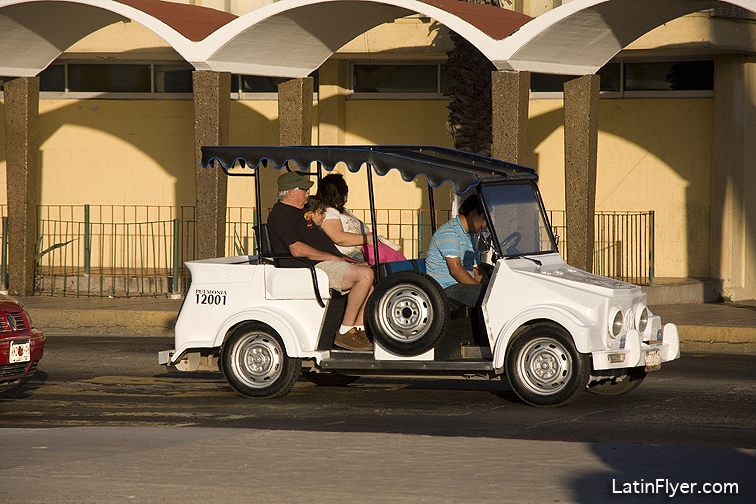
are overgrown golf carts, made with Volkswagen parts and used as taxis.
Drivers of regular taxis were jealous of the fanfare the open-air taxis
received when they were introduced, so they told customers they'd get
pneumonia riding in them. Pulmonia is Spanish for pneumonia.
Humberto
Valasquez, who has been driving the same, meticulously maintained
pulmonia for 20 years, took us on a tour of the city in it. Because we'd
just missed Mardi Gras, I asked him what it was like.
"A big
parade on the Malecon (one of the world's longest). Lots of people -
400,000 visitors in town wearing masks and drinking. Nine months later, a
lot of babies are born."
About like New Orleans, in other words.
Humberto used to work in a restaurant, but he likes being outdoors better.
"A
lot of the restaurants aren't doing well," he said. "The all-inclusive
resorts have hurt them. People eat for free there, so they don't go out
to dinner as much. They don't even go out for drinks because the drinks
at the resort are free."
Pacifico beer is made in Mazatlan. That,
and myriad varieties of tequila - from regular agave tequila to coffee
tequila, almond tequila, mango tequila. … (The waiter at dinner on our
last night offered us a sample from a jug with a snake in the bottom. We
declined.)
"Tequila is our national drink," Humberto said, laughing. "That and beer, and vodka, and rum. … "
Like
many of the people we met in Mazatlan, Humberto truly seemed to enjoy
life. Except during Mardi Gras, the city is low-key, laid back. The
street and beach vendors are almost sedate compared with those in other
places we'd been, and in two weeks we met exactly one guy who was
pushing time shares. In Puerto Vallarta, you see more than that before
you leave the airport.
Add perfect weather and friendly, helpful locals and you have a textbook winter getaway.

Showing posts with label pulmonias. Show all posts
Showing posts with label pulmonias. Show all posts
Monday, March 16, 2015


Thursday, December 11, 2014
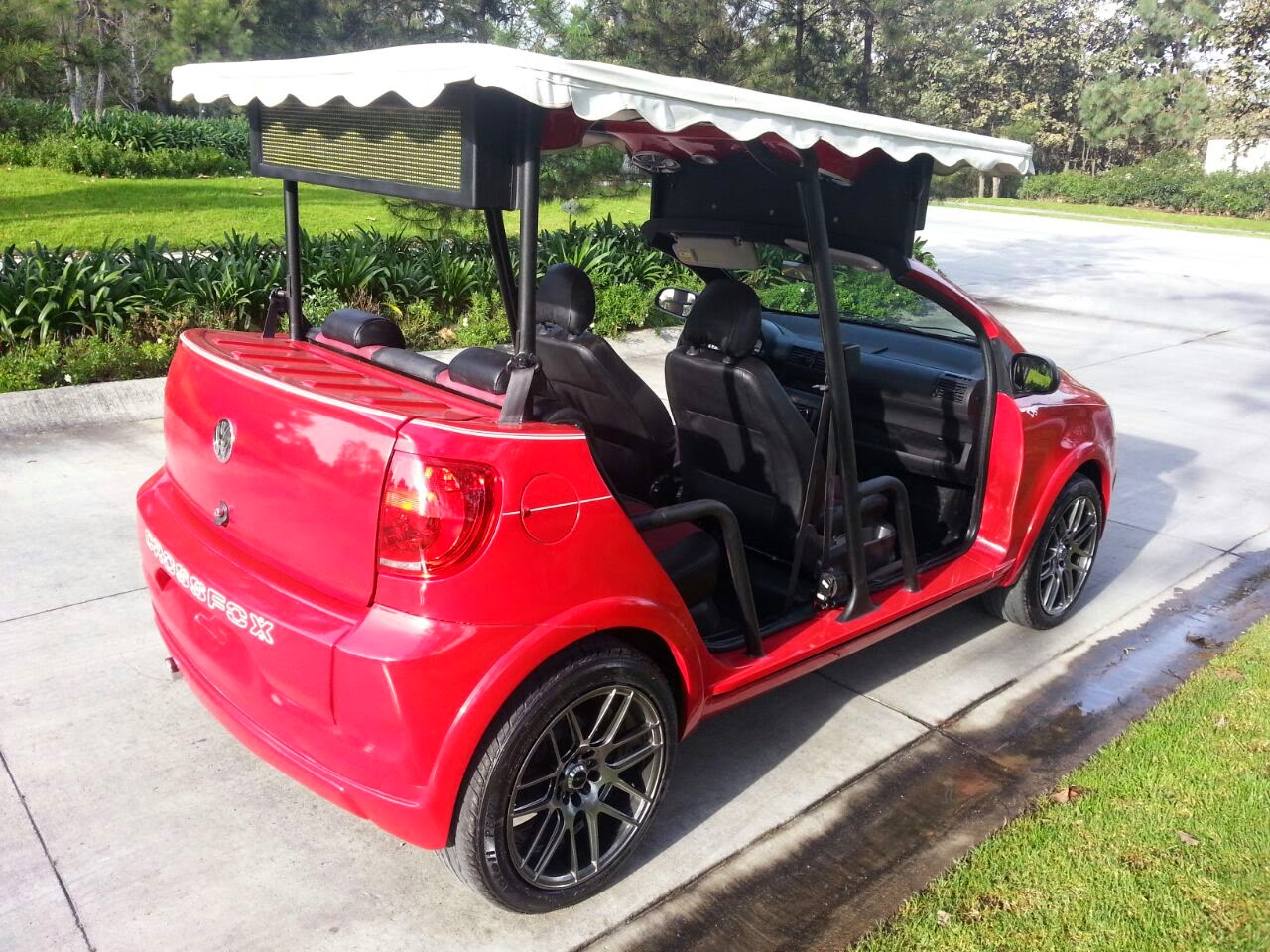
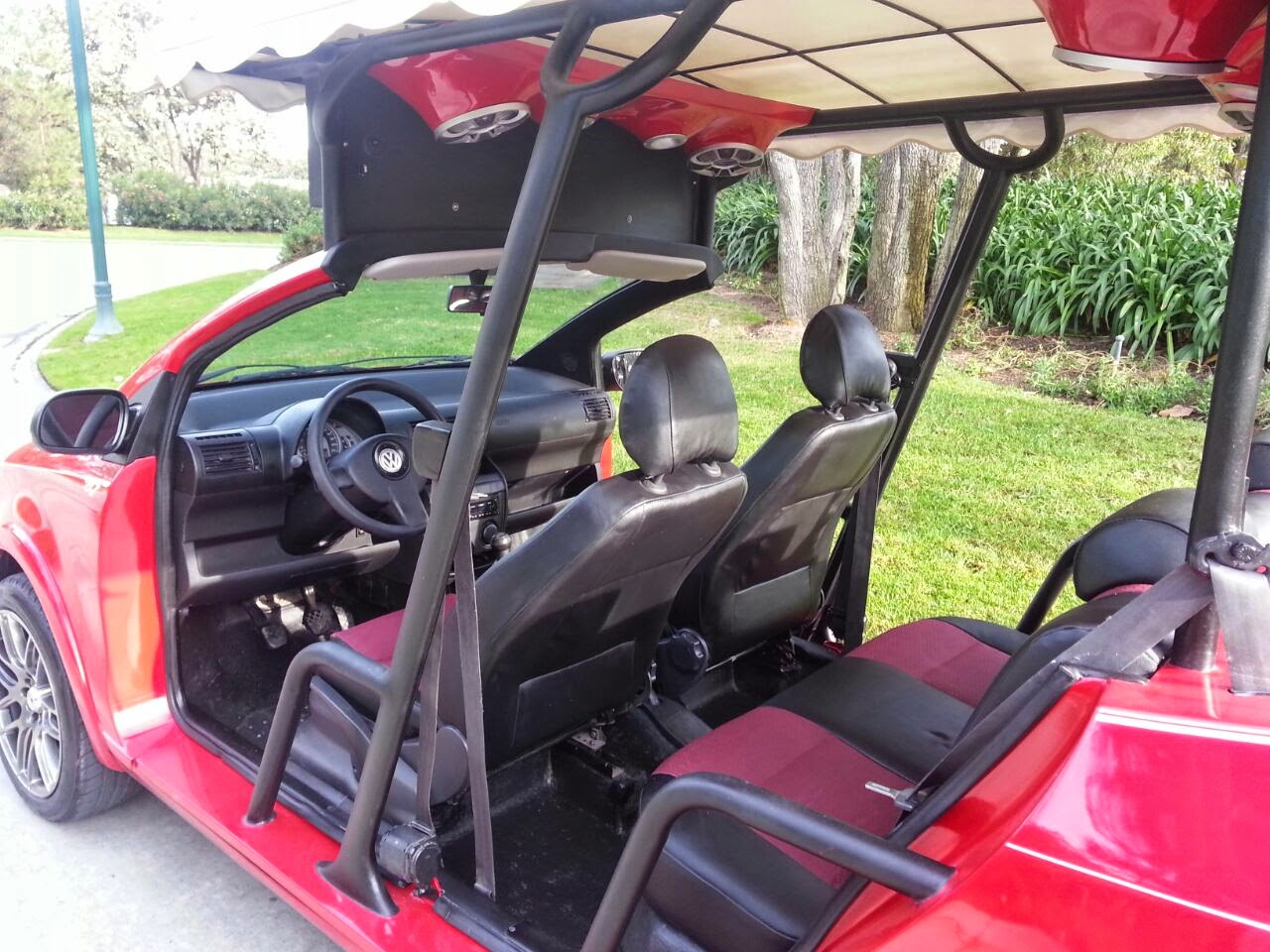
Surge nuevo modelo de “Taxi-Safari”
2014/12/11 11:30:31 AM
quepasaenmazatlan.com

Un nuevo concepto de TAXI-SAFARI podría circular en el puerto,este tipo de vehículo viene siendo una conversión de cualquier marca de auto compacto y que daría mayor seguridad y comodidad al pasajero, cualquier permisionario de taxi tendrá la posibilidad de adquirir este tipo de vehículo a través de esta empresa quien tiene su domicilio en la ciudad de Guadalajara, fueron presentaron a los dirigentes de los Ecotaxis quienes han visto con buenos ojos este nuevo concepto de TAXI-SAFARI
El costo se asemeja al de un auto nuevo así mismo los autos existentes se pueden convertir con un costo de 80 mil pesos, así lo señalo el Sr Rene Villaseñor propietario de esta empresa y coincidió que el servicio público se debe reformar y más en un destino turístico como Mazatlán.

Friday, April 4, 2014
The Mazatlan Pulmonia
January 18th, 2011
by Mark Chesnut
latinflyer.com
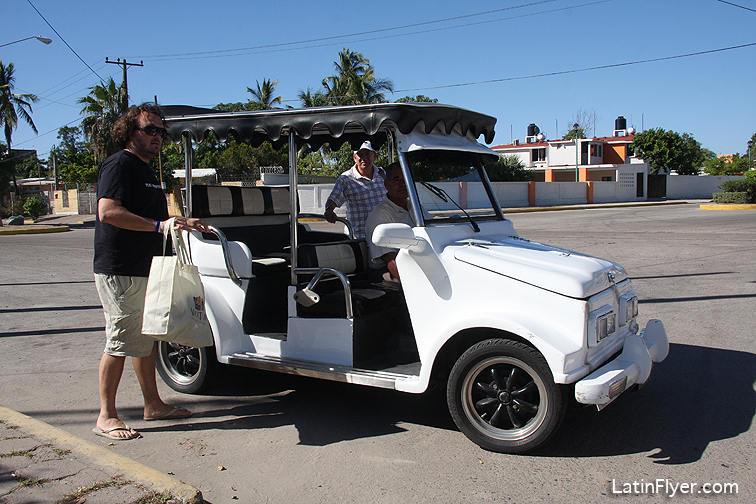 |
| The pulmonía is a unique, fun alternative to taxi cabs in Mazatlan, Mexico, |
What better way to travel than aboard an overgrown golf cart? In Mazatlán — the Mexico vacation hotspot often called the “Pearl of the Pacific” because of its scenic Pacific coast location — it’s the most enjoyable way to get around (and a lot more interesting than a regular taxi). The pulmonía — which means, literally, “pneumonia” — is a quirky form of transportation with an interesting moniker, and you won’t find anything quite like it anywhere else. During my most recent visit to Mazatlán, I made this VIDEO introduction to the pulmonía experience. Hop on board (and hold on to your hat; it’s a bit windy!).
Stay tuned to LatinFlyerBlog.com for even more photos, videos and reviews from Mazatlán.
Stay tuned to LatinFlyerBlog.com for even more photos, videos and reviews from Mazatlán.
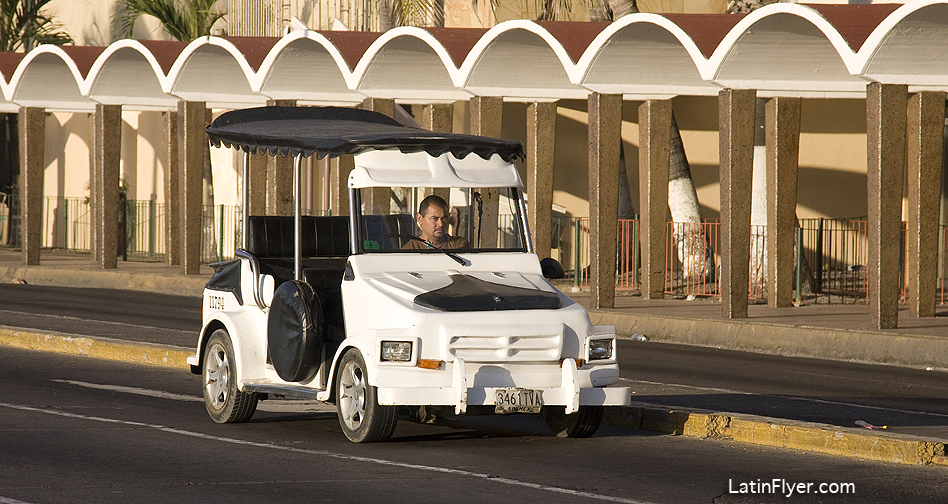 |
| The pulmonía cuts a hard-to-forget profile against Mazatlan’s waterfront. |
 |
| Watch the LatinFlyer video for the story behind how these quirky pulmonia vehicles got their name! |
Wednesday, April 2, 2014
Top 5 Reasons to Visit Mazatlan
latinflyer.com
July 13th, 2012
by Mark Chesnut
Looking to justify your next Mexico beach vacation? In this EXCLUSIVE VIDEO, we jet down to Mexico’s Pearl of the Pacific, to check out the top 5 reasons to visit Mazatlan.
1. The Beach
It’s no surprise that the #1 reason to visit Mazatlan is the beach. The Zona Dorada, or Golden Zone, is square one for many visitors, thanks to its wide stretches of sand and many hotels. You’ll always find plenty of fun and activities here.
2. The Historic Center
Downtown Mazatlan is dotted with beautifully restored historic buildings, including the ornate cathedral and lots of postcard-perfect private residences.
Downtown Mazatlan is dotted with beautifully restored historic buildings, including the ornate cathedral and lots of postcard-perfect private residences.
3. The Culture & the Cuisine
Mazatlan offers experiences that few other resort cities can. After all, not many beach destinations are home to a landmark building like the gorgeous Angela Peralta theater, where you can attend live concerts, dance and theater performances. Just a few steps away, you can enjoy live music while dining at lovely open-air restaurants like Pedro y Lola. Wherever you have your lunch and dinner, don’t miss out on Mazatlan’s tasty cuisine — the city is a major shrimp port, so the seafood is especially fresh.
4. Sightseeing
Be sure to plan at least a day to tour the city of Mazatlan and its surroundings. You can join a guided tour or do it yourself, by taking one of the fun, open-air taxis called pulmonías
Mazatlan offers experiences that few other resort cities can. After all, not many beach destinations are home to a landmark building like the gorgeous Angela Peralta theater, where you can attend live concerts, dance and theater performances. Just a few steps away, you can enjoy live music while dining at lovely open-air restaurants like Pedro y Lola. Wherever you have your lunch and dinner, don’t miss out on Mazatlan’s tasty cuisine — the city is a major shrimp port, so the seafood is especially fresh.
4. Sightseeing
Be sure to plan at least a day to tour the city of Mazatlan and its surroundings. You can join a guided tour or do it yourself, by taking one of the fun, open-air taxis called pulmonías
Have your camera ready for the interesting sculptures along the waterfront Malecon — as well as a performance by the Mazatlan cliff divers. I also enjoyed a trip to Stone Island, which includes a fun boat trip and live music while dining along the beach.
Also worth the trip is Isla Venado, or Deer Island. The scenic boat ride provides lots of photo opportunities, including — if you’re lucky — an upclose look at a sea lion or two. The final destination — Deer Island — is an unspoiled paradise with lots of sand and good swimming conditions.
5. Fun Day Trips
Within less than an hour, you can arrive at historic towns, or perhaps learn how to drink homemade agave Tequila-style drinks at Hacienda Los Osuna. Also nearby is Huana Coa, where you can take a fast-paced canopy ride through nature.
Within less than an hour, you can arrive at historic towns, or perhaps learn how to drink homemade agave Tequila-style drinks at Hacienda Los Osuna. Also nearby is Huana Coa, where you can take a fast-paced canopy ride through nature.
In Mazatlan, you won’t have any problem finding lots to do — although, of course, you could just lie on the beach.
Thursday, January 16, 2014
“Catch Your Death of Cold” - History of the Pulmonia

By December 20, 1965, the 16 little taxis were completed and the governor issued permits for them to provide public transportation in Mazatlán.
As is the case with many men like Don Miguel, he had a variety of business endeavors including selling bread, motorcycles, and pianos. He even worked as a reporter for a period of time. But he always had his eye on the next adventure.
When he was in his early 40s he passed by an open garage and saw an old unused gasoline powered Cushman golf cart. He thought to himself, “What a great way to get people around town.” Only a little modification would be needed. He approached the town’s banks, only to be denied financing for his crazy scheme by the smart bankers.
Undaunted, he travelled to Lincoln, Nebraska, the home of Cushman, and talked the company into financing eight of the gasoline golf carts. He brought them back to Mazatlán and rented a place on Constitución and had his friend, Don Miguel Valadez Lejarza, make the necessary modifications.
When his prototype was ready, as luck would have it, the Governor of the State of Sinaloa, Leopoldo Sanchez Celis, was in town. Early one morning El Chícharo drove his three-wheeled taxi downtown and parked it in front of the hotel in which the governor was staying.
When the governor exited the hotel and saw the little taxi, he was taken by the cleverness of the motorized tricycle, and struck up a conversation with El Chícharo. El Chícharo did his best “sales job” and before the governor left he told El Chícharo that he would help him build sixteen of them and get the permits to drive them as taxis on the streets of Mazatlán.
His location on Constitución got busy building the new taxis. His Constitución location, which now houses the Municipal Arts Center, served as the workshop for El Chícharo for ten years. The next time you walk past this location (the first door on your right as you walk east on Constitución past Carnaval) you will see a plaque commemorating this fact.
By December 20, 1965, the 16 little taxis were completed and the governor issued permits for them to provide public transportation in Mazatlán. El Chícharo lined them up on the main street and drove his little parade through town with him playing the accordion in the first cart.
By the end of the following year El Chícharo had another 16 tricycles and the public had accepted them as a quick and fun mode of transportation. Although the public liked the newly created option for getting around town, the drivers of city buses and taxis did not. El Chícharo was cutting into their profits.
The open air transportation during the cooler months did cause one to bundle up a little, as the fresh and strong ocean breezes swept through the vehicle. The taxi drivers would tell prospective passenger that they would “catch their death of cold” riding in one of those things. Before long word had spread, thanks to the jealous taxi drivers and bus drivers, that people were catching pneumonia riding in them. Although no one ever met a passenger who had suffered the illness due to a ride in the little tricycle, the name “pulmonia,” which is the Spanish word for pneumonia, caught on. Before long El Chícharo’s little taxi had a name, a pulmonia.
By the end of the 1960s there were well over a hundred pulmonias plying the streets of Mazatlán. The drivers of the pulmonias had by this time formed a union and decided they wanted a bigger piece of the pie. The union approached the governor and asked him to issue permits to them, so they could also have pulmonias on the streets. They argued that free enterprise demanded it. El Chícharo should not have a lock on the business.
Their request fell on deaf ears, or at least ones that were hard of hearing. So the union decided to get the governor’s attention and on April 4, 1975, the union struck El Chícharo. With a significant portion of the city’s public transportation out of business, on May 28th the state recalled all permits issued to pulmonias and began issuing temporary ones.
Operation and control of the pulmonias was granted to the union. The story goes that the union’s operation of the business was so bad that within a short time there were only 24 pulmonias serving the public.
In an attempt to revitalize the business major changes were made in the early ‘80s. Since the three-wheel vehicle was really unsafe for city streets, it was decided to go to the current four wheel version. Also the motor from a Volkswagen Beetle was substituted for the Cushman motor. The availability of Volkswagen engines and parts substantially cut the cost of both production and maintenance.
The pulmonia made a comeback and the design and name “pulmonia” was registered with the federal patent office (The Mexican Institute of Industrial Property). The union attempted to introduce the pulmonia into other resort towns, such as Acapulco and Puerto Vallarta. However, the local transportation unions never let the idea get off the ground. In fact, one story says when the Mazatlán union took a pulmonia to another town to show it, the local union set it afire.
And so, the pulmonia is another thing unique to “The Place of the Deer.” The importance of El Chícharo’s pulmonias to Mazatlán was memorialized in 2001 when a monument to the famous taxi was unveiled on the Malecón across from the Aqua Marina hotel.
Today there are well over 350 pulmonias providing open-air transportation to locals and tourists alike in Mazatlán. I must admit, however, that sometimes during the months of January and February I am more likely to catch a ride with a taxi. Not that I’m afraid I’ll catch my death of cold riding in a pulmonia; it’s just a little too breezy.
But come March, like most people, I’ll be on the corner waiving down that white pulmonia.
Subscribe to:
Posts (Atom)