Showing posts with label sunscreen. Show all posts

Thursday, November 6, 2014

What Should I Look for in a Sunscreen?

travelandleisure.com

what should i look for in a sunscreen
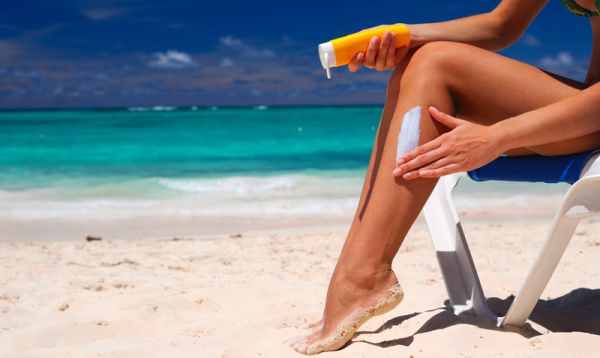
Find one that’s between SPF 30 and 50 (anything higher protects only incrementally more) and has UVA and UVB protection, says Dr. Doris Day, a New York City dermatologist and author of Forget the Facelift. Broad-spectrum coverage makes the lotion more stable, so it will last longer in the sun—though Day still advises applying every two hours. For a tropical getaway, go for a water-resistant formula (there’s no such thing as waterproof). As for which form of sunscreen to choose: “It’s a matter of personal preference between a gel, cream, wipe, powder, spray, or lotion,” Day says. “They’re equally effective.” And don’t forget a hat, sunglasses, and protective or SPF-treated clothing.

Photo courtesy of iStock

Thursday, July 31, 2014

Scientists Blow The Lid on Cancer and Sunscreen Myth

banderasnews.com

go to original
July 11, 2014
Researchers concluded that the conventional dogma, which advises avoiding the sun at all costs and slathering on sunscreen to minimize sun exposure, is doing more harm than actual good.

According to a June 2014 article featured in The Independent, a major study conducted by researchers at the Karolinska Institute in Sweden found that women who avoid sunbathing during the summer are twice as likely to die as those who sunbathe every day.
The epidemiological study followed 30,000 women for over 20 years and "showed that mortality was about double in women who avoided sun exposure compared to the highest exposure group."

Researchers concluded that the conventional dogma, which advises avoiding the sun at all costs and slathering on sunscreen to minimize sun exposure, is doing more harm than actual good. That's because overall sun avoidance combined with wearing sunscreen effectively blocks the body's ability to produce vitamin D3 from the sun's UVB rays, which is by far the best form of vitamin D.
In the USA, vitamin D deficiency is at epidemic levels. Ironically, vitamin D deficiency can lead to aggressive forms of skin cancer. A ground-breaking 2011 study published in Cancer Prevention Research suggests that optimal blood levels of vitamin D offers protection against sunburn and skin cancer.
Additionally, vitamin D protects the body from diseases like multiple sclerosis, rickets (in the young), tuberculosis, inflammatory bowel disease, type 1 diabetes, inflammatory bowel disease, rheumatoid arthritis, systemic lupus erythematosus and Sjogren's syndrome.
According to the Vitamin D Council, researchers at the University of Alabama at Birmingham recently reported that "lack of sun exposure may lead to cognitive decline over time."
A Dissident Dermatologist
Bernard Ackerman, MD, (deceased 2008) was one of the world's foremost authorities on the subject of skin cancer and the sun, sunscreens and melanoma skin cancer risks.
Below are Ackerman's views excerpted from an article in The New York Times (July 20, 2004), titled "I BEG TO DIFFER; A Dermatologist Who's Not Afraid to Sit on the Beach":
• The link between melanoma and sun exposure (dermatology's dogma) is unproven.
• There's no conclusive evidence that sunburns lead to cancer.
• There is no real proof that sunscreens protect against melanoma.
• There's no proof that increased exposure to the sun increases the risk of melanoma.
• A 2000 Swedish study concluded that higher rates of melanoma occurred in those who used sunscreen versus those who did not.
Sunscreens: Cancer-Causing Biohazards
Elizabeth Plourde, PhD, is a California-based scientist who authored the book Sunscreens – Biohazard: Treat as Hazardous Waste, which extensively documents the serious life-threatening dangers of sunscreens not only to people but to the environment as well.

Dr. Plourde provides proof that malignant melanoma and all other skin cancers increased significantly with ubiquitous sunscreen use over a 30-year period. She emphasizes that many sunscreens contain chemicals that are known carcinogens and endocrine-disrupting chemicals (EDC).
Environmentally, she notes: "In areas where there has been much exposure to ED (endocrine disrupting) chemicals, coral and other sea populations have died off and the prevalence of dual-sexed fish has risen."
Dr. Plourde's research on mice and sunscreen exposure also showed increases in both pup and maternal mortality as well as reproductive issues in subsequent generations.
Additionally, the book documents how sunscreen chemicals have polluted our water sources including oceans, rivers and municipal drinking water. Worse yet, testing revealed that 97% of Americans have sunscreen chemicals in their blood!
Dr. Plourde's book also has a chapter on the importance of vitamin D3 to health, and she posits that the widespread vitamin D3 deficiency is linked to overuse of sunscreen combined with sun avoidance in general.
Original Story

Wednesday, May 28, 2014

Mexico Sun Tips

mexicoexpo.com

SUNSCREEN TIPS

It's a fact that people on vacation usually spend more time outdoors than when they are at home during their regular routines. Because being outside and under the sun for extended periods of time is not a common behavior for many people, some travelers get caught off guard when it comes to controlling their exposure to the sun.

Excessive exposure to sun is even worse in the tropics. Mexico is a good example of a popular travel destination located in the tropics. Longer wavelength UVA rays (ultraviolet A) and shorter wavelength UVB rays (ultraviolet B) are much more intense at these latitudes. The twin concerns of sunburn and skin cancer can both be significant in the tropics, but proper skin care can make a world of difference.

Different people react differently to exposure to the sun. While it may be true that fair skinned people are more at risk for sunburns and skin cancer, all types of skins are vulnerable to sun-related problems.
While sunburns are often not much more than an inconvenience, skin cancers should be taken very seriously as a significant health concern. The good news is that most basal cell and squamous skin cancers are curable, especially if detected early. Melanoma, on the other hand, has a reputation of being deadly and deserves much more serious attention.

The likelihood of getting a sunburn or obtaining skin cancers can be minimized by proper sunscreen usage while traveling. Here are a few tips to put you on the path to protecting your skin while traveling in Mexico.

SUNSCREEN TIPS * SUNSCREEN LINKS


For more information on skincare and the sun go to the web site of SUNPROTECTION.ORG.
And drop by SUN PROTECTED.COM and BEACH STORE for protection related products and clothing.

SUNSCREEN TIPS

  • ANALYSE YOUR PERSONAL RISK

    It's a good idea before you get to the tropics to assess your own sun risk. The more you understand how your skin works the more prepared you can be to avoid excess sun exposure.
    People with fair skin usually understand that they are at a greater risk of skin damage from the sun. People with light colored hair or red hair and light skin usually burn more quickly than people with darker hair and darker skin. If you have freckles you are probably fair skinned.

    If you think your family genes have put you at a greater risk it's easy to plan accordingly. When in doubt whip it out (the sunscreen that is). It's better to be safe than sorry, especially while on vacation!
  • CHOOSE A SPECIFIC TYPE OF SUNSCREEN

    Today's sunscreen consumer has many choices for protection. Sunscreens come in lotions, oils, creams, sprays, gels, and sticks. Choosing the right type of sunscreen can make your day in the sun a whole lot easier.

    Lotions, oils and cremes have been around the longest and have proven to be worthy tools for sun protection. They apply evenly and are usually easy to see where you missed. Sprays are becoming more common but they can be more difficult to apply evenly.

    Gels such as Bullfrog can work miracles for those needing a waterproof sunscreen, and sticks do a good job of covering sensitive areas on the face such as noses and cheeks. It's a good idea to plan your sunscreen type based on your particular travel needs.
  • DECIDE UPON THE PROPER SPF

    SPF is short for Sun Protection Factor and is a good number to use to determine the length of time you can stay in the sun without reapplying sunscreen.

    While using a sunscreen with a SPF of 15 might provide you with only minimal protection for a short time, using a SPF of 35 might hold off a sunburn for a significantly longer period.

    Since everyone's skin is different, the SPF is only a guideline. Each person must learn how a given SPF works on his or her particular skin. When experimenting on sunscreen SPF's it's best to start with the higher numbers and work your way down.
    For more information on SPF drop by the SPF QUESTIONS on Ask Yahoo!
  • APPLY THE SUNSCREEN PROPERLY

    You've seen it before, probably more than once. A person at the beach with bright red skin on one part of his or her back right next to the white handprints of successful sunscreen coverage just inches away. Yikes!

    Applying sunscreen evenly is easy enough on the parts of the body you can see, but things get tricky on the backside. This is where most people fail to ask for help and where most sunscreen applications go south.

    Finding a person to put sunscreen on the parts of your body you can't reach may not be fun, but it is a critical part of skin management. Find someone that loves you, or at least likes you. But don't plan on covering your backside properly without some outside help.
  • REAPPLY THE SUNSCREEN OFTEN

    Probably the biggest sunscreen mistake people make it forgetting to reapply their sunscreen after a certain length of time. If you have the energy to re-apply sunscreen every 30 minutes you will be better off than if you wait an hour or more.

    Even a body that has not moved can loose protection from sunscreen that has left the body due to perspiration. But dipping in the pool or ocean is a sure way to loose protection fast.

    On extremely hot days when the body is perspiring or after taking even a short dip in the water a fresh coat of sunscreen is good insurance against a sunburn.
  • GIVE SPECIAL ATTENTION TO SENSITIVE AREAS

    Certain parts of the body just seem to be more sensitive to sunburn. And these areas can be easily protected with just a little more attention.

    Noses, cheeks, and the tops of ears are susceptible to a larger amount of sun because of the additional sun they receive from reflection. These are areas that the thicker creams and gels work well to protect.

    For some people who never get in the sun their whole body is sensitive to sun. The best advice out there for these people is to take it slow, allowing for only a moderate amount of sun each day, along with plenty of sunscreen on all exposed parts of the body.
  • SPECIAL CARE FOR WATER FANS

    The growing market in today's sunscreen wars in in the waterproof sector. Seems like most sunscreen manufacturers are now marketing special waterproof and water resistant sunscreens. In general most waterproof sunscreens last about twice as long as water-resistant sunscreens.
    This new market is actually well overdue, because so much of sun protection is water oriented. Swimming, surfing, snorkeling and diving, kayaking, water skiing and many other sports lend themselves to high sun exposure in conjunction with a wet environment.

    Most of these waterproof or sport sunscreens provide excellent coverage and are priceless for travelers who plan on getting wet. It is important to remember, however, that even these waterproof sunscreens have their limits with water and they must be reapplied after spending considerable time getting wet. Re-applying at least every two hours is suggested, and more often if the water activity has been extensive.

Friday, November 22, 2013

Sunscreen - Sunscreen Questions and Answers


about.com

By Vincent Iannelli, M.D.


Confusion about sunscreen and sun exposure put a lot of kids at risk for getting a sunburn. Review these answers to common sunscreen questions parents have, such as when to reapply sunscreen, whether you should use a combination sunscreen and insect repellent, and if your kids can get a sunburn on a cloudy day, so that your kids are protected from the sun.

Sunscreen Questions - Amount of Sunscreen

How much sunscreen do I need to use on my kids?

Many experts report that most people don't use enough sunscreen on their kids.

A good rule of thumb is that you should use approximately half a teaspoon of sunscreen for your child's head and neck and each arm and one teaspoon to his chest and abdomen, back, and each leg.

A larger child may need a little more though.

The American Academy of Pediatrics recommends using an ounce of sunscreen for a young adult.

Another good general rule is to use a palmful of sunscreen to cover your child's body. Since larger kids have larger hands, that helps you adjust the amount of sunscreen for different-size kids.

Sunscreen Questions - Dark Skin

Do you need to use sunscreen if you have dark skin?

Yes, everyone should use a broad spectrum sunscreen with an SPF of at least 15 to 30 all of the time when they are going to be out in the sun. Even people with deeply pigmented skin, who rarely burn, should use sunscreen.

So use sunscreen, no matter your race or ethnic origin, because it is a myth that people with dark skin don't need sunscreen.

Sunscreen Questions - Healthy Tans

Is it ever healthy to get a tan?

No, there is no such thing as a healthy tan. And a 'base tan' is not a substitute for sunscreen either.

A tan from artificial light, like a tanning bed, isn't healthy either and may raise a person's risk of melanoma.

Not surprisingly, the American Academy of Pediatrics opposes the use of tanning salons by children under the age of 21.

Sunscreen Questions - Tanning and Acne

Will going out in the sun without sunscreen to get a tan make your teen's acne go away?

Acne is a fact of life for many teens and most will do anything to make themselves look better. Getting a tan isn't one of the things they should be doing though. A tan may make their pimples look better temporarily, but the damage the sun exposure does to their skin and pores will just cause an even larger breakout a few weeks later.

Your pediatrician and/or a pediatric dermatologist can offer much healthier ways to control your teen's acne and recommend a non-comedogenic sunscreen too.

Sunscreen Questions - SPF

What does SPF on my sunscreen's label stand for?

SPF is an acronym for sun protection factor.

Sunscreen Questions - Waterproof Sunscreen

Do you have to reapply sunscreen if it says that it is 'waterproof' or that it has 'all day protection'?

Yes, no sunscreen is truly waterproof. Instead, it can be water resistant and may need to be reapplied every few hours or according to the manufacturer's instructions. And no sunscreen really provides all day protection. Even with an SPF of 50+, you should still reapply it every 2 hours, or sooner if you have been in the water or sweating a lot.

Sunscreen Questions - Vitamin D

Does using a sunscreen or sunblock block your body's ability to make vitamin D from sun exposure?
Yes, and while some experts use that fact to recommend unprotected sun exposure, if your child is following nutrition guidelines for drinking milk, then she should be getting enough vitamin D.

Talk to your pediatrician if you think your child needs more vitamin D, especially if he doesn't drink milk, has very dark skin, and/or is rarely in the sun.

Sunscreen Questions - SPF

Does a sunscreen with an SPF of 30 provide twice the protection as one that has an SPF of 15?

No. A sunscreen with an SPF of 15 provides protection against 93% of UVB rays, while one with an SPF of 30 provides 97% protection. Keep in mind that a sunscreen with an SPF of 2 only provides 50% protection, so be sure to use a sunscreen with an SPF of at least 15 to 30.

Many experts question whether using a sunscreen with an SPF above 30 is really necessary, since you are already blocking 97% of UVB rays. Using a high SPF sunscreen might provide more protection for those parents who don't use enough sunscreen and don't reapply it often enough though.

Sunscreen Questions - When to Apply Sunscreen

When should you apply sunscreen on your kids?

You should apply your sunscreen 15 to 30 minutes before you are going to be exposed to the sun. Since it takes time for the sunscreen to be absorbed by your skin, you should apply it in advance. If you wait until you are already outside or until your child shows signs of getting red, then he will have a longer period of being unprotected and will be more at risk for getting a sunburn.

Sunscreen Question - Combo Sunscreens

Does a combination sunscreen and insect repellent provide good protection against both the sun and insect bites and stings?

While you can use a combination product to protect your children against both the sun and bugs, it is not usually a good idea. Remember that you should reapply sunscreen every few hours, while you usually don't reapply an insect repellent very often, or at all. Also, most experts think that insect repellents lower the SPF of sunscreens. So while a combo product might be convenient and provide protection, it likely doesn't provide good protection, unless your child is only going to be outside for a few hours.

Sunscreen Questions - Clouds and Sunscreen

Can you get a sunburn on a cloudy day?

Clouds don't block the UV rays that cause sunburn, so you can still get a sunburn when it is cloudy outside. Since UV rays can be reflected off of water, sand, snow, and concrete, you can even get a sunburn in the shade.