Showing posts with label USDA. Show all posts

Monday, April 27, 2015

USDA Expands Beef & Pork Trade with Mexico and Peru


go to original
April 23, 2015

"Mexico is an important market for U.S. cattle producers, with the potential to import $15 million of live U.S. cattle per year," said the United States Secretary of Agriculture, Tom Vilsack.


Dodge City, Kansas - Agriculture Secretary Tom Vilsack announced the U.S. Department of Agriculture has recently reached agreements allowing U.S. beef and pork producers greater access to consumers in Mexico and Peru.

The two agreements announced will allow U.S. producers to export slaughter cattle to Mexico and expand access to consumer markets in Peru for U.S. fresh and chilled pork. The secretary made the announcements during a meeting with producers in Des Moines, Iowa.

"Our priority at the USDA is not only to open or reopen markets for our producers, but to help drive U.S. economic growth through trade by supporting and creating American jobs on and off the farm," said Secretary of Agriculture Tom Vilsack. "Mexico is an important market for U.S. cattle producers, with the potential to import $15 million of live U.S. cattle per year, and Peru's market could generate $5 million annually in additional pork sales."

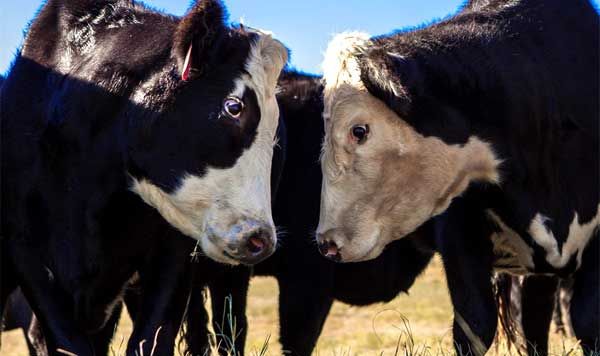
The United States and Mexico reached an agreement that takes effect immediately and will allow U.S. producers to export slaughter cattle to Mexico for the first time in over a decade. The USDA has been working with Mexico since 2008 to reopen this market and the final agreement was reached between USDA Under Secretary Ed Avalos and Enrique Sanchez-Cruz with SAGARPA during meetings recent in Washington, D.C.

Exporters and producers can find the required documents on the APHIS website or through their local veterinary services office.

Similarly, USDA has conducted extensive negotiations with Peru's Servicio National De Sanidad Agraria since 2012 to expand access for U.S. fresh, chilled pork and pork products. USDA's Food Safety and Inspection Service export library will be updated to the new export requirements for these pork and pork products exports.
"More than 1 million people go to work every day thanks to exports of American-grown products. Expanded U.S. agricultural exports mean more new jobs, but our farmers and ranchers will miss out on new markets for American products if Congress doesn't act on Trade Promotion Authority early this year and if we don't continue to build support for a Trans-Pacific Partnership with Asian nations."

USDA continues its push to eliminate all remaining trade barriers to U.S. cattle and cattle products stemming from past detections of bovine spongiform encephalopathy. USDA Animal and Plant

Health Inspection Service continues to work with its trading partners to ensure any unnecessary requirements for U.S. origin beef are eliminated. The World Organization for Animal Health considers the United States' to have negligible risk for BSE. This is OIE's lowest risk category for this disease.

The U.S. Department of Agriculture continuously seeks opportunities for U.S. agricultural products and producers to expand access to overseas markets and contribute to a positive U.S. trade balance, to create jobs and to support economic growth. The past six years have represented the strongest period for American agricultural exports in the history of our country. In fiscal year 2014 American farmers and ranchers exported a record $152.5 billion of food and agricultural products to consumers worldwide.

Original article

Friday, May 30, 2014

The Mexican Oyster That Could Change the Whole Game

yahoo.com

The Mexican Oyster That Could Change the Whole Game
Photo credit: StockFood/ Greg Rannells Photography
The first time I spoke with Tom Kehoe, the owner of seafood distributor K&B Seafood, it was 7:55 a.m. on a Monday and I’d just been jolted awake by his phone call.
"We oyster people are early risers,” he apologized a few hours later at Grand Central Oyster Bar, New York City’s hallowed hall of clamorous oyster worship. Kehoe had lured me to Grand Central with a new oyster he was peddling: the Baja Kumamoto, the world’s first Kumamoto oyster grown in Mexico.
The deep-cupped Kumamoto, famed for its diminutive size, sweet flavor and cucumber finish, is among the most popular oysters on America’s rapidly expanding oyster scene. But a Kumamoto grown for American consumption anywhere but the cold waters of northern California and Washington State—which together have a monopoly on Kumamoto production—might strike some as strange, and potentially even dangerous: The thought of slurping down a raw oyster grown in Mexican waters sends shivers down some spines. “I think [these oysters’] biggest problem is perception,” Kehoe conceded, before launching into an explanatory spiel.
Most Americans assume that oysters originating from south of the border are grown in the warm waters of the Gulf of Mexico, he said, and are therefore more susceptible to disease. They’re also wary of Mexican standards of quality and sanitation. But Baja Kumamotos, or Kumos, are produced exclusively by the aquaculture companyMaxmar, a 15-year-old company founded by a pair of Brits named Mark—Mark Reynolds and Mark Venus—both with masters degrees in aquaculture.
image
Photo credit: Timothy Davis
The Marks grow their oysters in the chilly waters off the Western shores of Mexico’s Baja Peninsula, where water temperatures range from 52 to 68 degrees. This is thanks to the California Current, which coaxes frigid waters down from Alaska and along the coasts of California and Baja, producing an ideal environment for Kumos. The water is cooler in summer than the Gulf of Mexico, but not so frigid in winter that oysters’ growth is slowed, which happens in California and Washington State.
Moreover, to meet criteria for export to the United States, all foreign seafood producers, including Maxmar, must submit to regular testing from FDA officers, who hold it to the same standards as any American facility.
An ice-packed platter arrived at our red-and-white checkered table holding half a dozen shucked Baja Kumos. Petite and bowl-shaped, the oysters have all the physical hallmarks of their more famous American cousins. I tilted my head and tossed one back. 
The flavor of the Baja Kumos is intensely briny, a drastic departure from the sweetness of their Northern counterparts. After a moment, the saline quality gives way to the Kumo’s signature creamy, cucumber notes. It’s faintly metallic on the finish.
A few days later, I talked taste with Mark Reynolds. “Kumamotos have become known as a beginner oyster,” he said. “These are not. I wouldn’t call them a beginner’s oyster at all.”
People accustomed to mild and sweet American Kumos—a crowd pleasing oyster if ever there was one—might balk at the more powerfully-flavored Baja Kumos. But Reynolds believes those who enjoy briny oysters that smack of the sea, like Glidden Points, Wiannos, and Wellfleets, will take to it quickly.
"They’re bloody tasty,” Reynolds swooned. “You get [several] tastes with this oyster. You get the brininess to start, then the sweetness happening … the lasting finish that I get is a sort of mouthwatering savory experience, and that’s the Japanese umami.”
image
Photo credit: Timothy Davis
Maxmar sells its oysters through distributors on both coasts and its brick-and-mortar shop in Ventura, California, The Jolly Oyster. Tom Kehoe alone has arranged the delivery of Baja Kumos to restaurants from Hong Kong to Philadelphia to Las Vegas. But Kehoe is especially proud of the recent placement of Baja Kumos in Grand Central Oyster Bar.
They’ve been on Grand Central’s menu before, though. “In the past I’ve had a hard time selling Mexican oysters,” explained executive chef Sandy Ingber. “I nicknamed them ‘Meximotos.’” But when strung together, the words “Mexican” and “oyster” failed to resonate with patrons. They didn’t last on the menu.
But Ingber chanced again on the oysters, now rebranded “Baja Kumamotos,” and added them back into the rotation in late March. The gamble seems to be paying off; on the day of my meeting with Kehoe, the Baja Kumos were selling quite nicely. “They’re really very good,” Ingber said.
Perhaps it helped that the Baja Kumos were featured side-by-side with Washington State Kumos, only for 10 cents less. Baja Kumos are less expensive because they’re more plentiful, a product of those warmer-but-still-cold waters that promote a relatively faster growth rate. With fewer American Kumamotos to go around, they cost $3.65 a piece at Grand Central. A ten cent difference may not seem like much, but it could be enough to tip the scale in the Baja Kumo’s favor.
"This is the moment of the Baja Kumamoto," Kehoe proclaimed. "I think finally they’ve turned the corner … it’s going to be a big couple of years for them."

Wednesday, May 7, 2014

Mexico Removes Import Restrictions on U.S. Beef

wisconsinconnection.com
USAgNet - 05/07/2014

The Mexican government is in the process of making regulatory changes that allow for import of U.S. beef and beef products derived from cattle of any age. The move lifts the 30-month cattle age limit for U.S. beef and effectively removes the last of Mexico's BSE-related restrictions.

"This is an issue that U.S. Meat Export Federation (USMEF) has been working on for a number of years, and resolving it has been a lengthy process," said Chad Russell, U.S. Meat Export Federation regional director for Mexico, Central America and the Dominican Republic, contractor to the beef checkoff.

"We received excellent support on this issue from FAS officials at the U.S. embassy in Mexico, who always made sure that it was front-and-center whenever U.S.-Mexico trade issues were being discussed at high levels. Though it took some time, these efforts have now paid off."

The changes to Mexico's import regulations were to take effect April 30, though shipments of over-30-month beef cannot begin until the USDA Food Safety and Inspection Service (FSIS) updates its Export Library.

USMEF expects this process to be completed within the next few days. This will also allow the USDA Agricultural Marketing Service (AMS) export verification (EV) program for Mexico, in which approximately 170 U.S. establishments are currently enrolled, to be terminated.

According to information provided to USMEF, Mexico will accept either the new FSIS letter certificate or an existing letterhead certificate, along with the corresponding FSIS form, for product currently in the pipeline and for new shipments made over the next few weeks.

So exporters will have some time - likely until late June - to make the transition to the new letterhead certificate and other documentation requirements.

Despite concerns over rising beef prices and tight supplies, the Mexican market has been performing well. U.S. beef/beef variety exports have been above year-ago volumes in each of the past nine months, and 2014 exports (through February) were up 26 percent in volume (37,638 metric tons) and 40 percent in value ($182.9 million) from the same period in 2013.

The U.S. holds about 90 percent of Mexico's imported beef market, with the remainder captured mostly by Canada. Canada's market share has edged higher in recent months, likely due to increased affordability as Canada's beef production has been recovering and the Canadian dollar has weakened. But with the exception of livers, Canada's exports to Mexico are still limited to beef derived from cattle less than 30 months of age.

Tuesday, April 8, 2014

U.S.-Mexico border clean water access, improved infrastructure the focus of joint initiative

 waterworld.com

WASHINGTON, DC, April 4, 2014 -- A joint initiative between the U.S. Department of Agriculture and the Environmental Protection Agency (EPA) aims to improve access to clean water and wastewater infrastructure for U.S. communities along the Mexico border. This initiative is part of the organizations' ongoing partnership to increase the sustainability of rural drinking water and wastewater systems.

Many border communities lack the funds to build or rebuild their drinking water and wastewater infrastructure. Failing wastewater systems can significantly harm the environment, spilling untreated wastewater into streets, streams and rivers, and forcing raw sewage to back up into homes. Likewise, failing and inadequate water systems can harm community health by increasing the risk of water-borne illnesses such as salmonella and hepatitis A as well as gastrointestinal diseases.

USDA and EPA have conducted an initial needs assessment for water and wastewater infrastructure in the border region. The findings are published in the U.S. [FJ-RWD1] Mexico Border Scoping Assessment Phase 1 Report. The report identified communities in Arizona, California, New Mexico, and Texas that require improved water infrastructure and/or face environmental and/or public health risks associated with inadequate or failing water infrastructure systems.

USDA plans to award up to $500,000 through Rural Development's Technical Assistance and Training Grant program to a private, non-profit group for an in-depth priority assessment of the counties identified in the report. The assessment will include recommendations on the best way to deliver technical assistance. USDA anticipates that this analysis will be completed in late 2014. Further, based on this analysis, USDA and EPA will target technical assistance to the neediest communities and establish partnerships to provide or improve access to safe drinking water and basic sanitation.

Through this effort, USDA and EPA are helping rural communities implement strategies and tools to protect public health, improve water quality and create sustainable communities. This partnership has produced tools such as the Rural and Small Systems Guidebook to Sustainable Utility Management. It provides a step-by-step guide for sustainable operation and management of small water and wastewater systems. The partnership has also produced the Workshop in a Box manual, which provides materials to technical assistance providers who would like to market and conduct workshops based on the guidebook.

USDA has invested more than $125 million in water and waste projects in colonias since the start of the Obama Administration. The Department's StrikeForce for Rural Growth and Opportunity Initiative is utilizing the full array of resources in the poorest parts of rural America, including the colonias along the border. Colonias are small, rural communities along the border, some in federally-recognized Native American tribal areas, that have not had regular access to water and modern sanitation systems because that type of infrastructure was not required to be installed at the time the properties were sold and their houses built.