

Editor’s note: Mexico and Spain unsurprisingly have a number of customs in common, especially during the winter holidays. This is the first installment of a two-part special on a sweet tradition that’s shared by the two countries, and the second will appear on Monday.
culinarybackstreets.com
January 3, 2014
by Ben Herrera
In Mexico, Epiphany (or Día de Reyes, in commemoration of the three Magi’s visit to the baby Jesus), celebrated on January 6, offers an opportunity to extend the Christmas season. Mexican kids go to bed early on January 5 expecting to find gifts next to the Nativity scene the following morning. The traditional way to celebrate this holiday is by eating rosca de reyes, kings’ cake, an anise-scented, ring-shaped cake or sweet bread decorated with slices of candied fruit.
Embedded within the pastry is a baby figurine (sometimes more than one). The figurines were once made of porcelain, but plastic is more common nowadays. In most households, schools and offices, everyone gathers to enjoy the rosca de reyes with cups of hot chocolate. They chat eagerly while waiting for some lucky person to find the baby figurine in his or her slice. Whoever finds it is obliged to prepare tamales for the Candlemas celebration on February 2, a ceremony that fuses Catholic and pre-Hispanic customs and marks the end of the holiday period. (Stay tuned for more on Candlemas in a future post.)
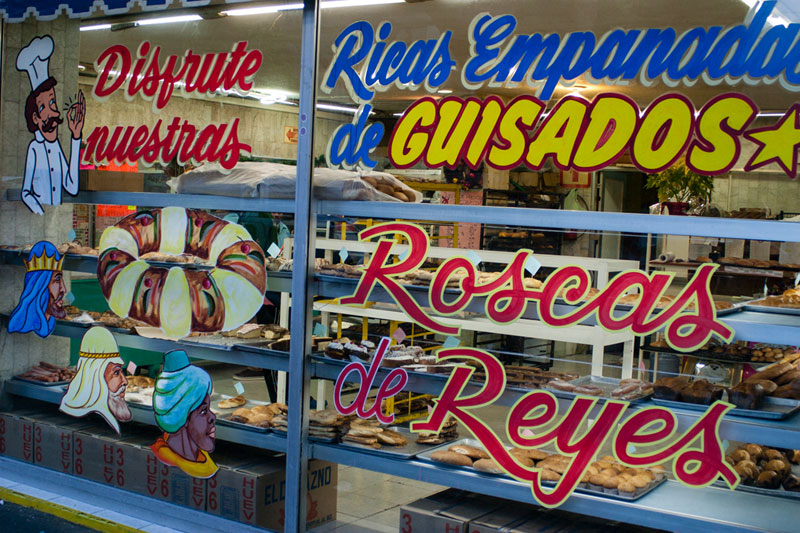
In Mexico City there are many places where one can get rosca de reyes – not just bakeries, but also department and auto-service stores, subway stations, street stands and even makeshift venues in private homes. Not all roscas are made equal, however; here are a few of our favorites.


No comments:
Post a Comment